HONU
A little sub.
A whole new world.
Meet Honu. The vision of Her Deepness, Dr. Sylvia Earle, and Tetiaroa Society's Richard Bailey, Honu is built as two three-person submersibles, traveling where the sunlight ends and the discovery begins.
Honu is headed for the twilight zone, 1,000 meters below the surface.
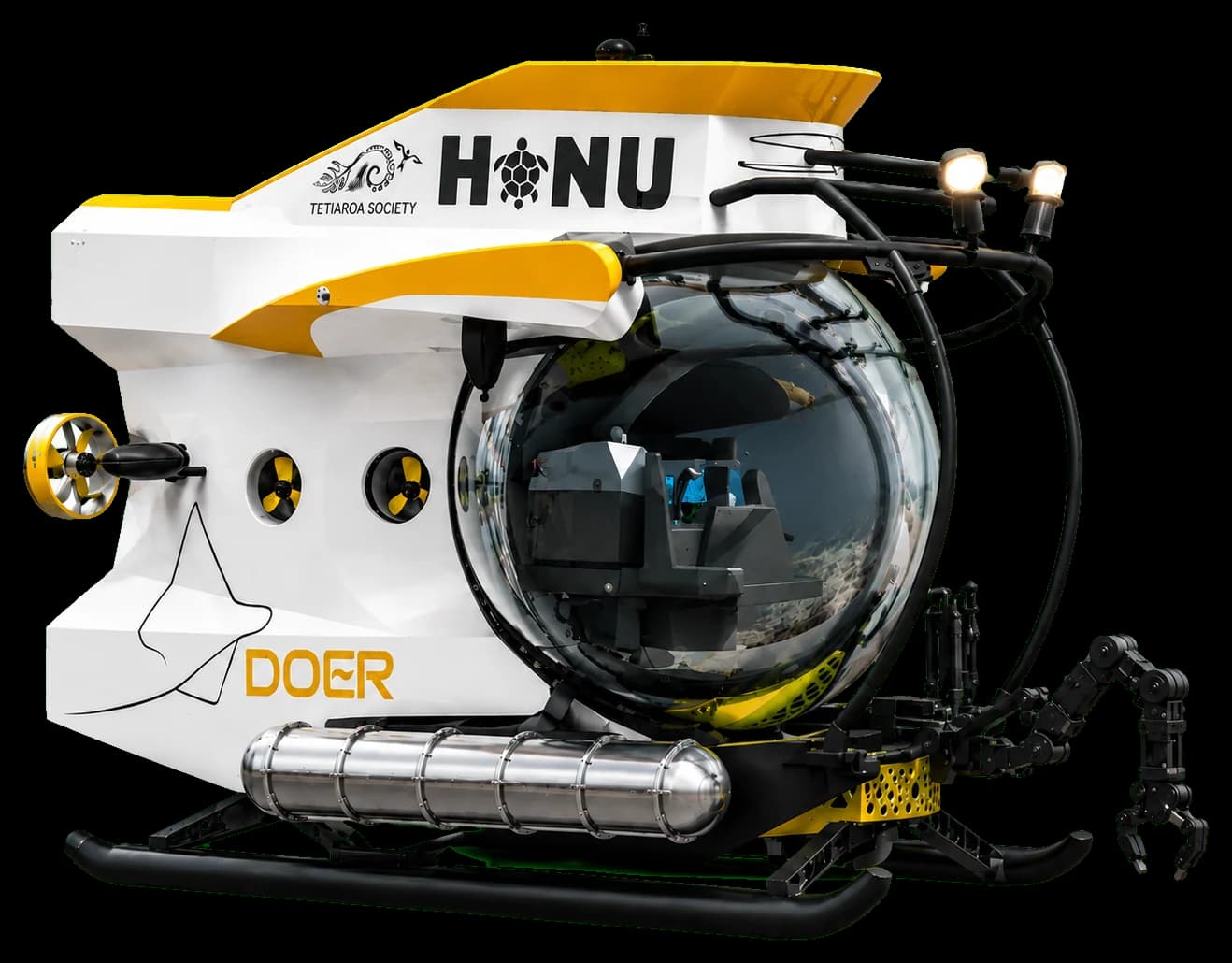
Honu means sea turtle in Tahitian. This one has thrusters.
What’s down there?
A reef no diver has visited? An animal we don’t have a name for yet? Those questions deserve a closer look. Built by DOER Marine in partnership with Tetiaroa Society, Honu will carry scientists into the deep and share that world with young explorers through film and XR.
- sister submersibles
- 2
- people on board
- 3
- metres depth rating
- 1,200
1 pilot + 2 passengers
“Right before our eyes, yet largely out of sight, lies Earth's largest ecosystem: the ocean. It regulates our climate and sustains life on this planet. Without the blue, there is no green. And still, we know so little.”
A closer look at Honu.
Beyond the dome, thrusters hold Honu steady, lights reveal the dark, and robotic arms bring samples back to the surface.
Choose a part to see what it does.
Your front-row seat to the ocean.
Honu’s clear acrylic dome gives the pilot and two passengers a wide view outside. Everyone can watch together, compare what they notice, and decide where to look next.
You’ve got a window seat. What would you look for first?
Dive with HONU
Steer HONU from the reef into open water. Look for animals among the coral, then try the lights and sonar farther out.
Your first dive
Getting HONU ready…
The work doesn’t end with a dive.
What we learn beneath the surface should matter back on shore. HONU’s five program goals connect ocean exploration with local science, sustainable tourism, and the people who will carry the work forward.
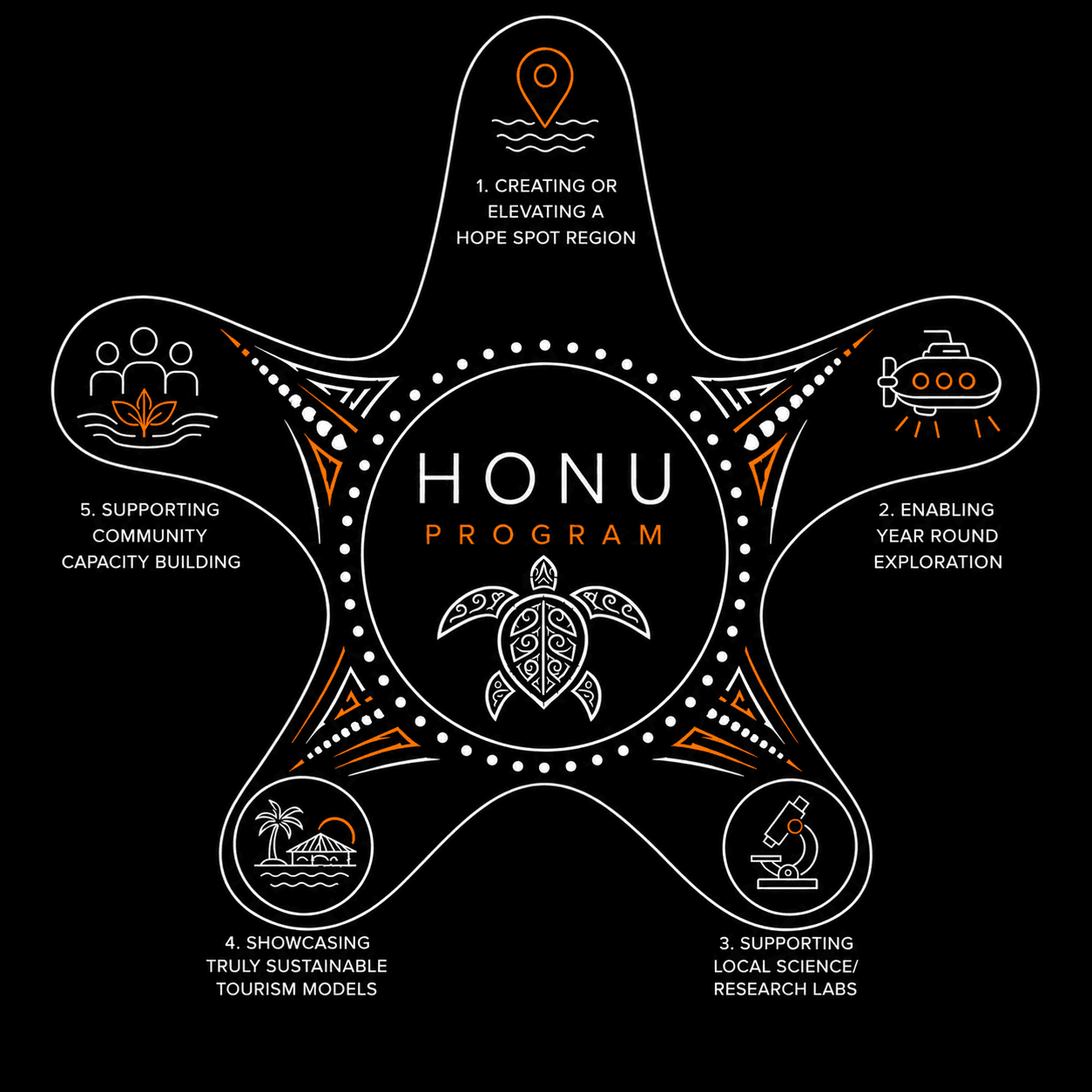
Give a Hope Spot room to grow
Create or elevate a Hope Spot region, helping more people see why it matters.
Keep exploring, all year
Enable year-round exploration, so one expedition can lead to the next.
Back local science
Support the scientists and research labs working close to these waters.
Show what sustainable tourism can do
Showcase tourism models that help care for the places people come to see.
Build skills within the community
Help local communities build the knowledge and experience to take part in the work.
Support oceanresearch.
A dive can begin with a scientist’s question and end with a child asking ten more. Help make room for both: the research that tells us what’s down there, and the films that let more people see it.
Give to Tetiaroa Society, or talk with our team about supporting Honu.
- 01
Go and see
Get scientists close enough to study deep reefs and the animals that live there.
- 02
Bring back the evidence
A sample, a photograph, an unfamiliar sound. Each dive can give researchers something new to investigate.
- 03
Make room for the next explorer
Help a child discover that the ocean is full of questions they could grow up to answer.
The ocean cools an island, too.