Long-term Shark Research on Tetiaroa Contributes to Study Indicating How to Save Declining Global Populations
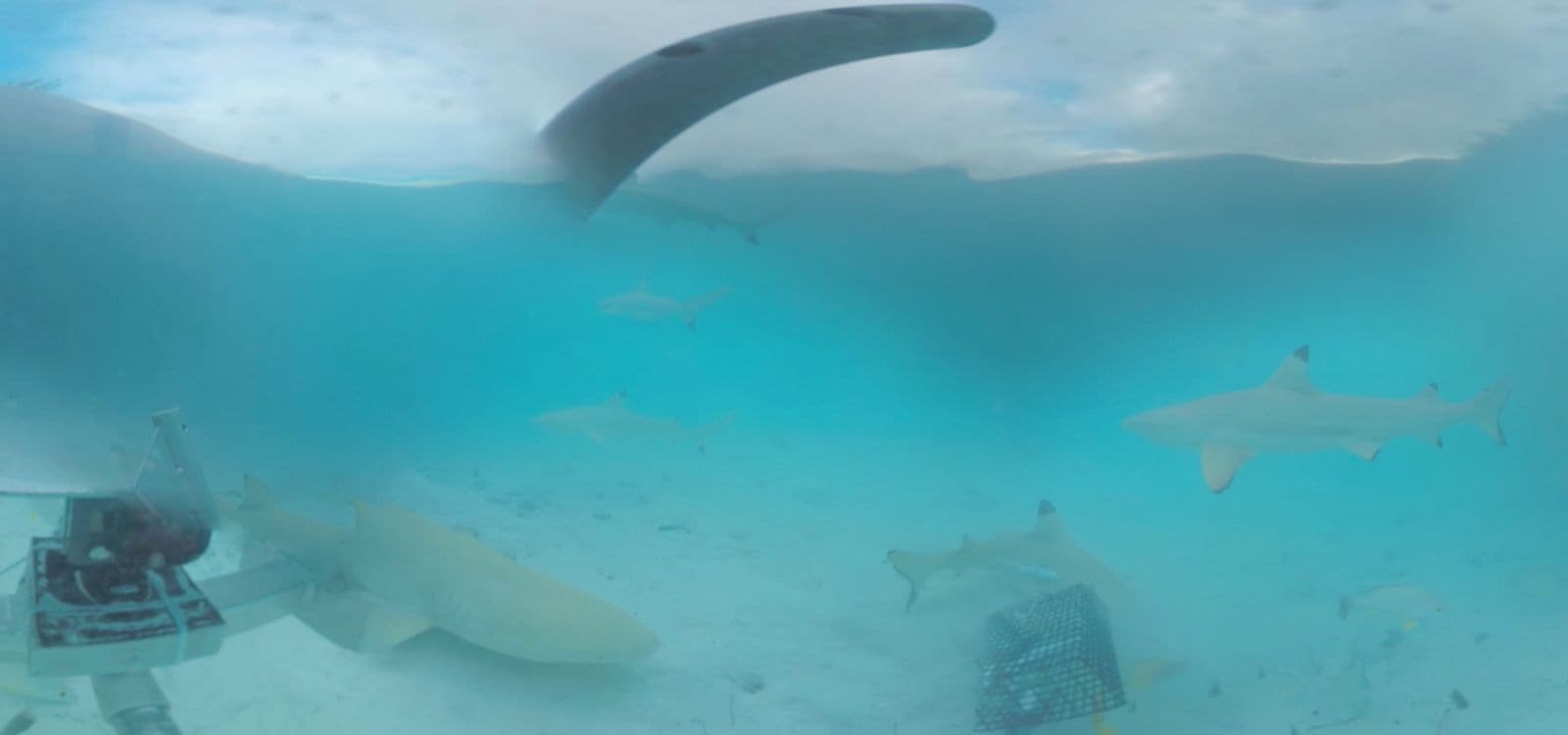
French Polynesia is a model for shark conservation as the world’s largest shark sanctuary
In a first-of-its-kind study published in Nature, scientists report on the conservation status of reef shark populations worldwide. The results are grim; reef sharks have become rare at numerous locations that used to be prime habitat, and in some cases sharks may be absent altogether. A long history of human exploitation is the culprit, with depleted shark populations strongly tied to socio-economic conditions, lack of governance and the proximity of reef environments to large human population centers. These patterns were recognizable across the globe.
Yet even in the familiarity of what seems like another gloomy study about the environment, researchers remain hopeful and see bright spots for recovery.
“At twenty percent of the reefs we surveyed, we didn’t detect any sharks where you would expect to see them,” says Aaron Wirsing, associate professor of environmental and forest sciences and collaborator on the project. “That was alarming and a bit of a surprise. But in other places, even those with lots of human activity and tourism, like the Bahamas, sharks are doing relatively well. These locations exemplify the power of effective governance, and it is uplifting to see high performing regions near high human population centers.”