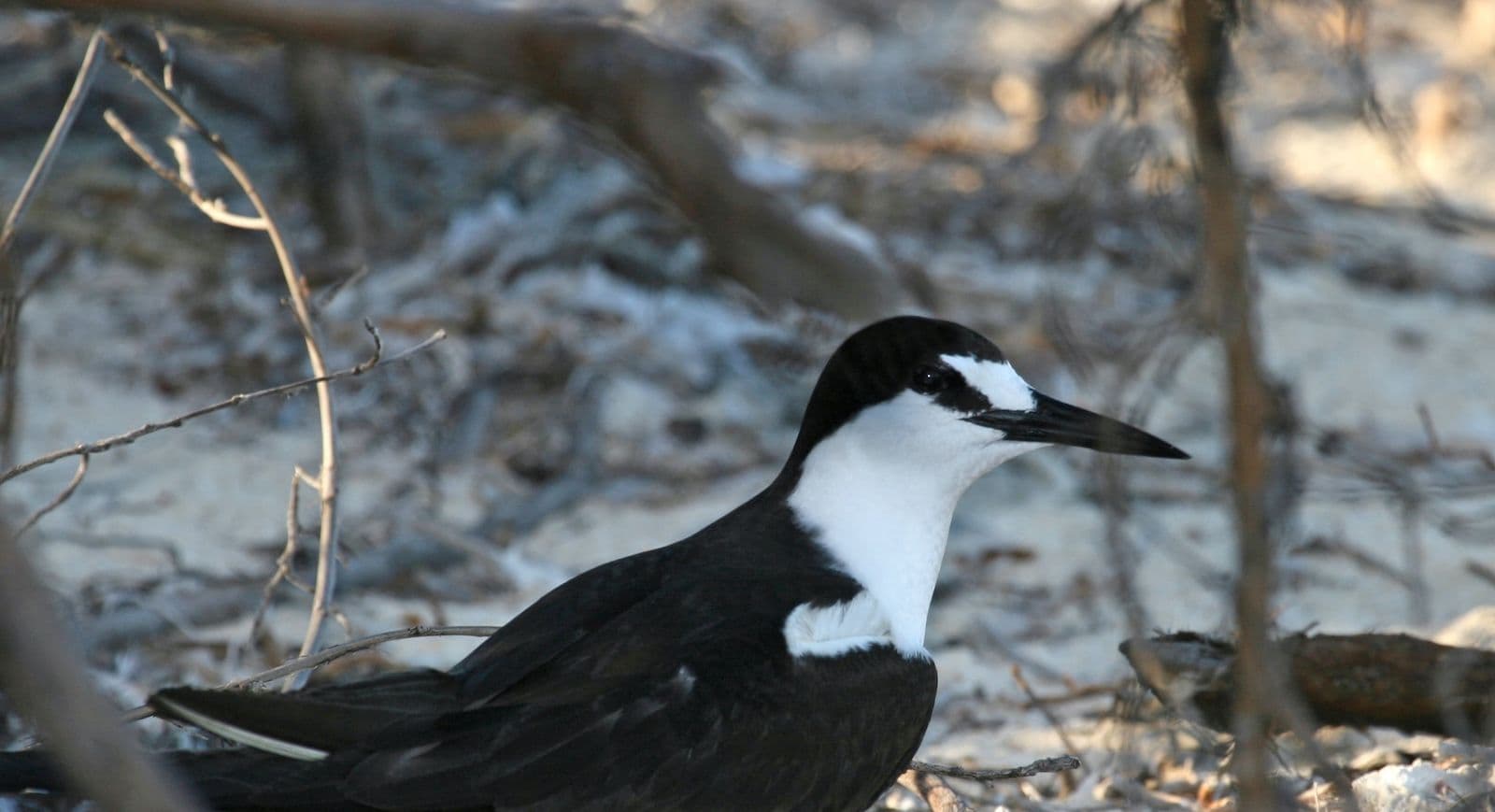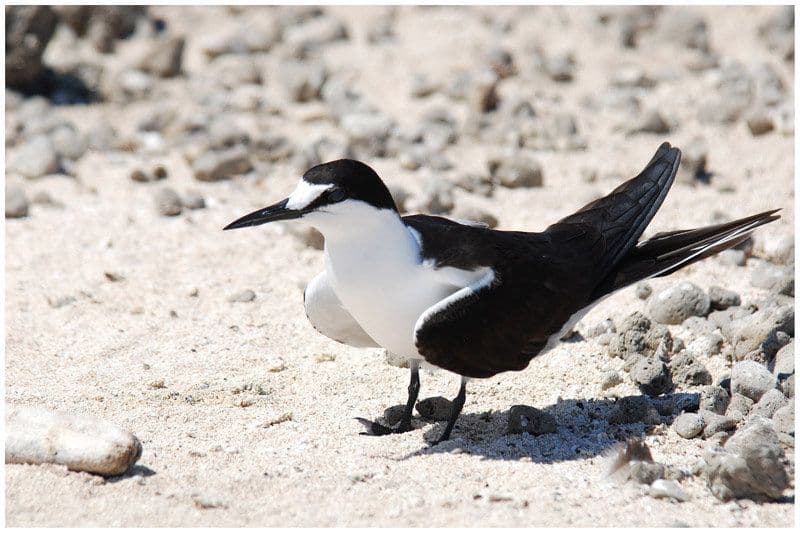
Most of its life belongs to the open ocean. Breeding brings the sooty tern back to sand.
- Local names
- ‘Ave’a, Kaveka
- Habitat
- Motu and shore
- Other names
- Sterne fuligineuse
About this species
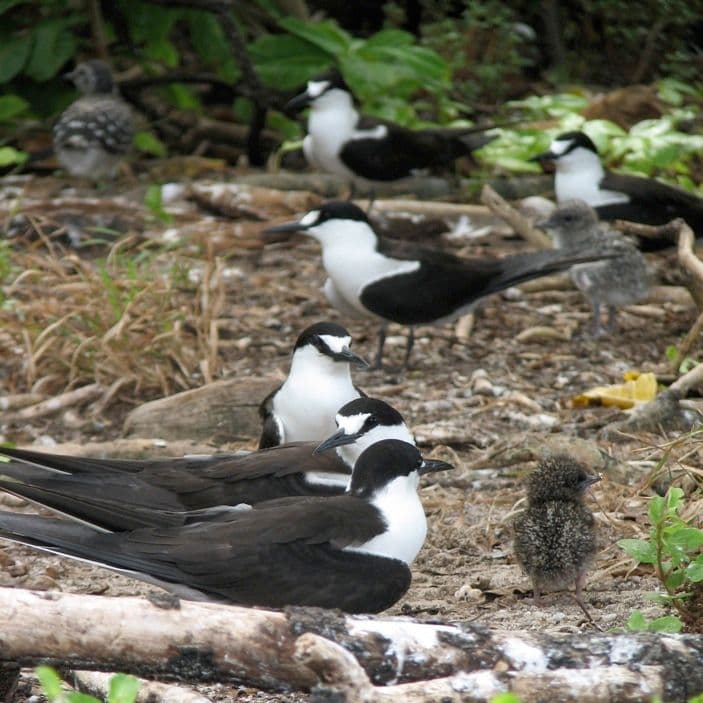
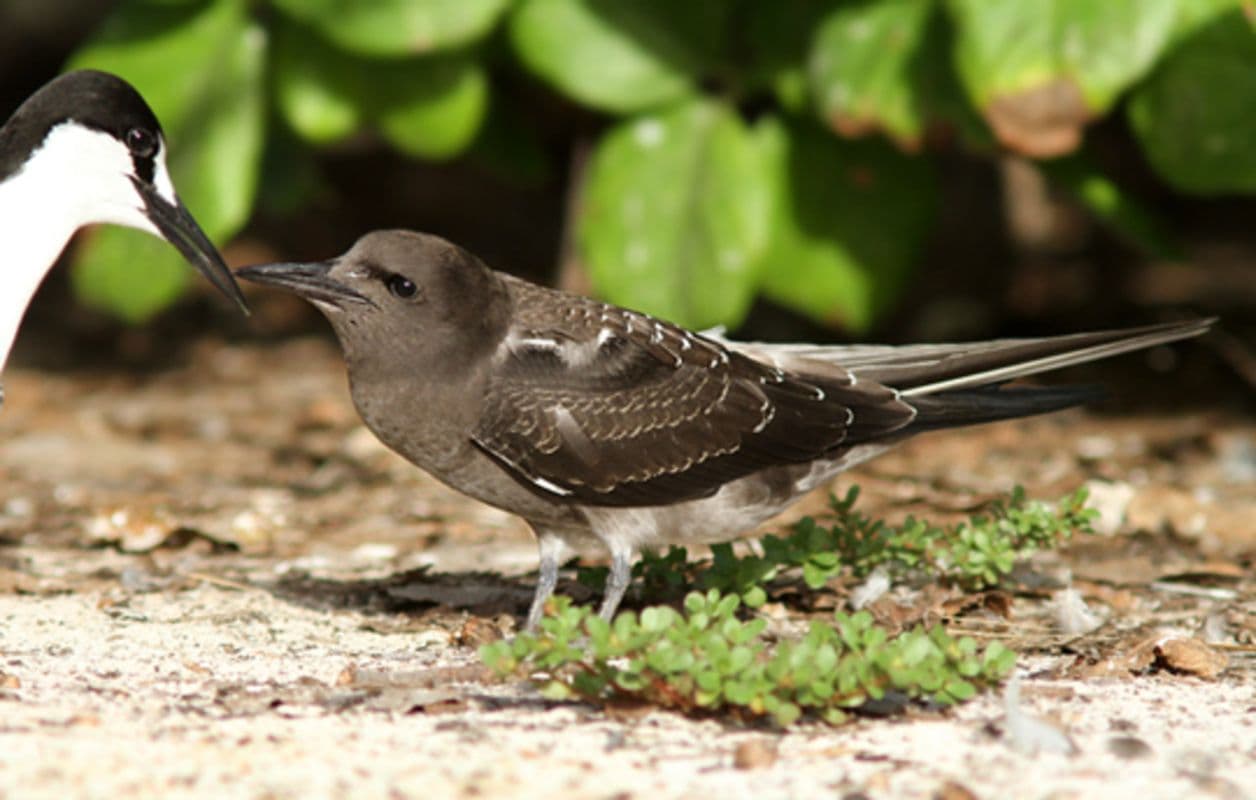
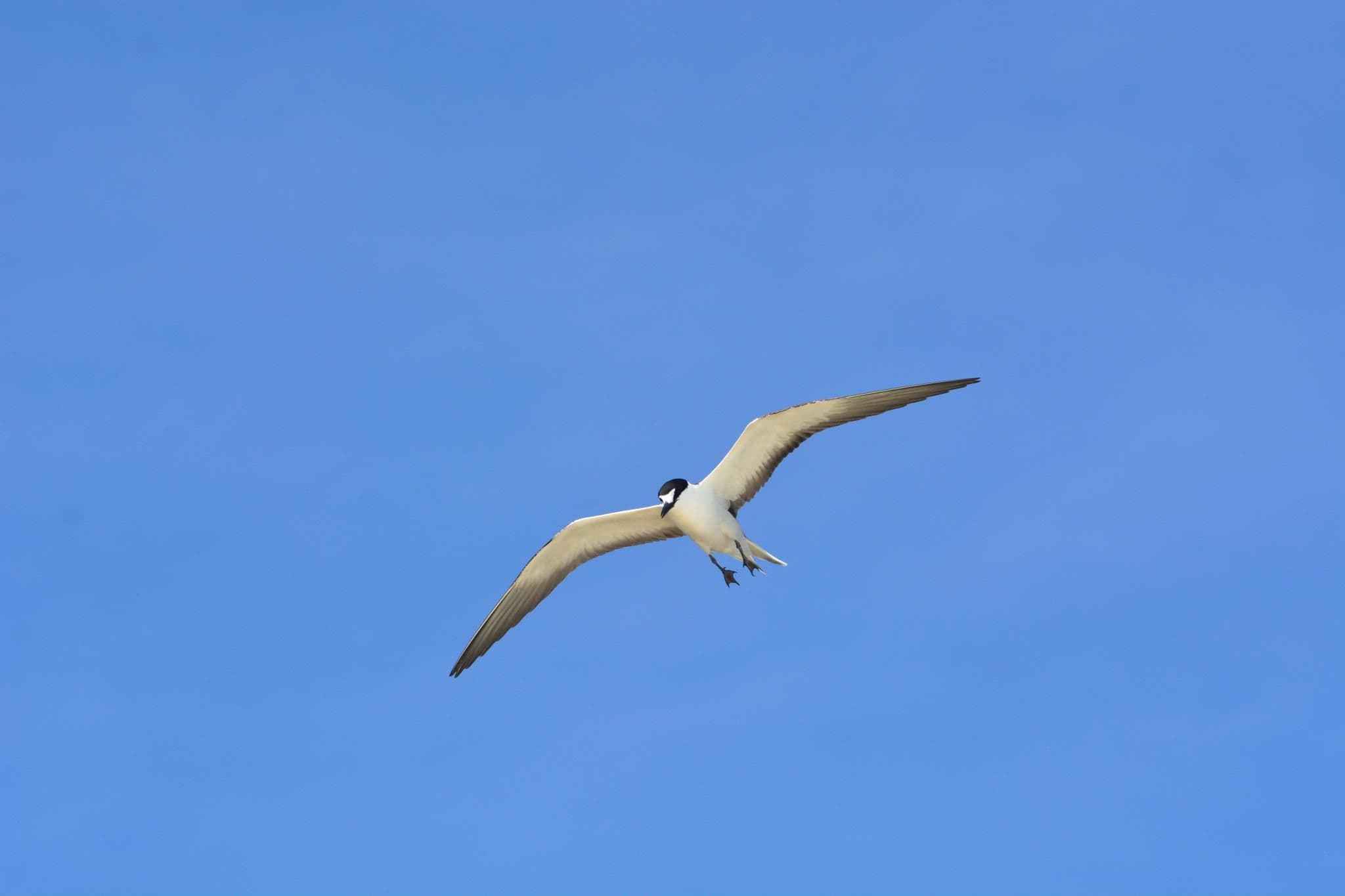
Dark above and white underneath, the sooty tern has a broad white forehead, a dark line through each eye and a deeply forked tail. Its wingspan is roughly 86–94 cm.
This tern feeds on small fish, crustaceans and cephalopods taken at the surface rather than by diving underwater. It travels hundreds of kilometres to feed; the guide reports journeys beyond 300 km and occurrence as far as 1,100 km from land. These are open-ocean capabilities, not a measured foraging radius for Tetiaroa’s colony.
It comes ashore principally to breed, nesting in colonies that can include other seabird species.
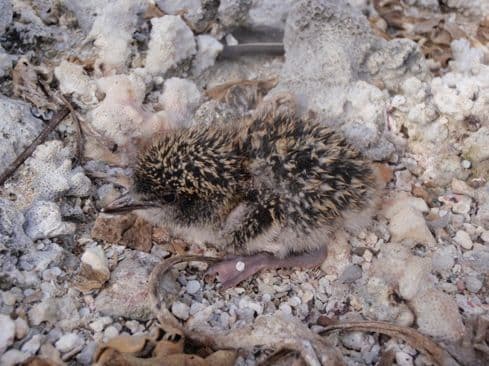
The guide records nesting on Tahuna Iti, with an estimated 20–50 pairs in 2014. Breeding may occur throughout the year. A single pale pink egg, spotted purple and brown and measuring about 5.3 × 3.6 cm, lies in a shallow scrape in the sand. Both parents incubate for around 29 days and tend the chick on the ground for about 70 days.