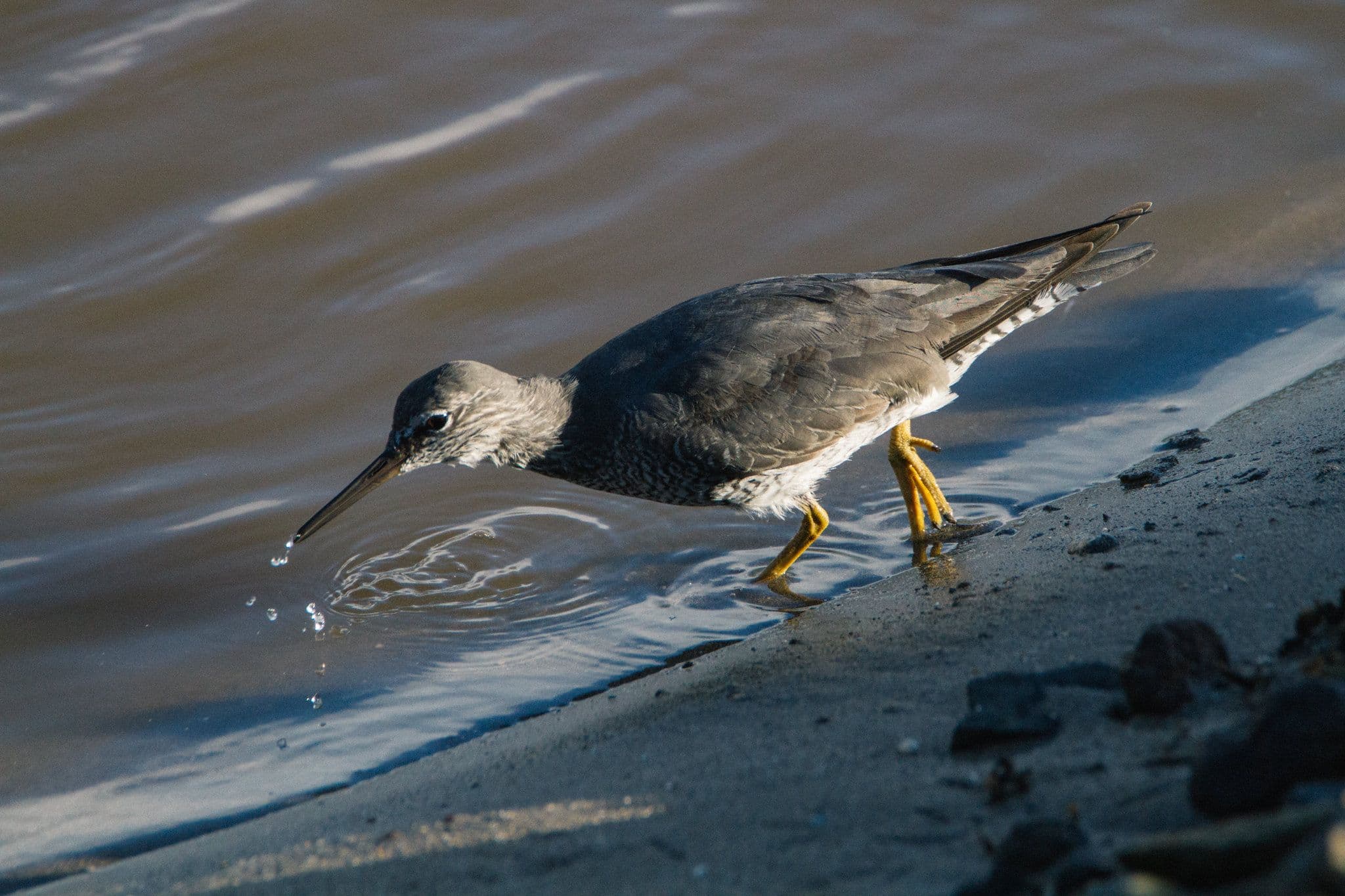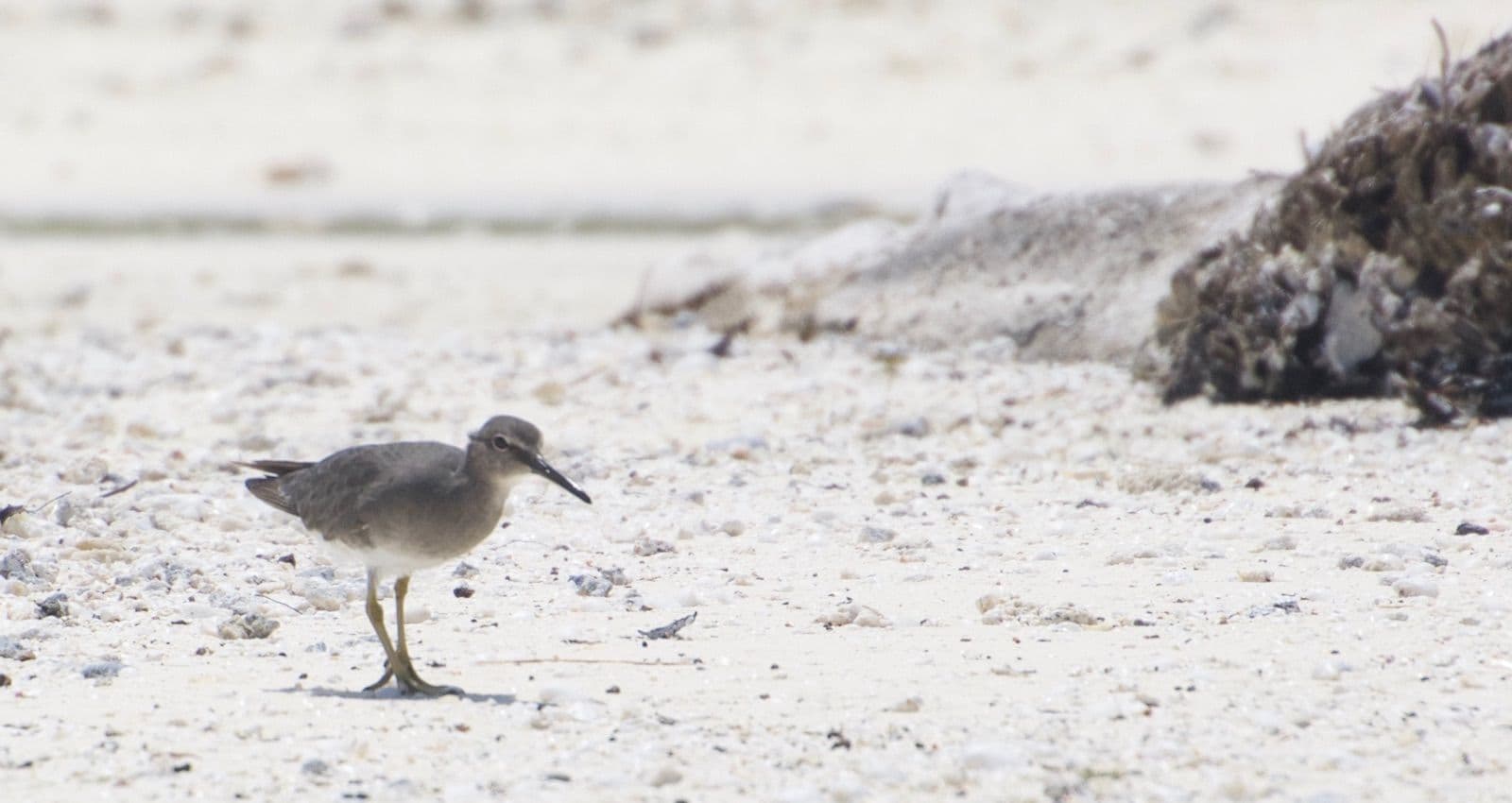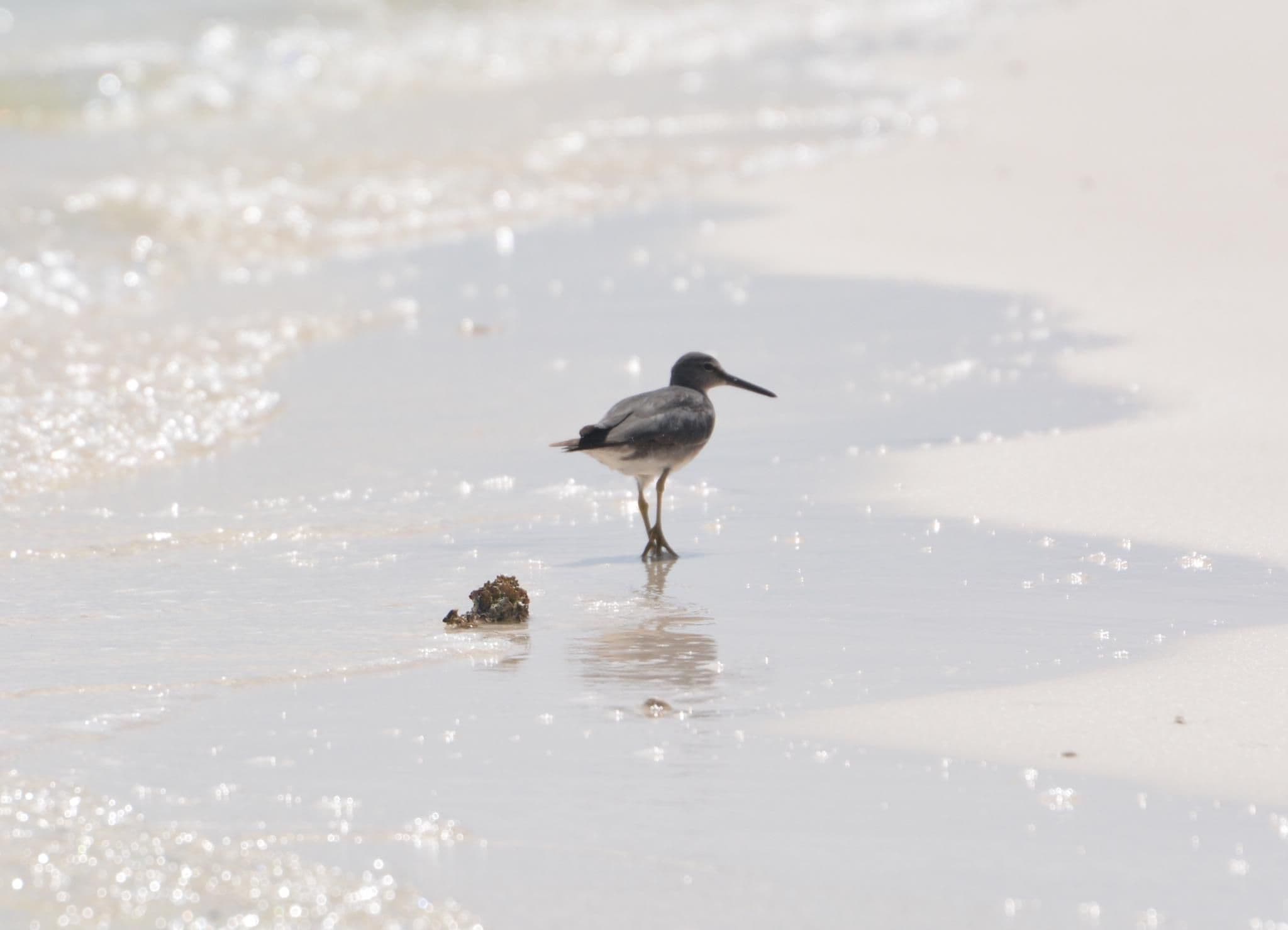
Adults travel north to breed, while some young birds stay behind. That is why a migratory shorebird can be seen on Tetiaroa in every season.
- Local names
- ‘Uriri
- Habitat
- Motu and shore
- Other names
- Chevalier errant
About this species
About 28 cm long, the wandering tattler is dark grey above with pale underparts outside the breeding season. Its breeding plumage has dark barring on the neck and breast, a pattern less often seen in French Polynesia.
It searches wet sand, beaches and reef flats for fish and invertebrates, including small crustaceans and molluscs. The guide also records occasional lizards and plant food.
Adults breed in the far north, including Alaska and eastern Siberia, during the northern summer. The guide places laying in June–July within a broader June–August breeding period. A ground nest usually contains four eggs, incubated for about 23–25 days. Both parents participate in incubation and chick care; females may leave before the young can fly, with males continuing to tend them.
Birds move to tropical Pacific shores as the northern winter approaches, generally remaining from September to May. Some juveniles stay through the next northern breeding season, explaining year-round observations on Tetiaroa.
In the Polynesian traditions cited by the guide, ‘Uriri embodied the gods of the water.