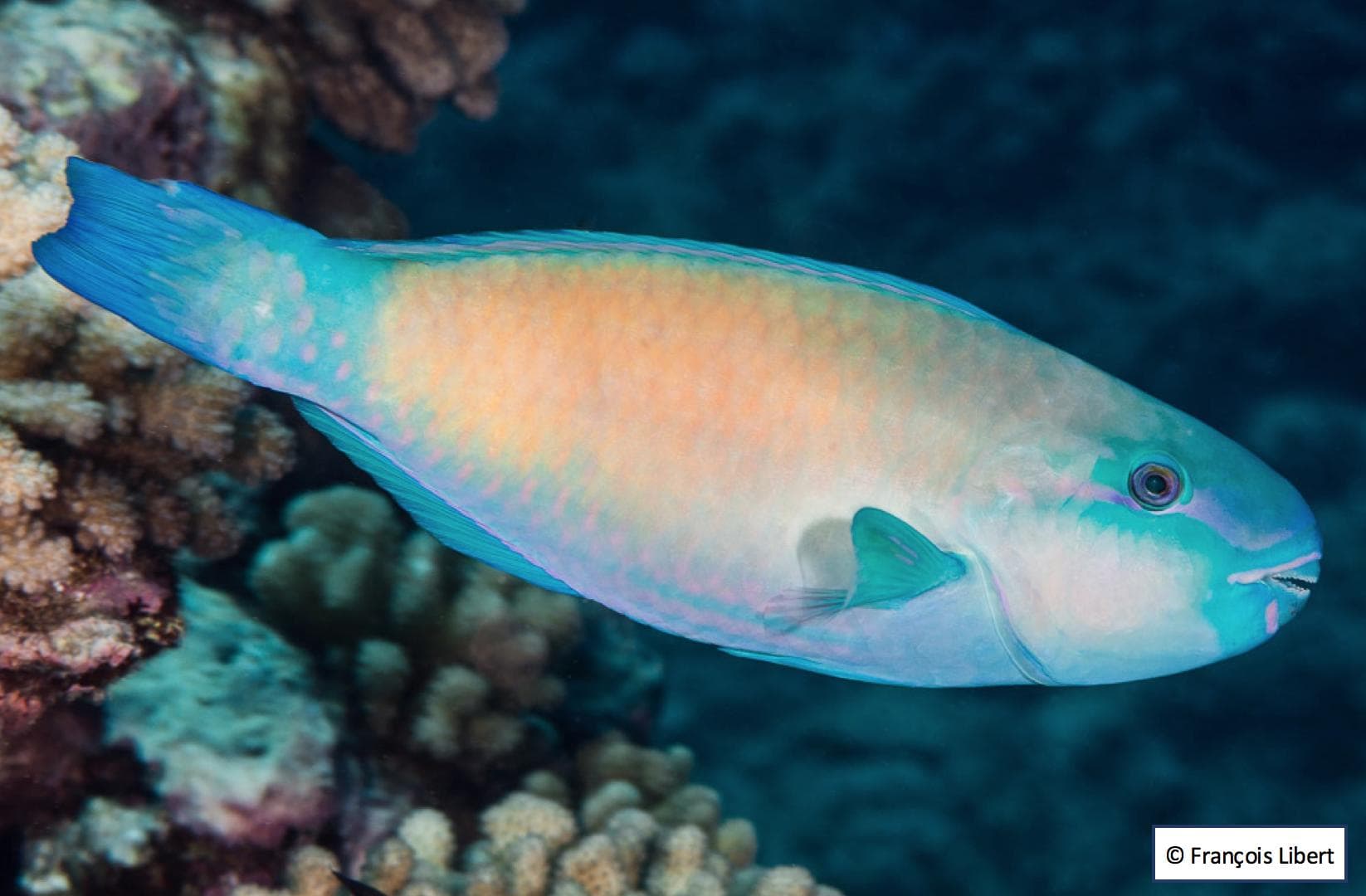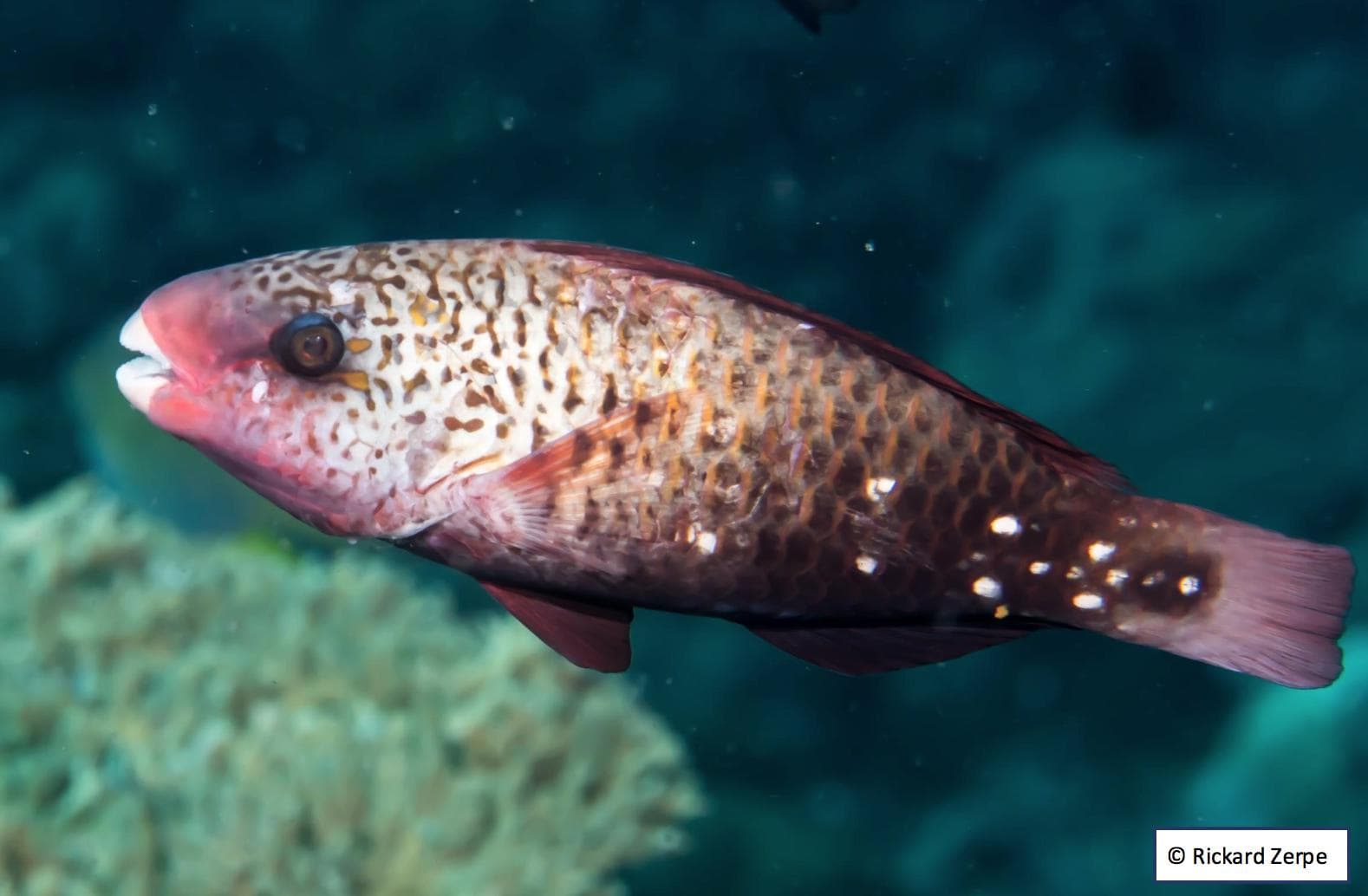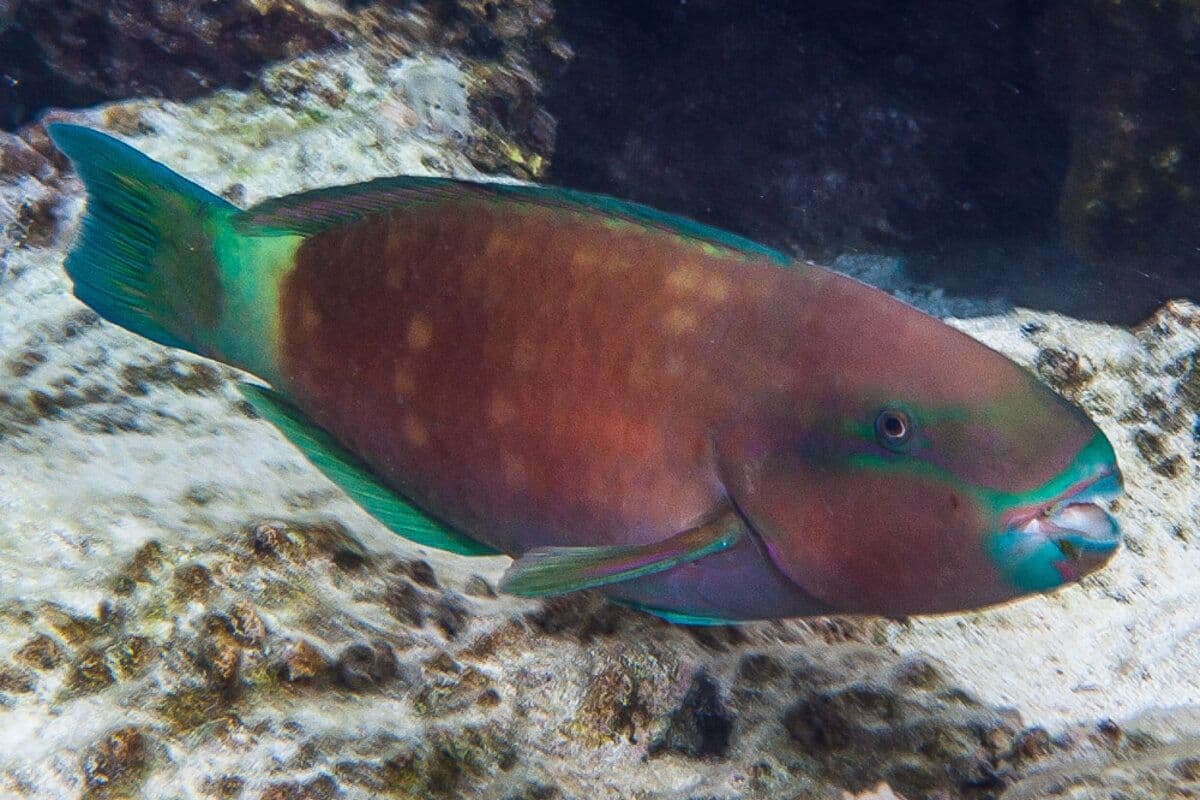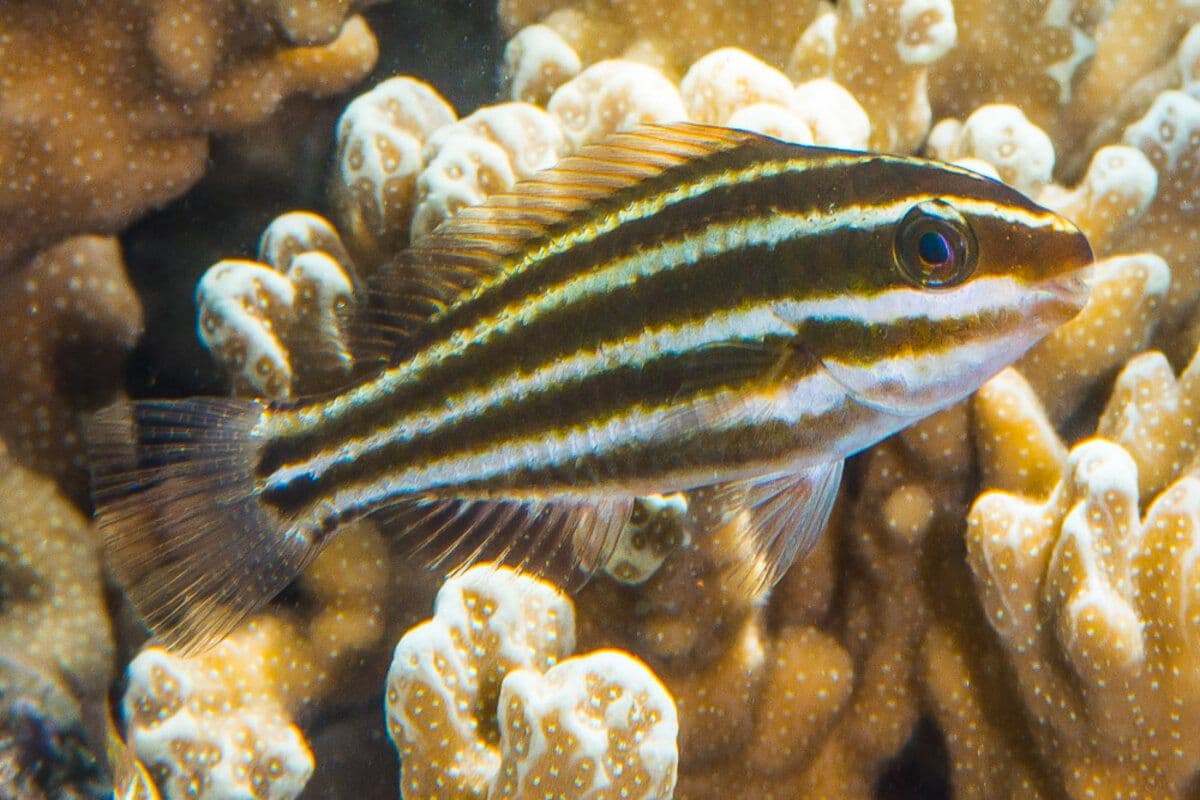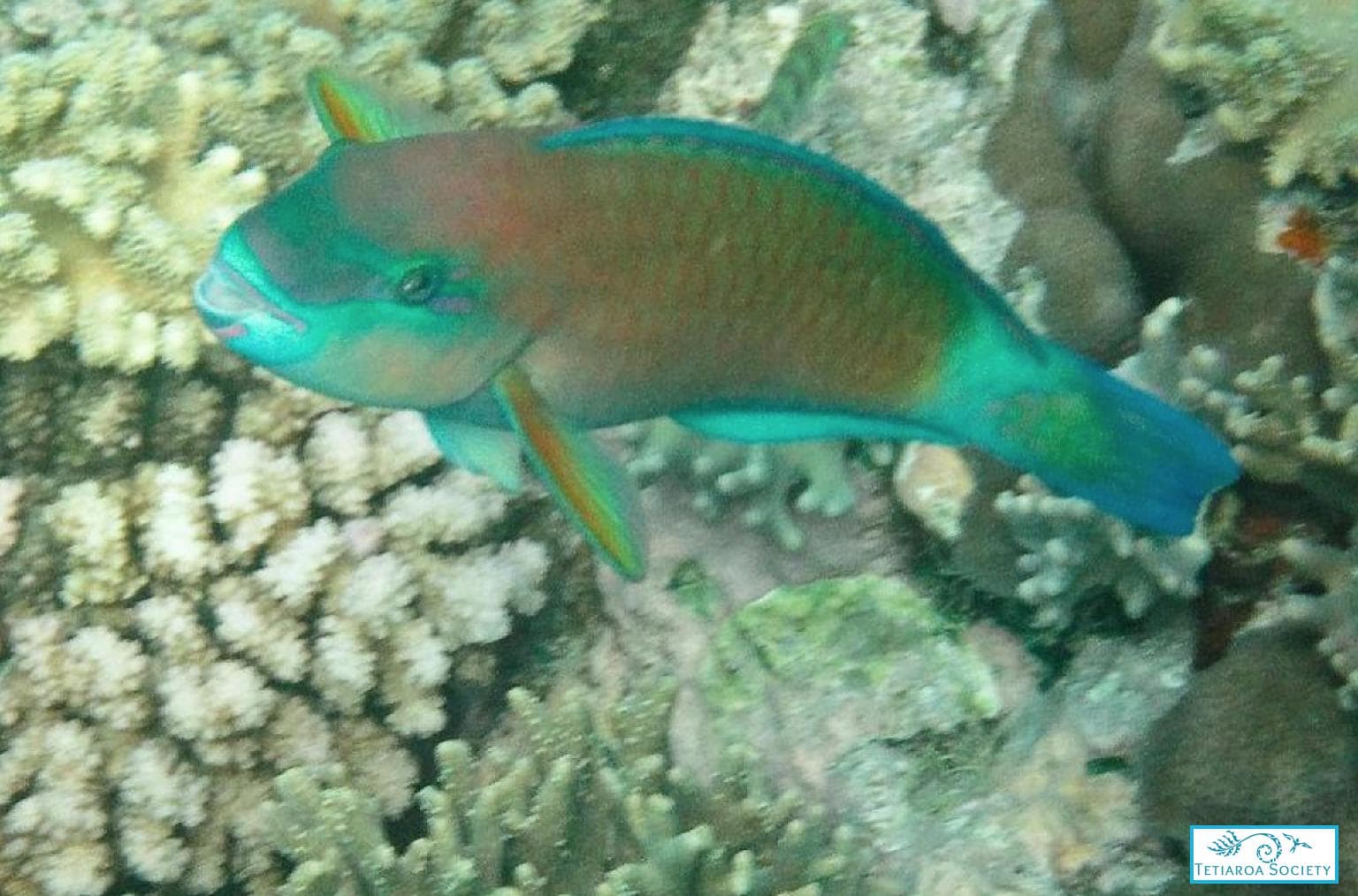
Every scrape of its beak changes the reef a little, loosening material that can become coral sand.
- Local names
- Pa'ati pa'a pa'a auahi
- Where it occurs
- The Pacific bullethead parrotfish is Chlorurus spilurus; older regional guides used Chlorurus sordidus for the wider species group.
- Habitat
- Lagoon and reef
- Other names
- Legacy source name: Chlorurus sordidus
About this species
The fused teeth of parrotfish form a strong beak. As they scrape algal growth from reef surfaces, they also swallow pieces of coral, contributing to reef erosion and sand production. The quantity varies with species, size and feeding conditions.
Colour changes with age and sexual phase. Many parrotfish can change from female to male as they grow, but the family’s life histories are more varied than a rule that every fish starts female. The seagrass-feeding Leptoscarus vaigiensis, for example, has separate sexes.
At night, these reef fish shelter in cavities; mucus cocoons are also described among parrotfish as part of their nighttime protection.
P. Bacchet, T. Zysman, Y. Lefèvre, 2010. Guide des poissons de Tahiti et ses îles. Au vent des îles. 3e édition.