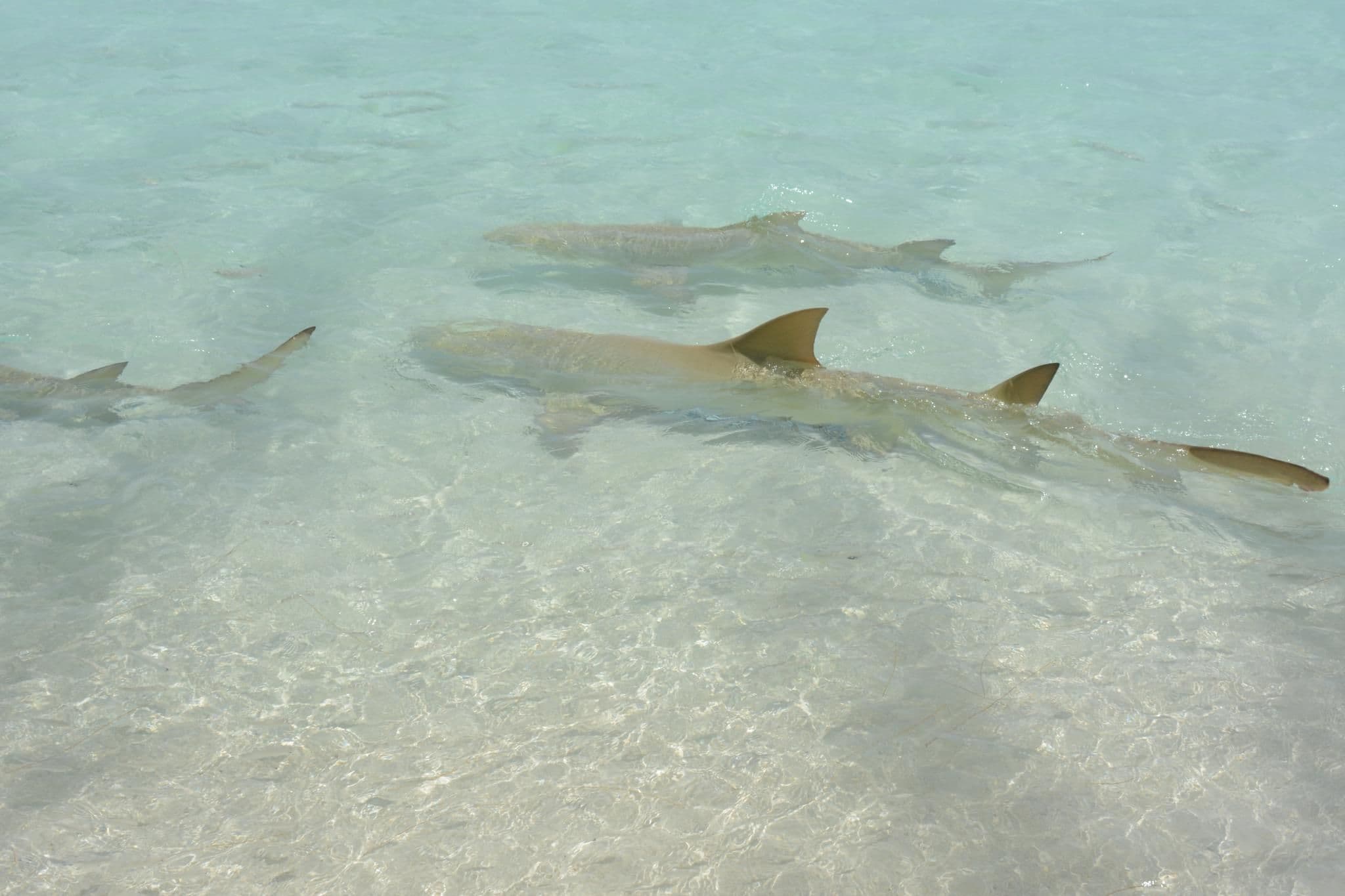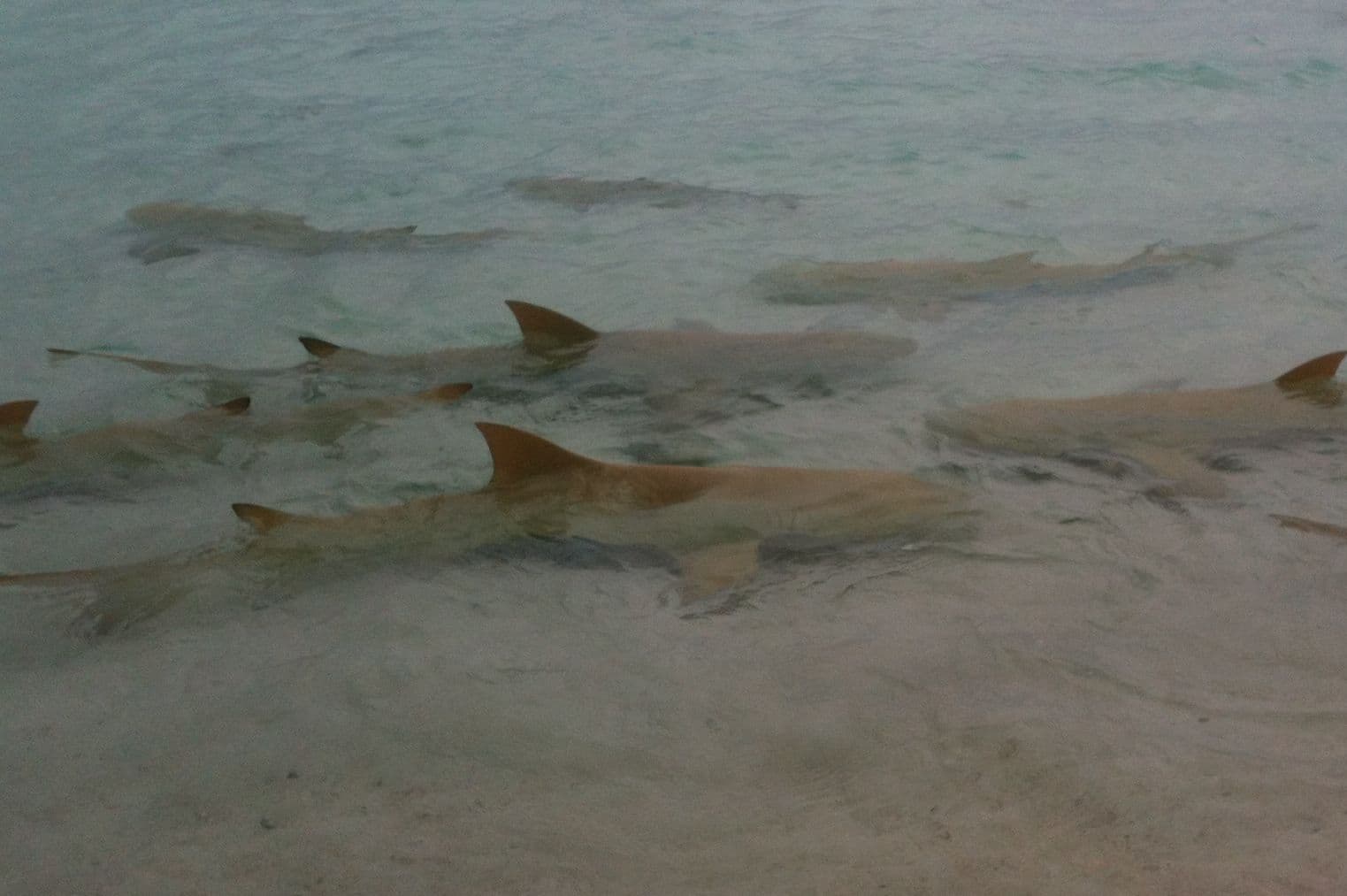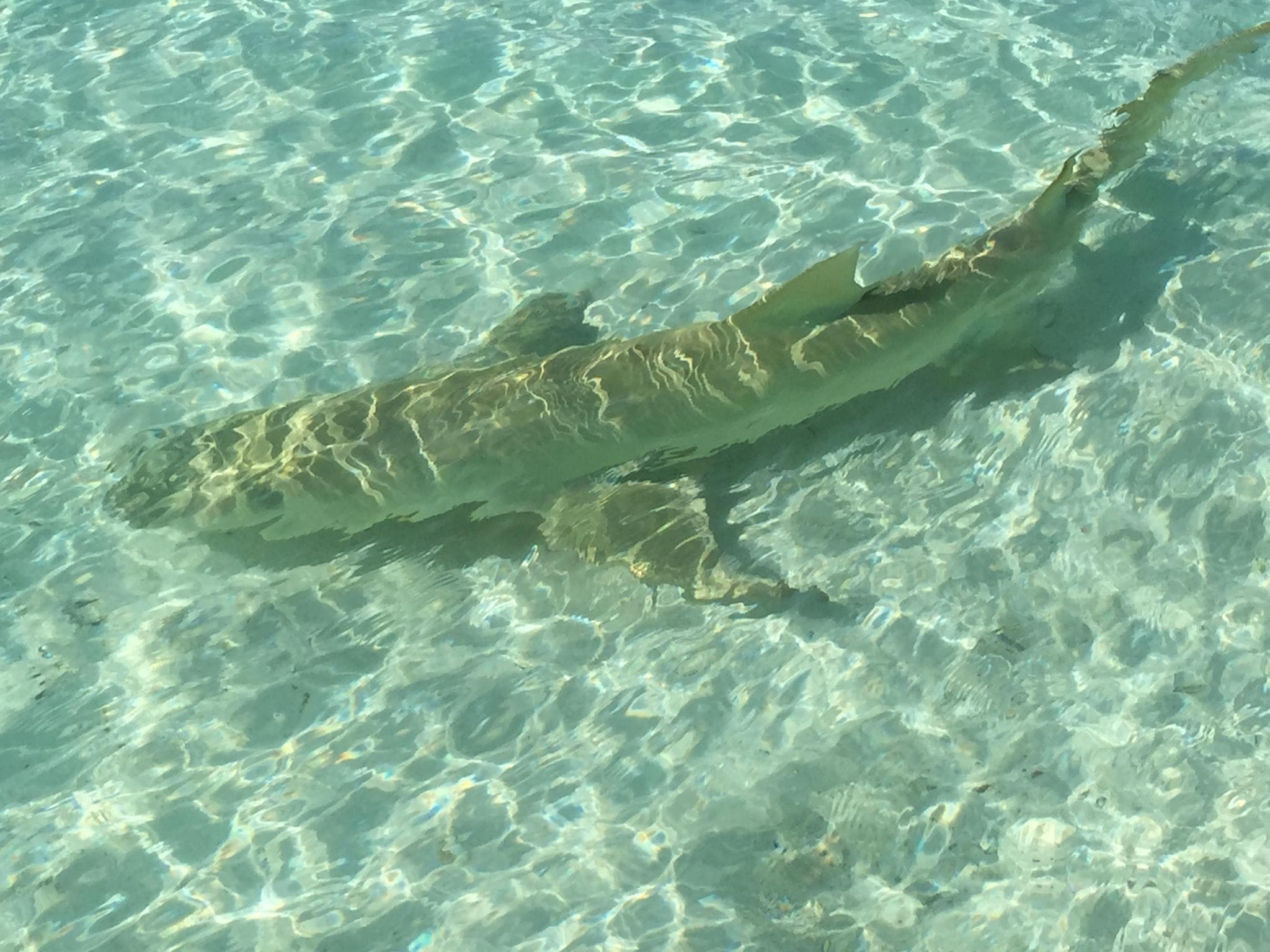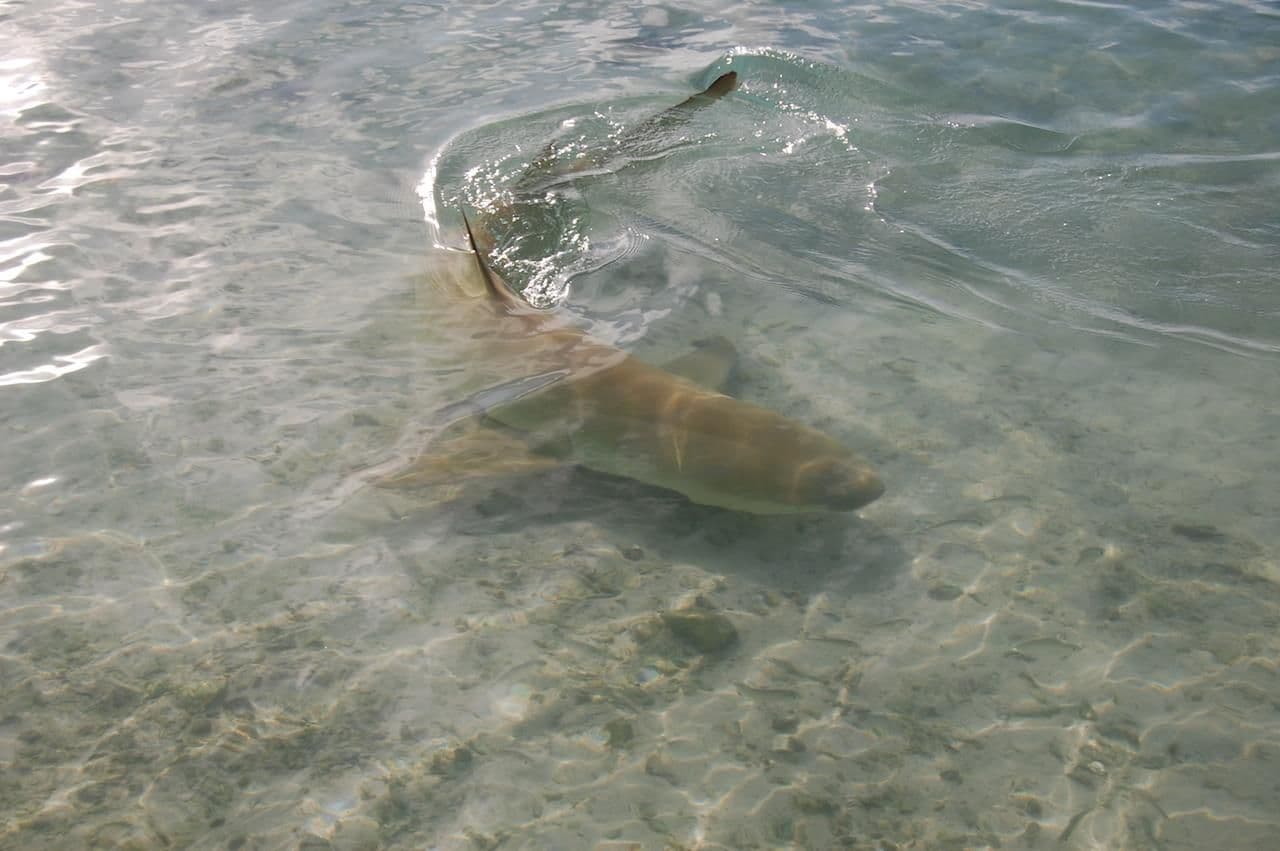
The lagoon is a nursery for young lemon sharks, while larger animals range into deeper water.
- Local names
- Ma’o arava
- Where it occurs
- Tetiaroa Society records lemon sharks in the lagoon, alongside the more common blacktip reef sharks.
About this species
The sicklefin lemon shark eats mainly fish living near the bottom, but also rays, smaller sharks, cephalopods and crustaceans. Opportunistic feeding can include scavenging, seabirds or injured fish near the surface. Its strong jaws carry numerous pointed teeth for gripping prey.
Across its tropical range, it occupies coral reefs, lagoons, estuaries and mangrove habitats, often in less than 30 m of water, with records to about 90 m. Mangrove habitats occur elsewhere in its range.
Sexual maturity is reached at roughly 2.2–2.4 m; the regional guide places this at around 15 years. Females give birth to live young after about 10–11 months, with one to fourteen pups in a litter. Birth sizes vary by population; measurements of roughly 45–80 cm have been reported.
At Tetiaroa, females use sheltered, food-rich lagoon areas, including hoa and sandbanks. Young sharks grow in these shallow waters before ranging farther out. Elsewhere, juveniles may spend their first years in coastal vegetation. Breeding seasons differ between regions.
- Guide des poissons de Tahiti et ses îles, Indo-Pacific Fish conference Tahiti 2017, P. Bachet, T. Zysman, Y. Lefèvre, Au vent des îles
- DORIS - Negaprion acutidens
- FishBase - Negaprion acutidens