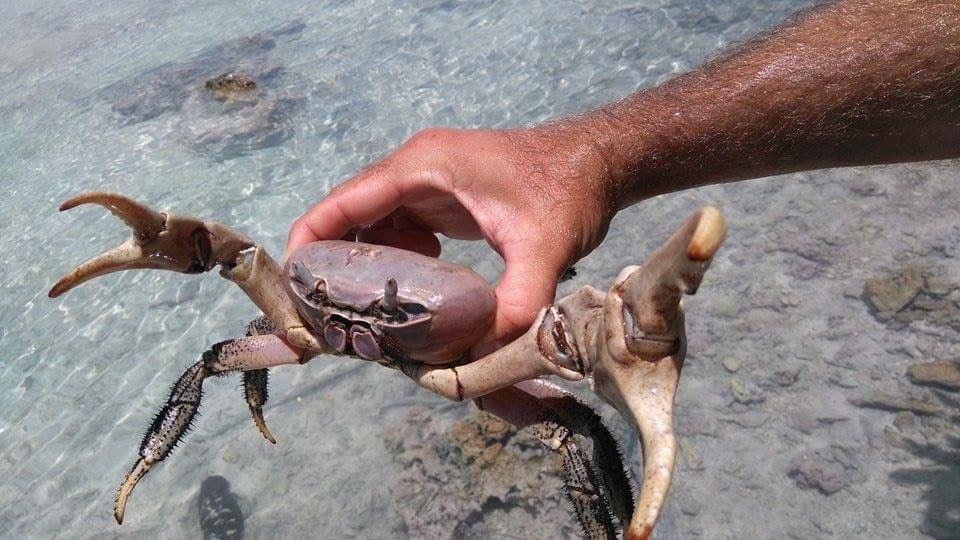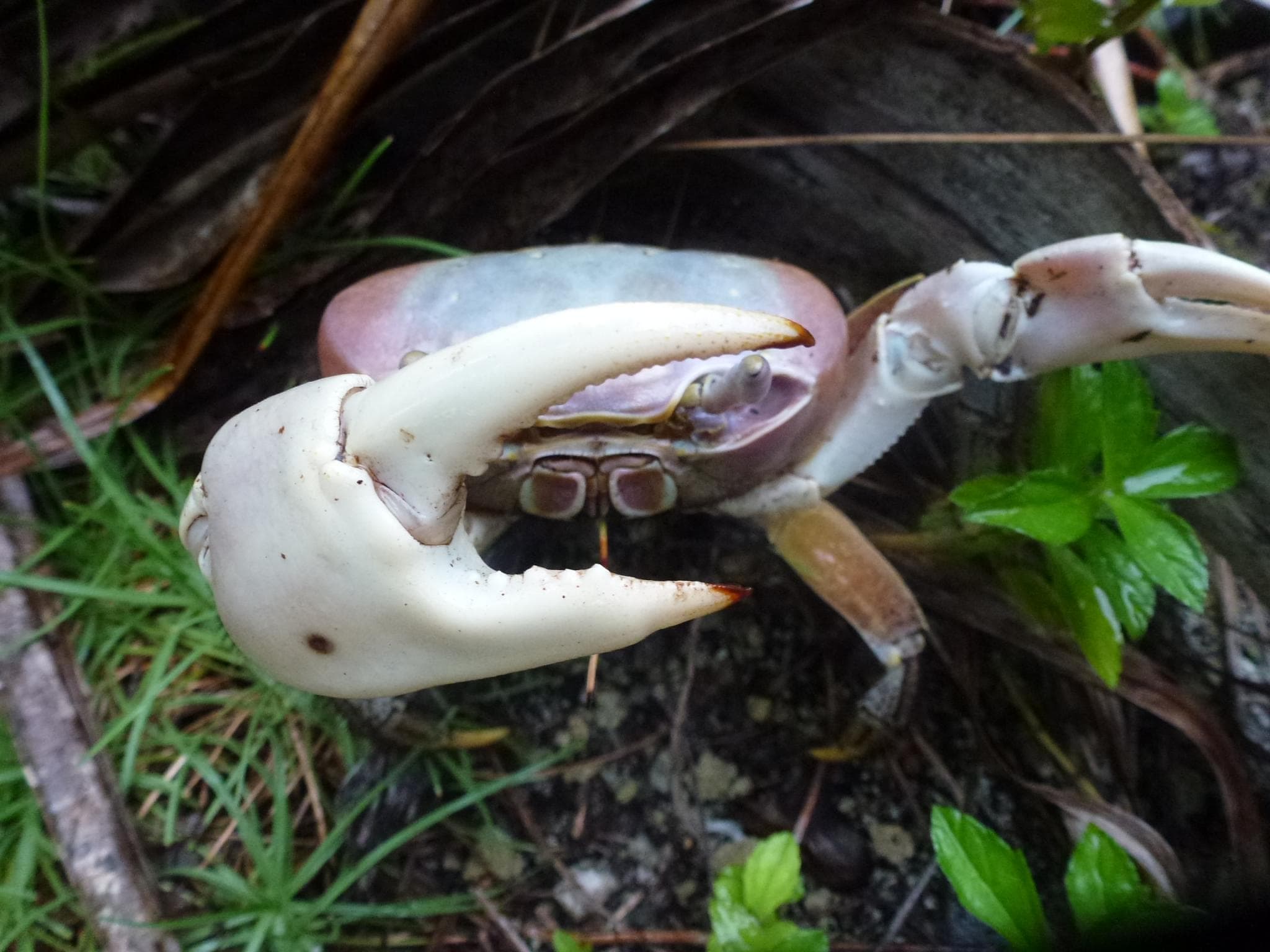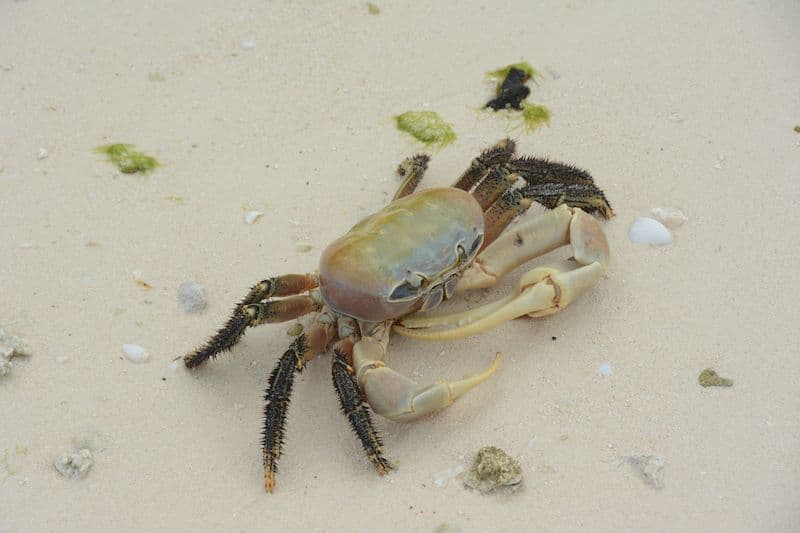
Tupa lives just beyond the reach of the tide, where a beach gives way to damp ground and pools. Its heart-shaped outline is written into the name Cardisoma.
- Local names
- tupa
- Habitat
- Motu and shore
About this species
This common Polynesian land crab is usually reddish brown with pale yellow claws. It occupies the upper shore, behind beaches and around water pockets. A branchiostegal lung supports life in air, while the animal remains dependent on moist conditions.
The guide describes a mainly plant-based diet with occasional animal food. Tupa is also a traditional food. The older account describes captured crabs being fed before consumption to alter an aftertaste associated with their diet.
The claws can differ markedly in size. A large claw is used in displays and contests, while smaller claws handle food. Opponents may face one another with raised, open claws, circle, strike or pinch.
Unequal claws do not make Cardisoma a fiddler crab: those crabs belong to a different family. In the Society’s cultural notes, tupa is also described as a manifestation of Polynesian gods.