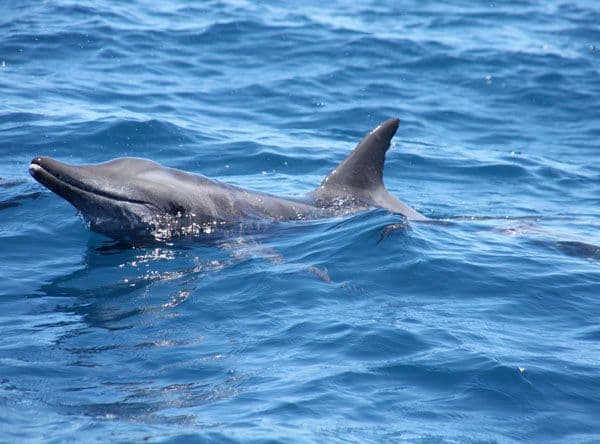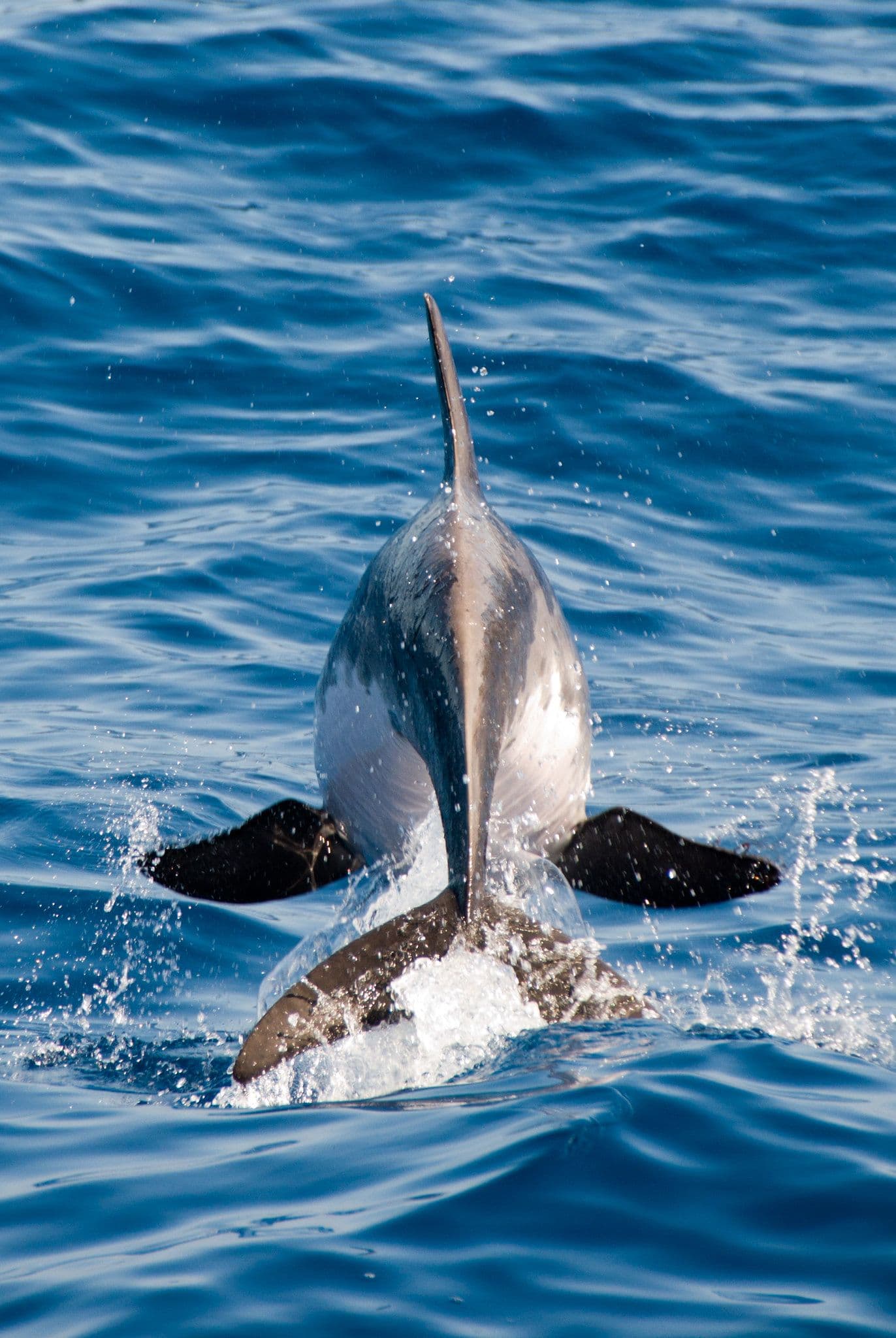
Some have learned to shake a fishing line until the bait comes free: this dolphin is an inventive hunter.
- Local names
- 'Ōu'a ; kōuka
- Habitat
- Motu and shoreOpen ocean
About this species
The guide records rough-toothed dolphins throughout the year in the Society and Tuamotu islands. Genetic research has found differentiation among island-associated communities; that does not establish a separate, genetically isolated population at every island.
They eat a wide range of fish and cephalopods. Their strong, rough-surfaced teeth are suited to handling substantial prey, including large fish. Algae have also been found in stomachs of stranded animals, although that observation alone does not establish regular feeding on plants.
Some individuals described in the guide learned to shake fishing lines and release bait without taking the hook, bringing them into competition with long-line fishers.
Rough-toothed dolphins are social. The guide describes groups of 10–50 and encounters with melon-headed whales, bottlenose dolphins, common dolphins and humpback whales. These are reported associations, not evidence that all such groups occur around Tetiaroa.