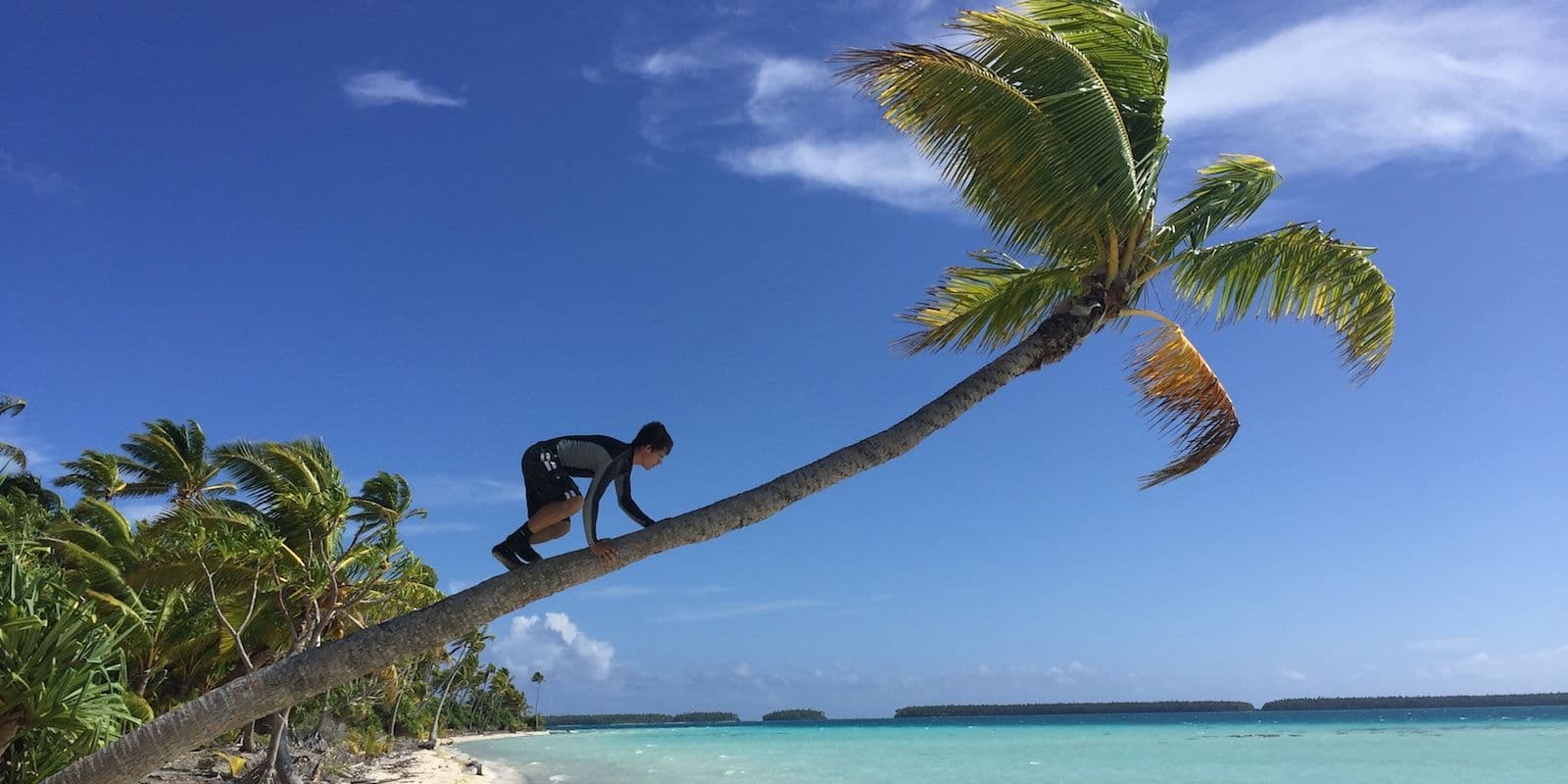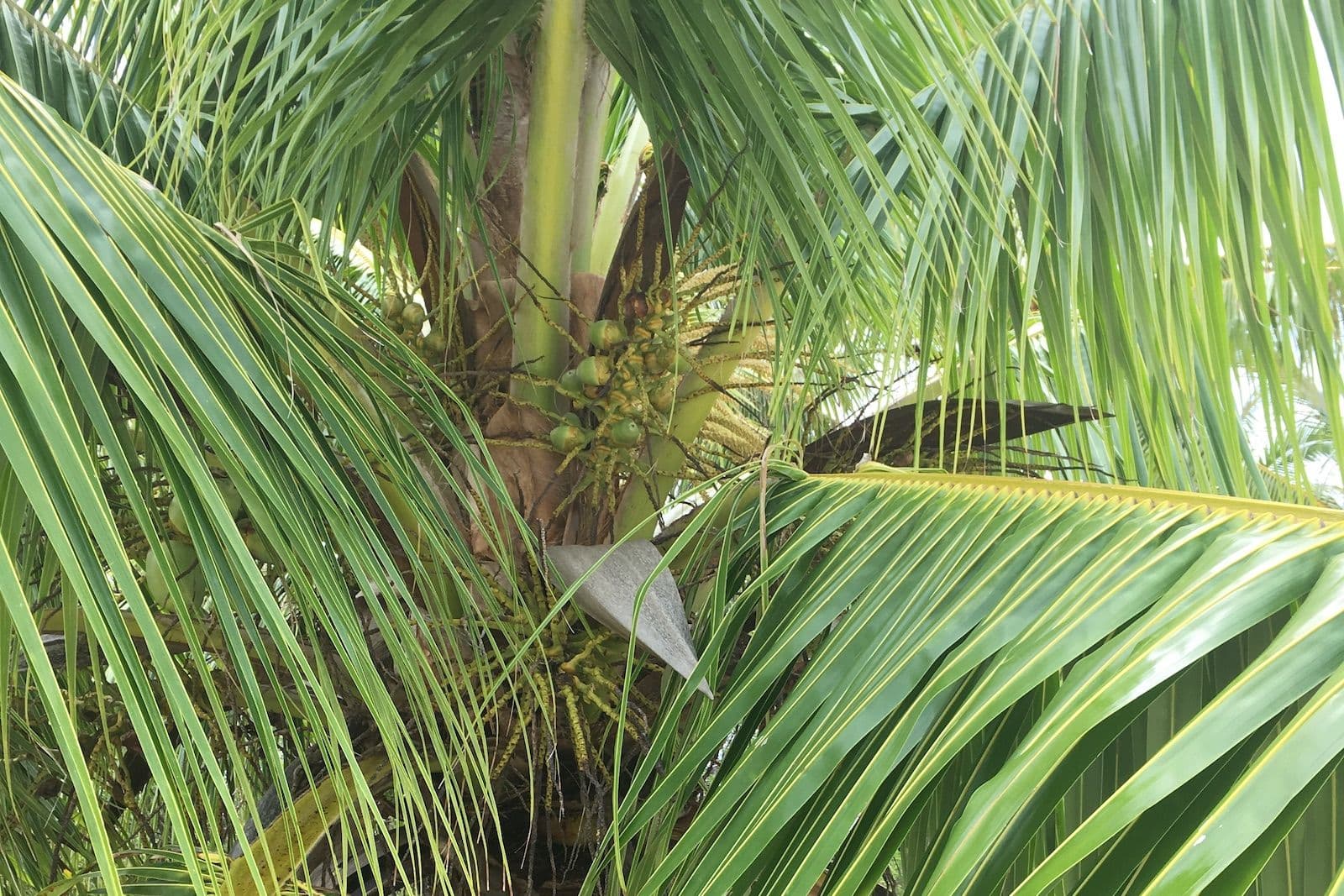
A coconut palm can supply a roof, a meal, a rope, and a bowl. On Tetiaroa, its abundance also records the history of copra cultivation.
- Local names
- Ha’ari (Society Islands, Tuamotu Islands, Austral Islands), Niu (Society Islands, Tuamotu Islands), 'Ehi (Marquesas Islands)
- Habitat
- Motu and shore
- Family
- Arecaceae
- Biogeographical status
- Polynesian introduction (legacy inventory)
- Life form
- Palm
- Abundance
- Very abundant
- Ecosystem
- Mixed forest, lagoon-side beach and shallow channels (hoa)
About this species
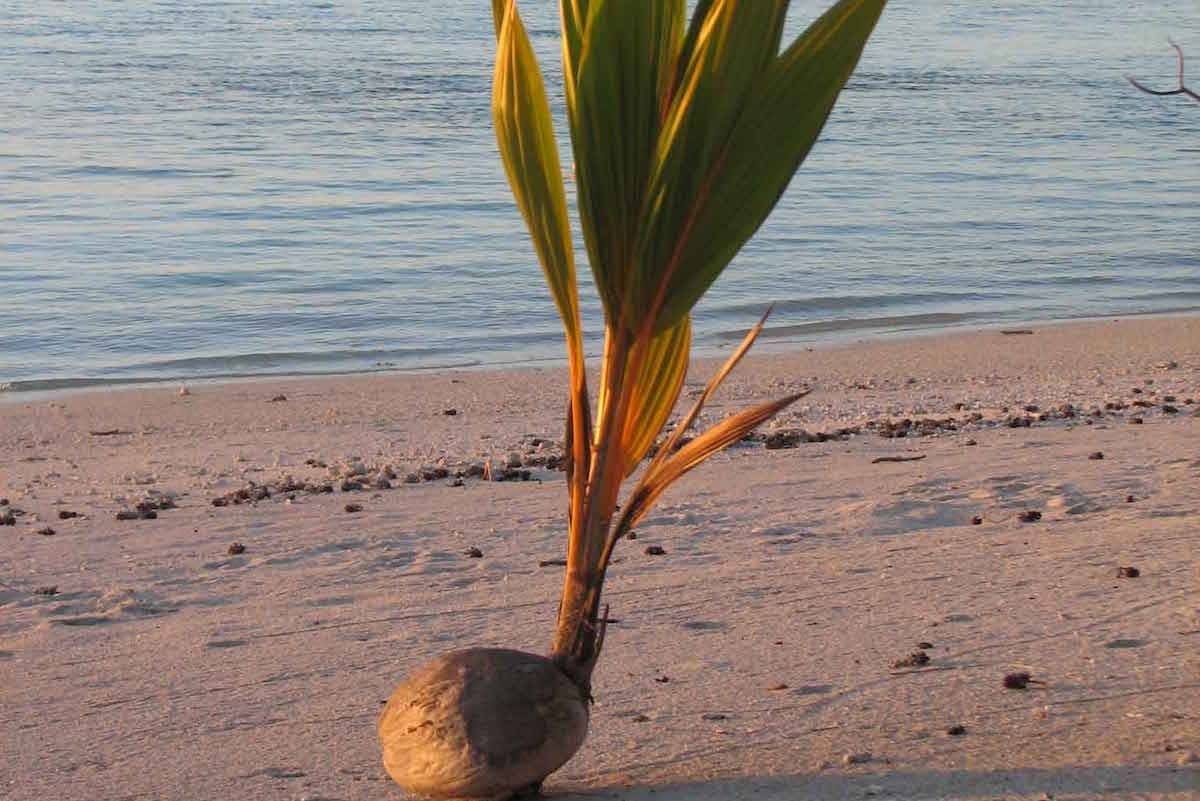
The guide traces coconut palms in French Polynesia to the first Polynesian migrations. Their waterproof, floating fruits and tolerance of poor soils helped them spread. On Tetiaroa, much of their abundance reflects planting for copra production in the early twentieth century.
The trunk supplies timber for buildings, furniture, canoes, and paddles. Fronds, called ni‘au, are woven into roofs, baskets, bags, and mats. Shells become bowls, dishes, and jewellery; husk fibre supplies cordage. Roots (‘a‘a) and bark occur in traditional medicinal preparations, including accounts of root preparations taken internally for sprains and fractures.
Coconut water is drunk and has also served as a carrier for other ingredients in traditional medicine. Mature flesh is grated and pressed for coconut milk, used in food including fermented preparations such as mitihue and taioro. The flesh supplies fats and minerals including potassium, iron, magnesium, phosphorus, zinc, and copper. The older guide also lists vitamins A and E among its constituents.
Coconut oil is a base for perfumed monoï; the two names do not describe the same unperfumed product. The guide records skin moisturising, hair conditioning, and historical uses for dandruff, stretch marks, intimate care, wounds, pimples, and purging. Those are records of cosmetic and traditional practice. Oil has also been used as fuel, for lighting, and in embalming.
Polynesian names distinguish stages of the nut. In legends, its three openings are read as the eyes and mouth of a human head.
Butaud J.F., Gérard J., Guibal D., 2011. Guide des arbres de Polynésie française, bois et utilisations. 2e édition, Au vent des îles.
Barrau, 1971. Useful plants of Tahiti. Société des Océanistes, Paris, Dossier 8.
Jost X., Ansel J.L., Raharivelomanana P., Butaud J.F., 2016. Ethnobotanical survey of cosmetic plants used in Marquesas Islands (French Polynesia). Journal of Ethnobiology and Ethnomedicine.