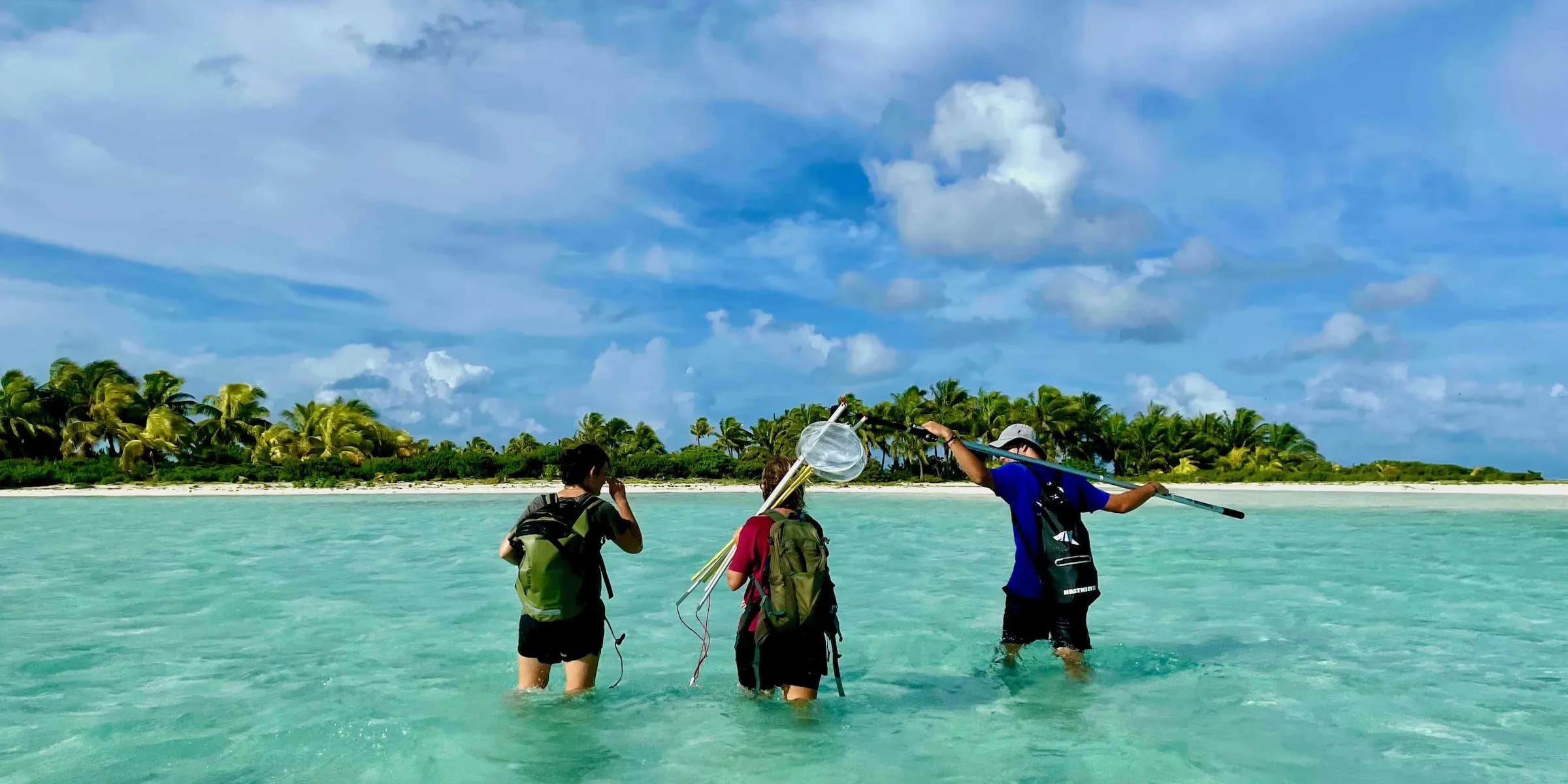
How does an atoll recover?
We study the whole system, remove what strains it, and then come back to see what changed.
Help the island recover.One atoll, one connected system.
Everything is connected here, so every conservation decision begins with evidence—from the reef and lagoon to birds, turtles, and motu.
We observe, act, measure, and adapt, because each result should shape what happens next.
Tetiaroa Atoll Restoration Program
Help the island recover.
A claw in the leaf litter. A wing above the sand. Remove the rats and yellow crazy ants, and discover how many lives share this small stretch of island.
TARP
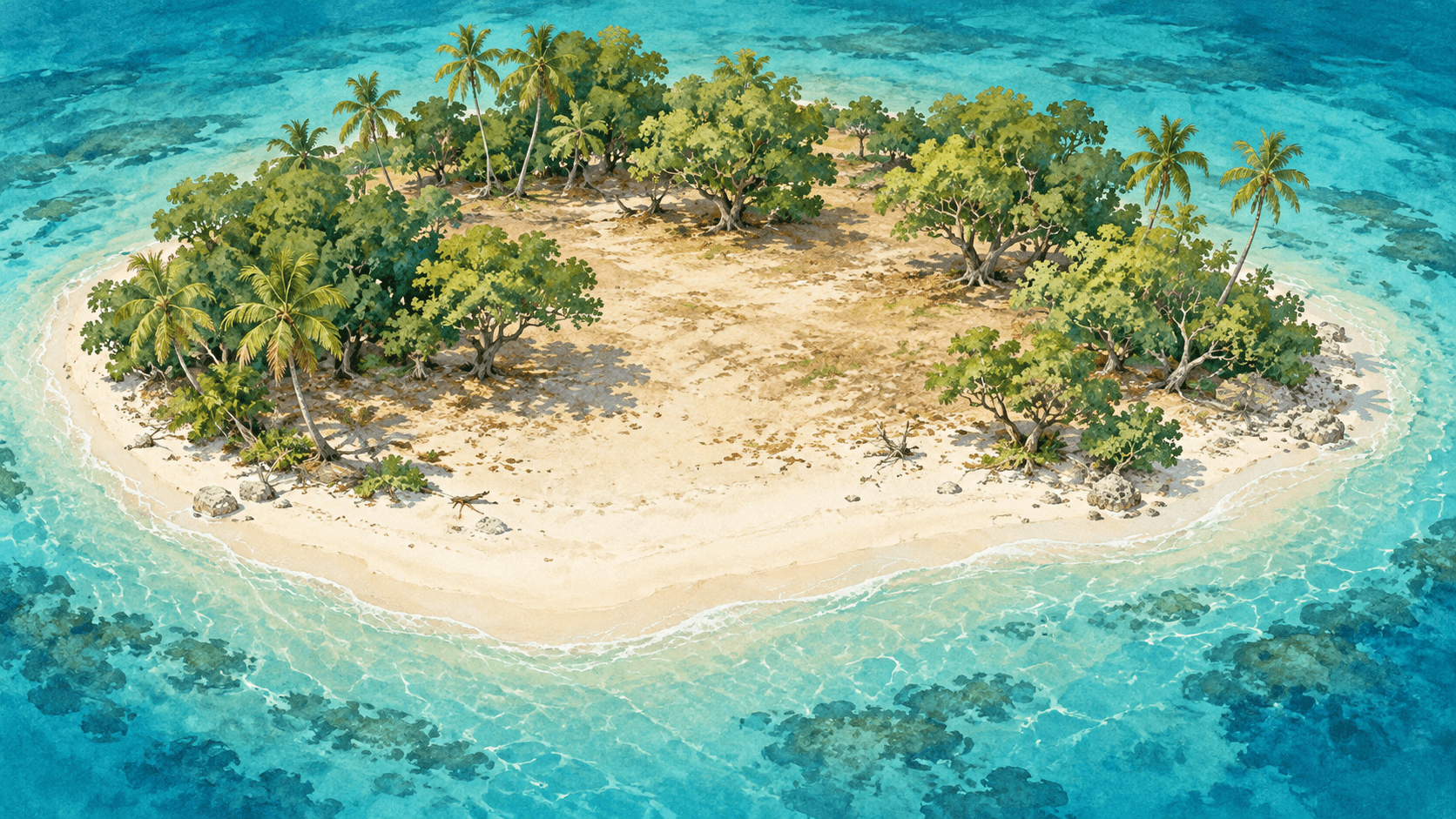
Finding our way to the motu…
Drag to look around the island.
Recovery rarely announces itself.
Maybe it is a new nest, a native plant still standing, or a healthier reef—and so we keep watching.
The work keeps moving
See the work now.
Current projects, reports, and field notes.
Keep exploring
Explore the other two pillars.
Back the work
Keep the work moving.
Your gift keeps field teams equipped, lessons running, and long-term monitoring in motion.