Bailey Field Station
On Motu Onetahi, the station is the base for your fieldwork on Tetiaroa.
- LEED Platinum buildings
- Laboratories and accommodation on site
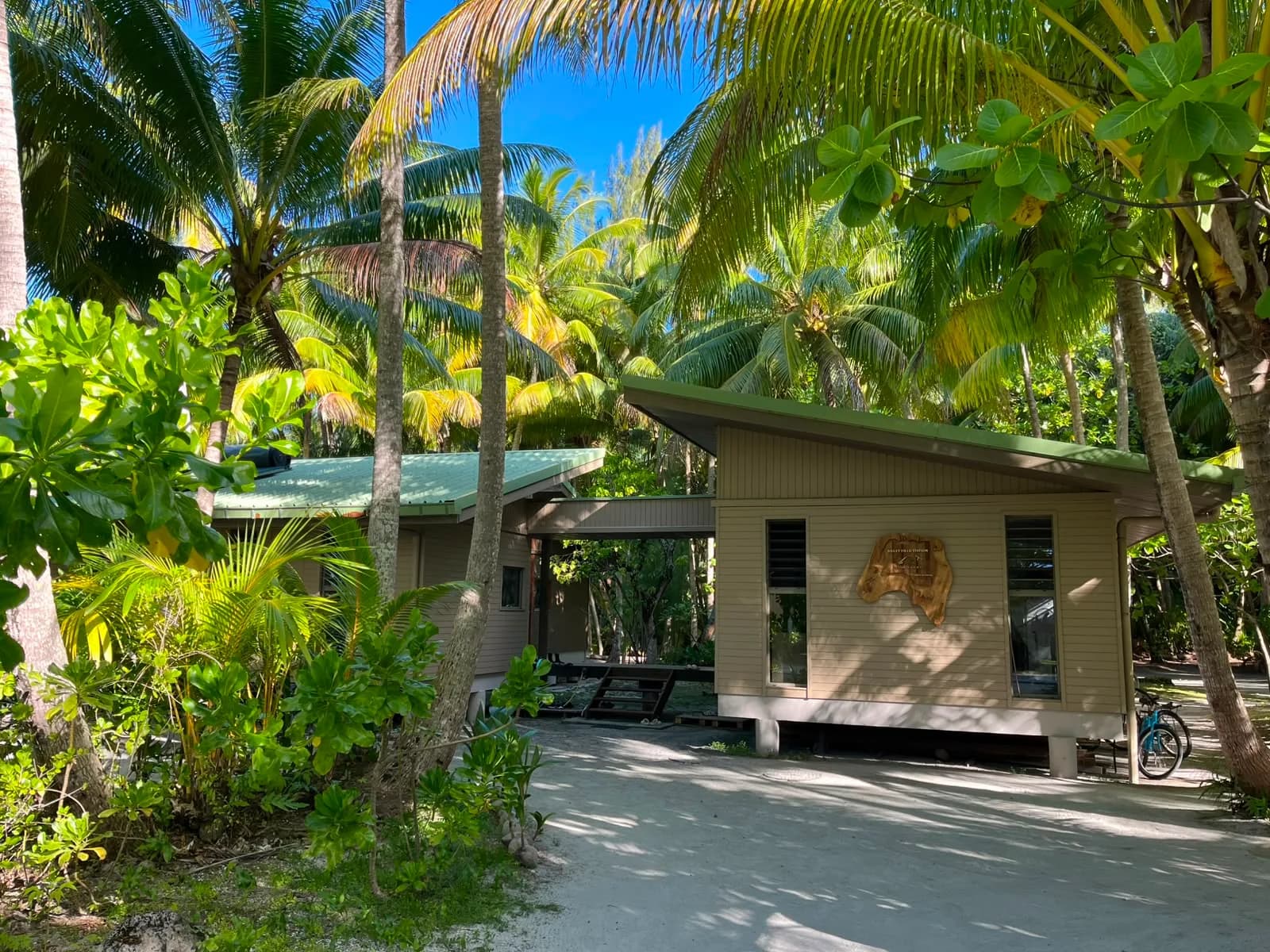
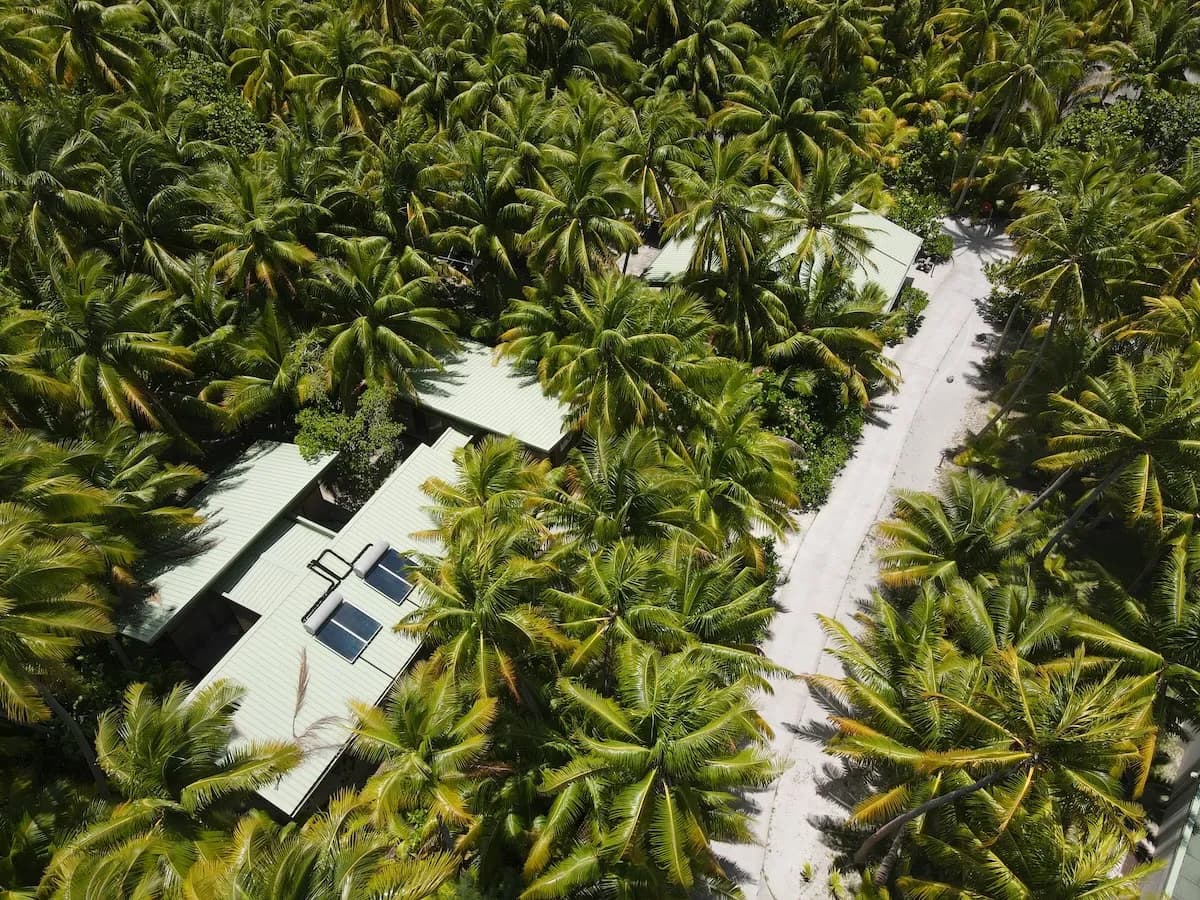
Field Station 01 / Motu Onetahi
Our eco-friendly lab surrounded by the nature it studies.
Marine biologists, ornithologists, entomologists, archaeologists and climate scientists apply for time at the Bailey Field Station every year, from institutions across the globe. Some stay a fortnight. Some come back season after season.
While they're here, researchers live inside the Onetahi community — eating at the staff cantina, riding the same bike paths, running the wet lab at odd hours. The reef, the forest, the brackish lakes and the marae are all minutes from the bench.
Projects can be scientific, cultural or educational. Applications are handled through RAMS, the system we share with the University of California Natural Reserve System, and the full process is set out further down this page.
The work
The station is a base, not a program. The projects running through it belong to visiting scientists, Tetiaroa Society staff, and students — but they cluster around the questions this atoll is unusually good at answering.
Coral condition, restoration trials, water chemistry, and the lagoon's response to heat. The reef starts a few metres past the beach, so a monitoring dive takes a morning.
Green turtle nesting is monitored with Te Mana o te Moana, and the station's seawater tables and aquaria take the animals that need care. The nesting motus and the lagoon nursery are both reachable by the Society's boat.
The Tetiaroa Atoll Restoration Project — rat and yellow crazy ant eradication, seabird colony monitoring with Te Manu, and holding back whatever arrives with the next hull. Most motus are now rat-free; the remaining few are still being worked.
The AeLIMIN+ programme, led by Institut Louis Malardé with Tetiaroa Society alongside, suppressing Aedes mosquitoes on Onetahi through sterile male releases. It needs a lab, rearing space, and somewhere to stage a release week after week.
Tetiaroa's marae and settlement sites are under strict protection and under continuing study. Cultural research is treated as research here, not as background.
Brackish lakes, groundwater, soils, and a direct deep ocean water line — the physical plumbing of an atoll, available for sampling on site.
University classes use the dry lab's teaching space and the atoll as their subject. Students arrive as students and leave having run something of their own.
The same transects, the same nests, and the same water, measured year after year. Slow change only shows up in a long record.
The building
Everything below is on site and shared. Diving equipment and boat time need to be booked before you arrive.
On Motu Onetahi, the station is the base for your fieldwork on Tetiaroa.
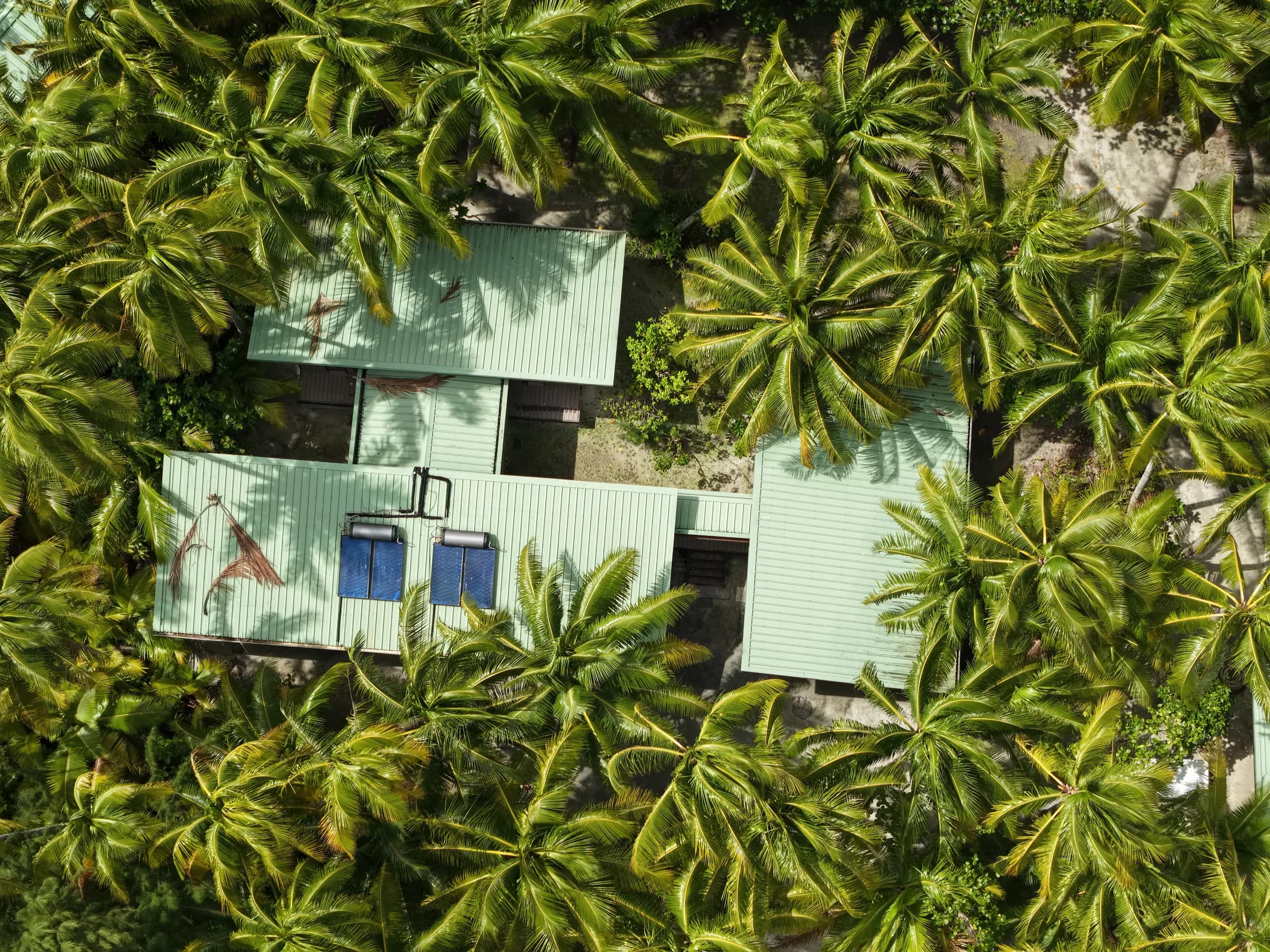
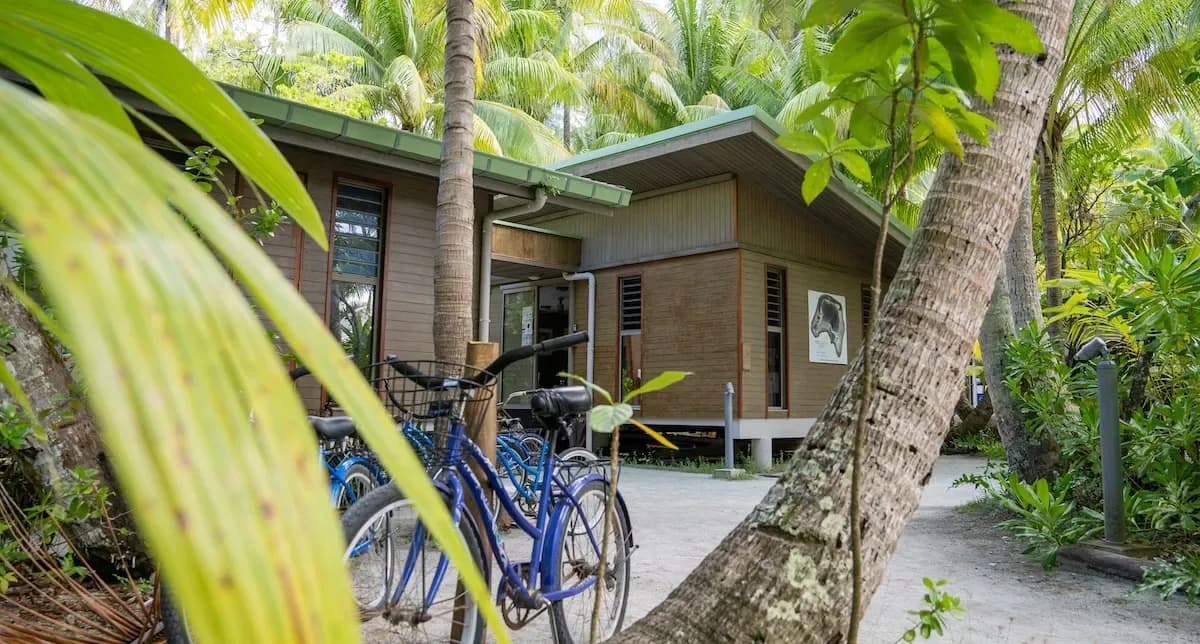
From your room to the lab, the station buildings are linked by covered walkways.
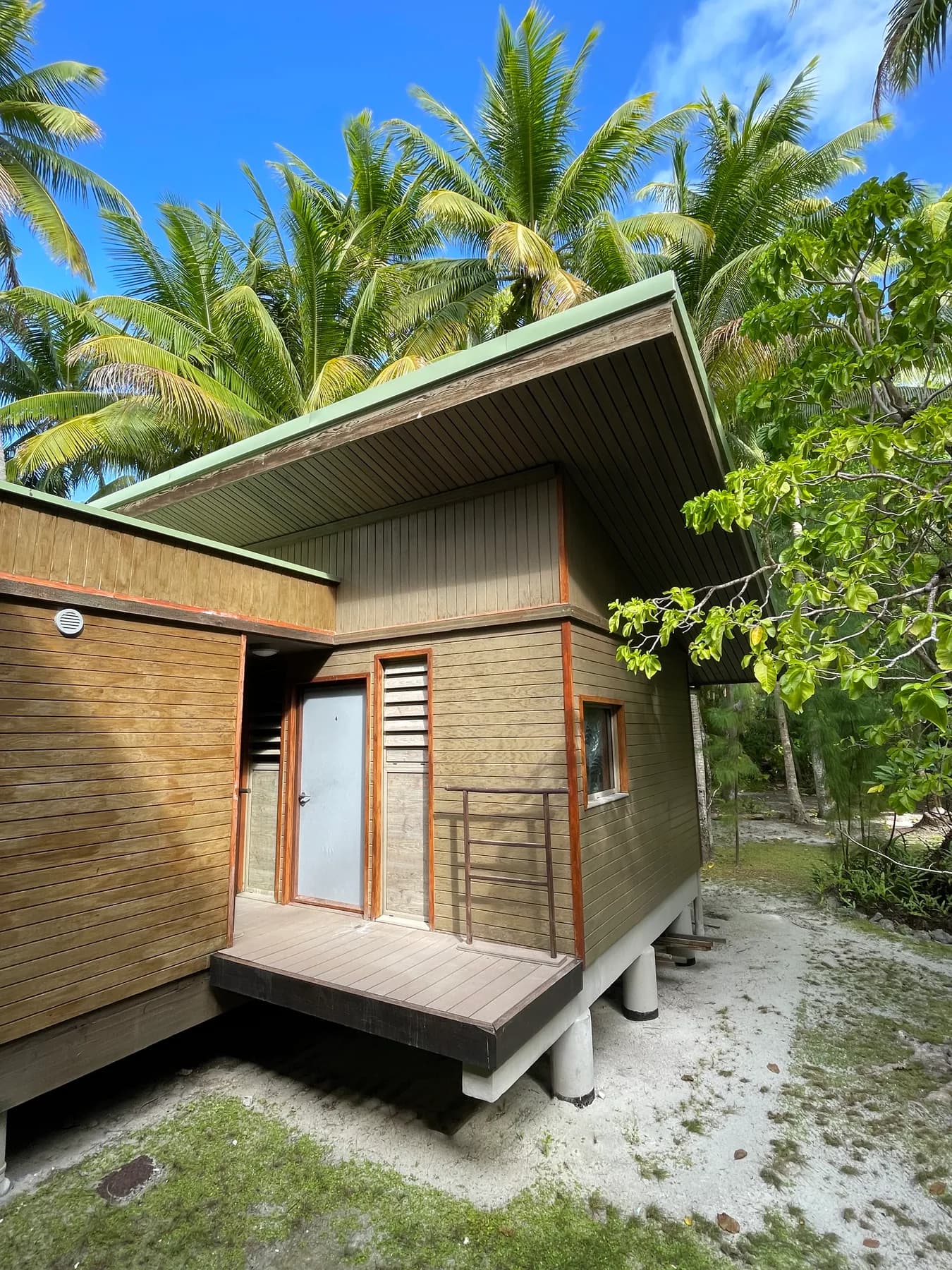
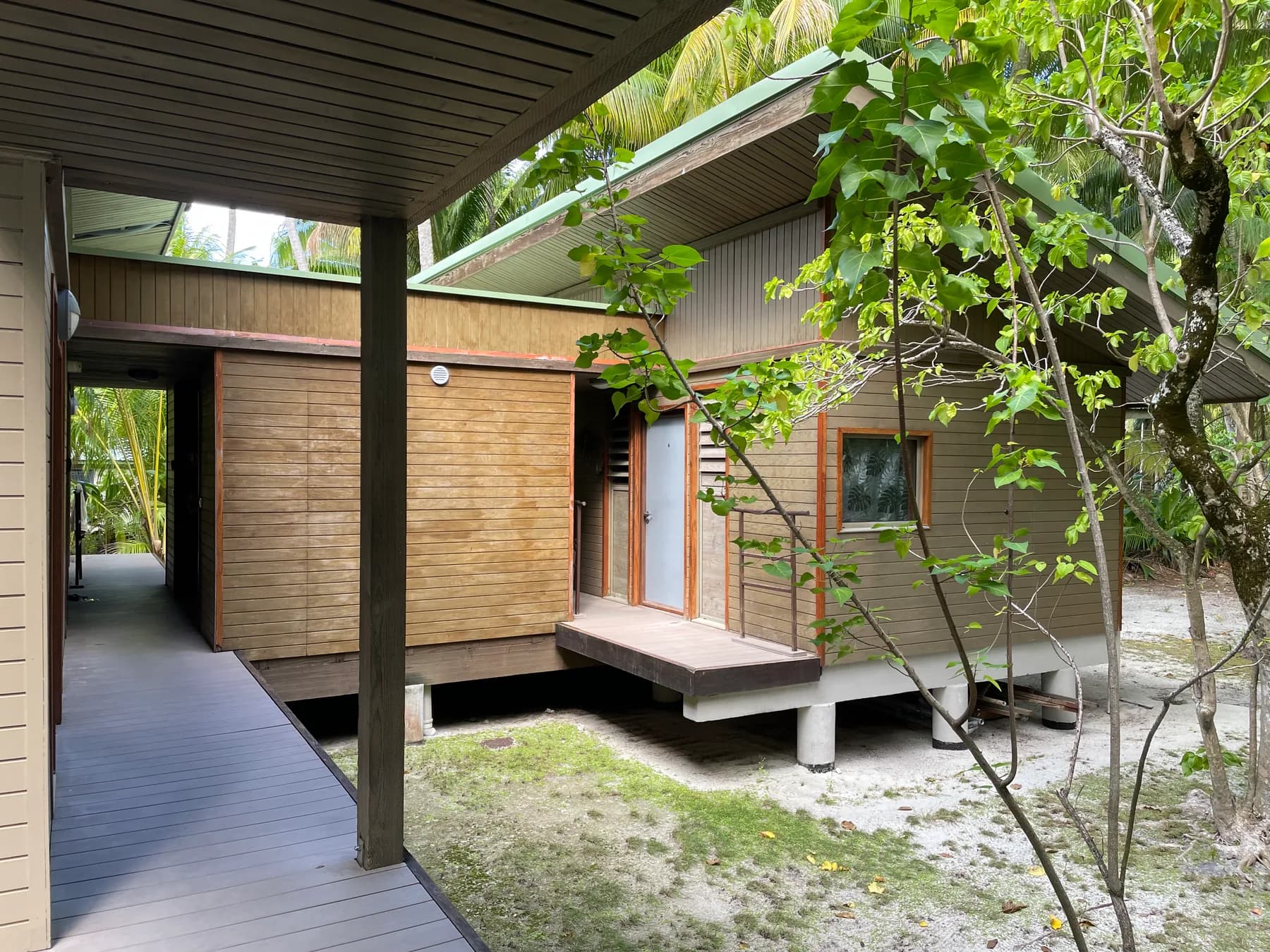
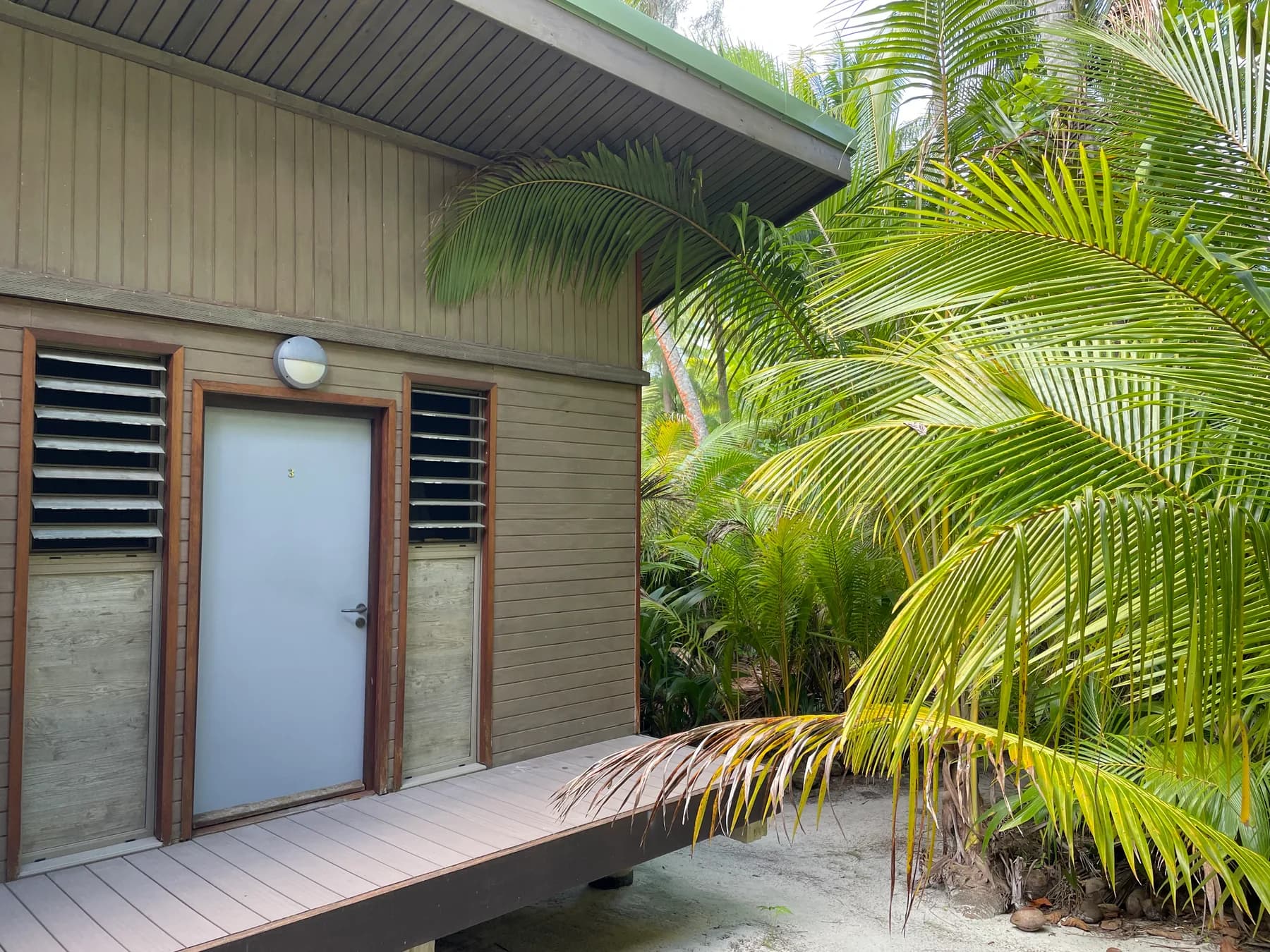
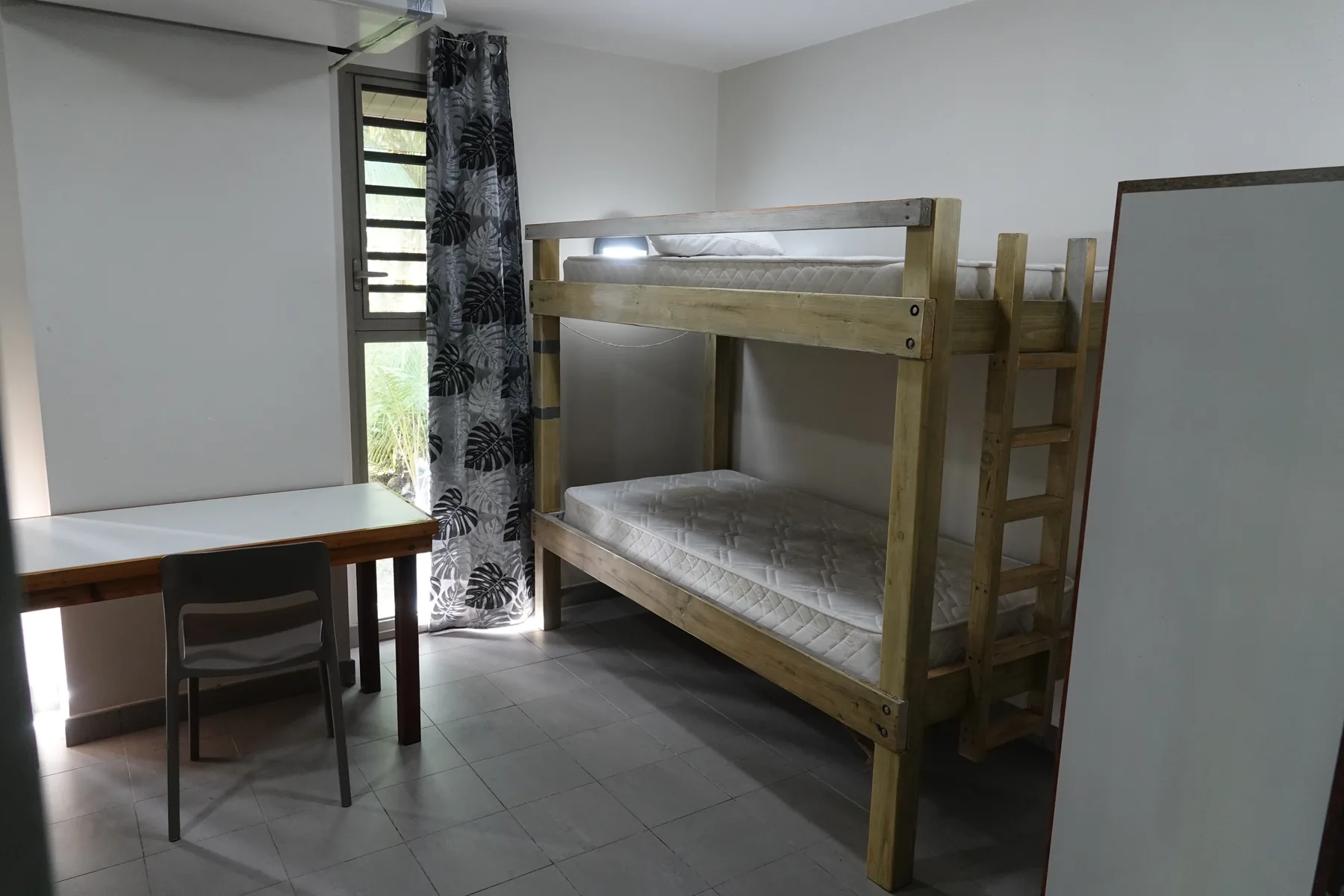
A comfortable place to come back to after a day in the field.
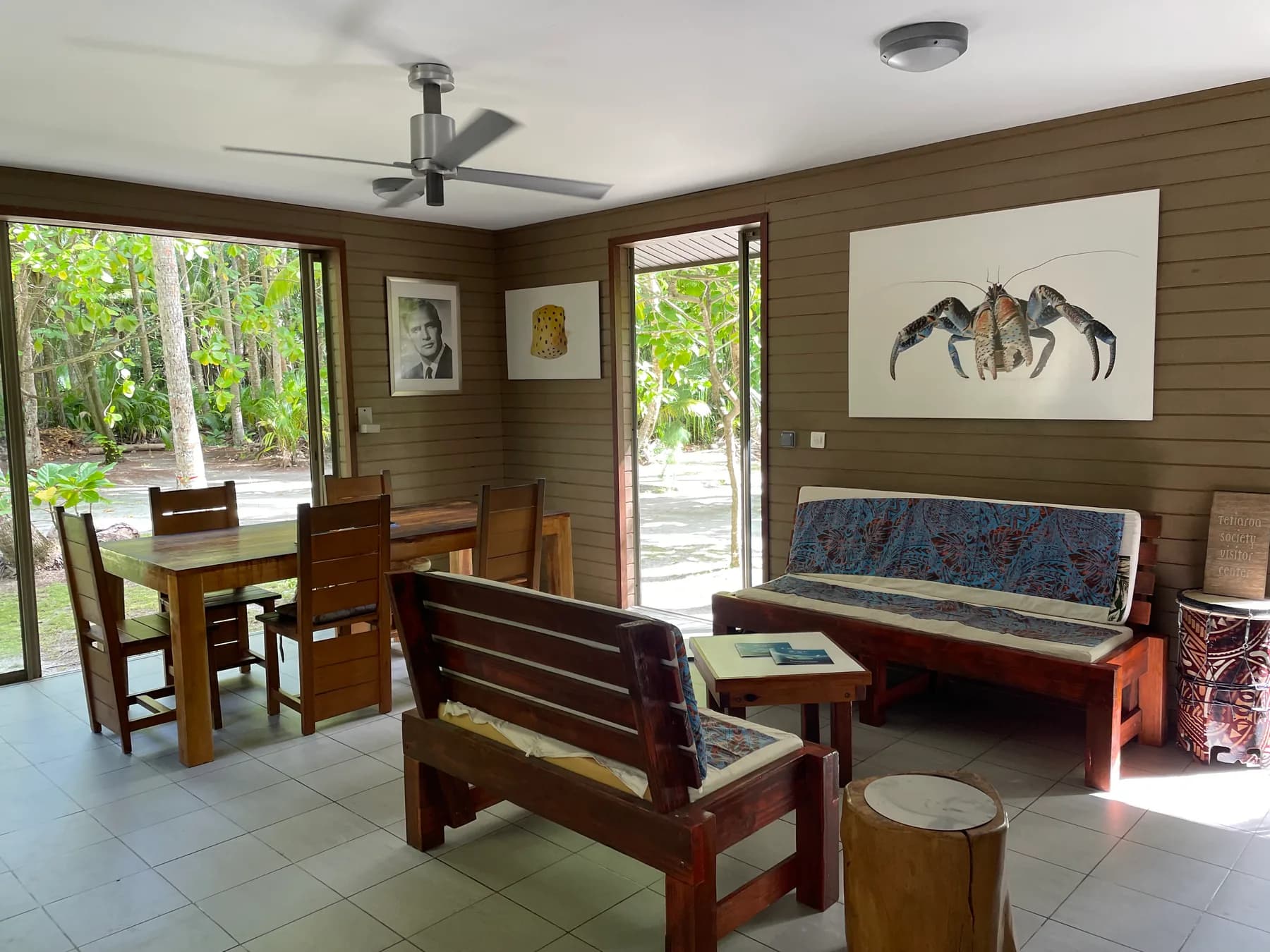
A place to sit down between trips to the lab or out into the field.
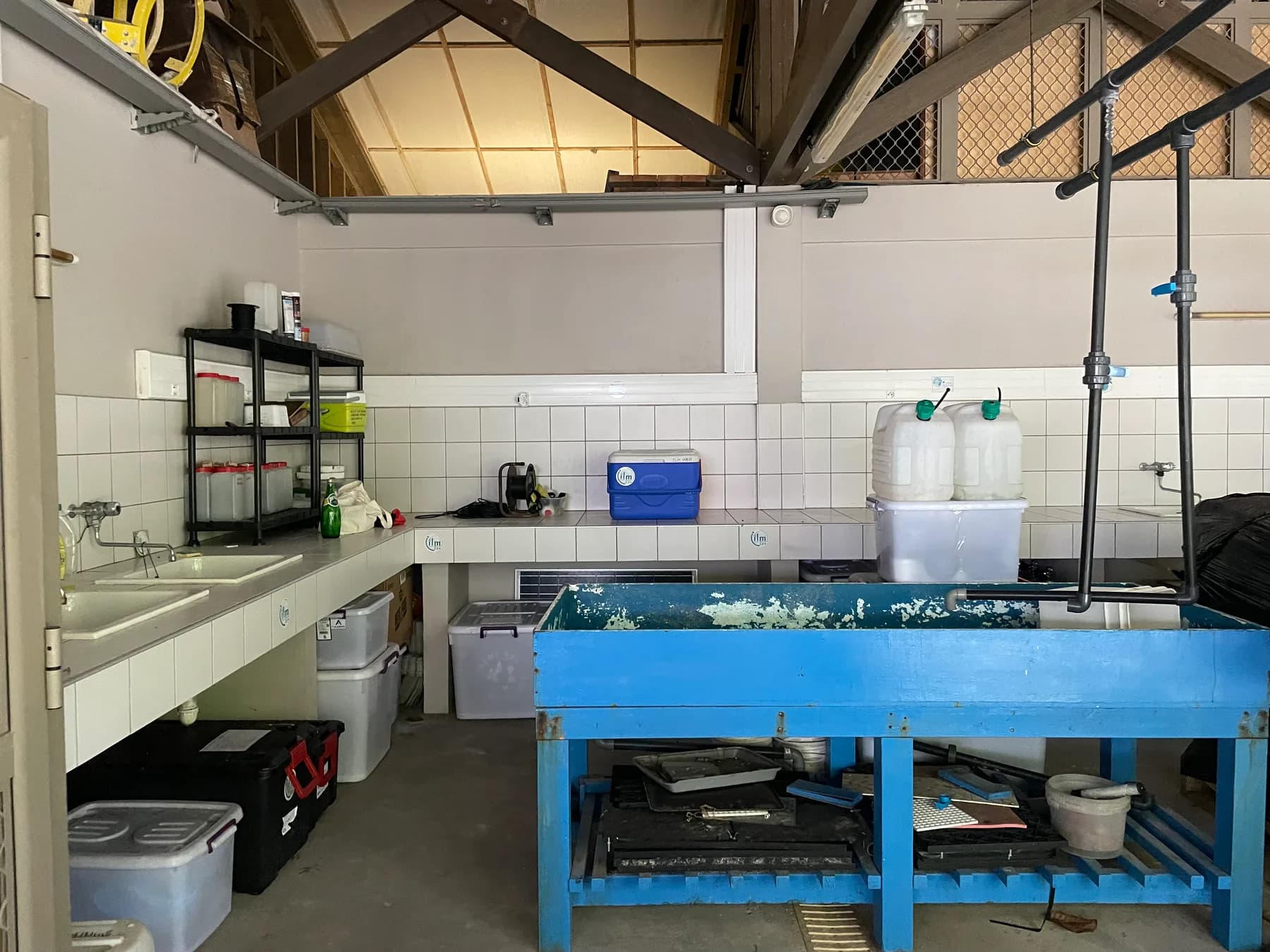
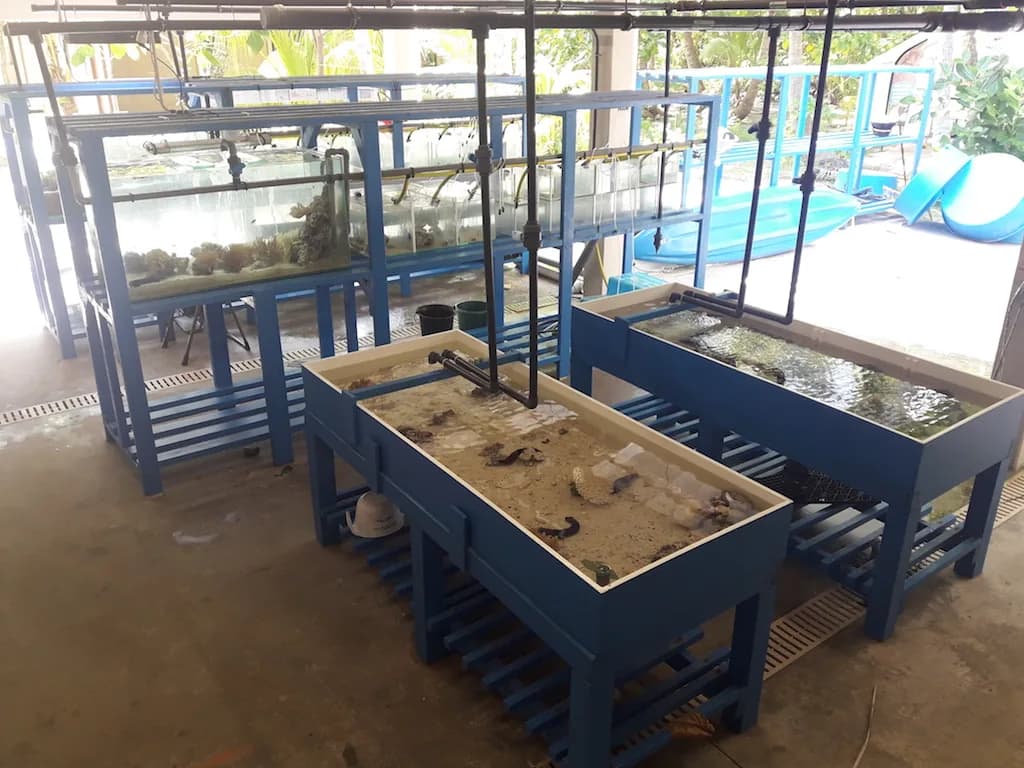
An outdoor lab with three water supplies: fresh water, surface seawater, and water from the deep ocean.
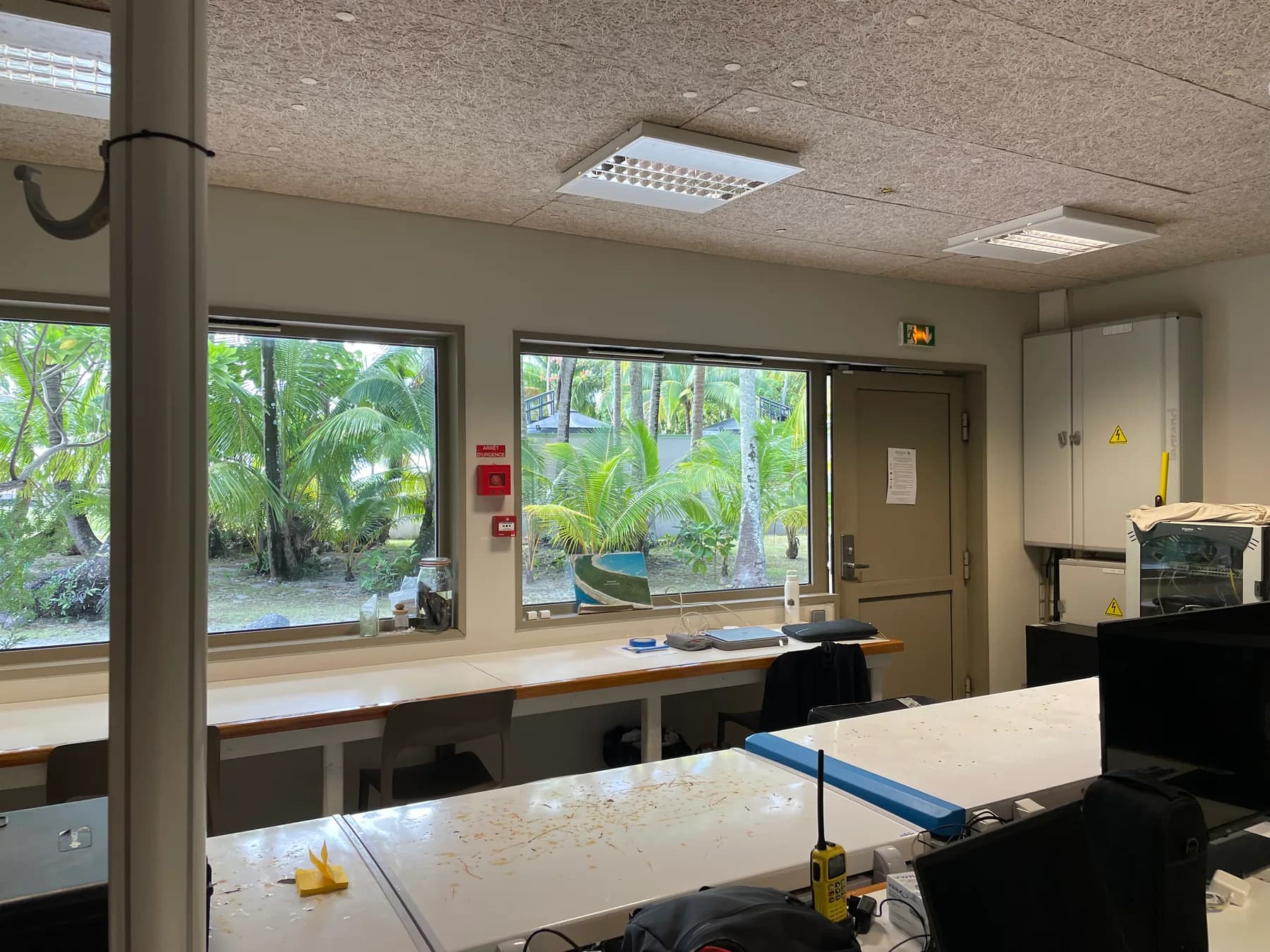
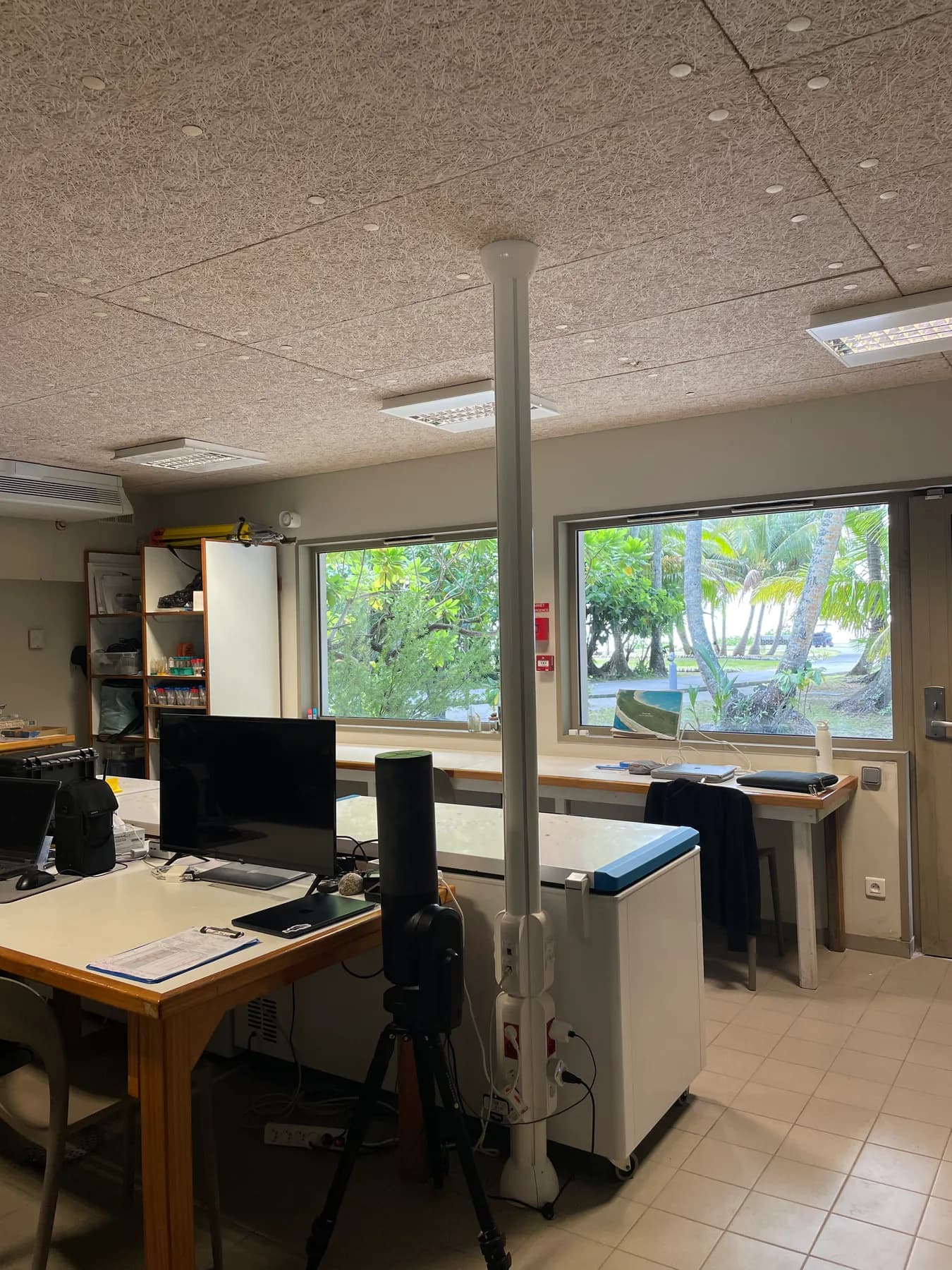
Forty square metres of air-conditioned space for lab work and teaching.
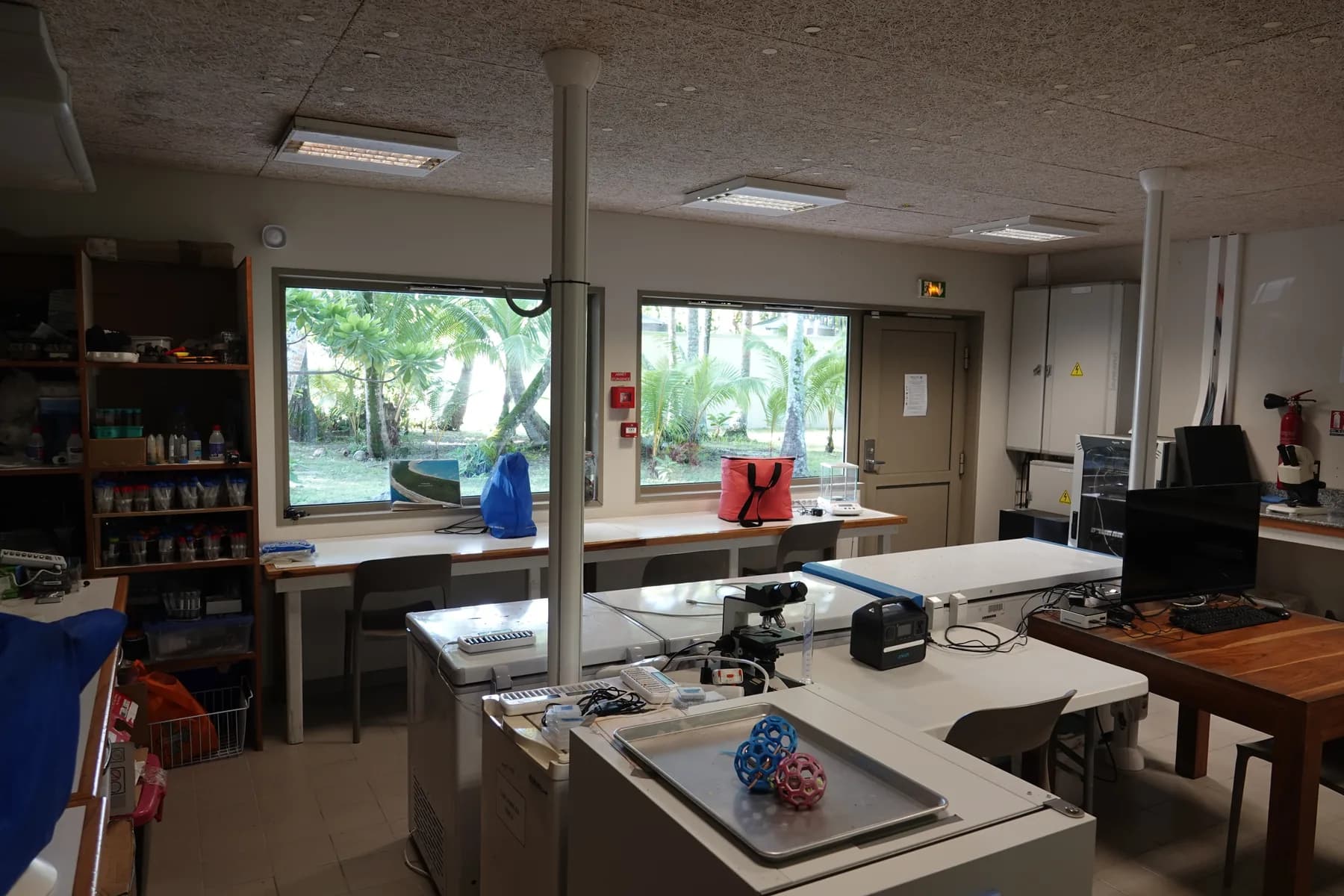
For the gear that won’t fit on a bicycle.
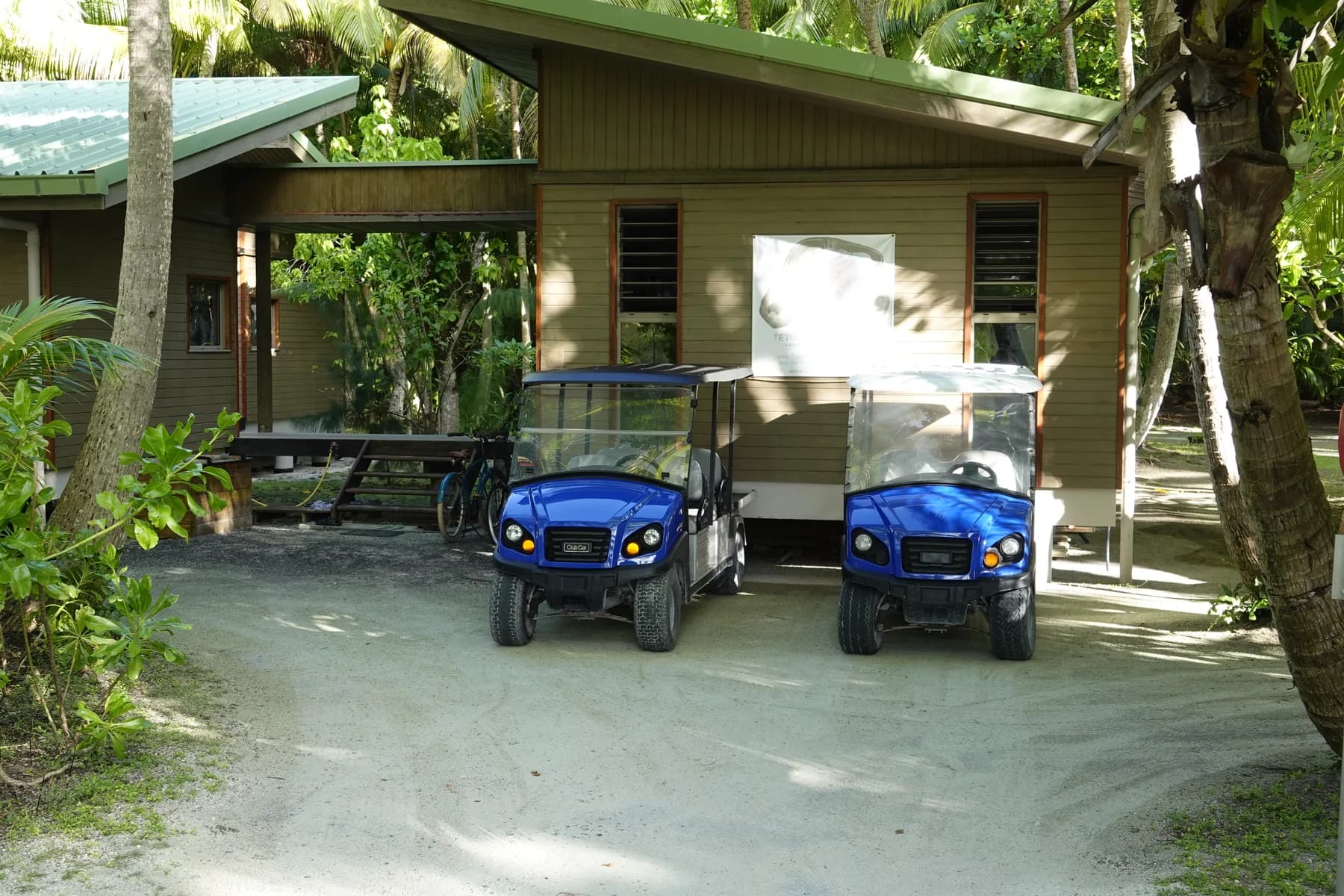
On this small motu, a bicycle is part of everyday life.
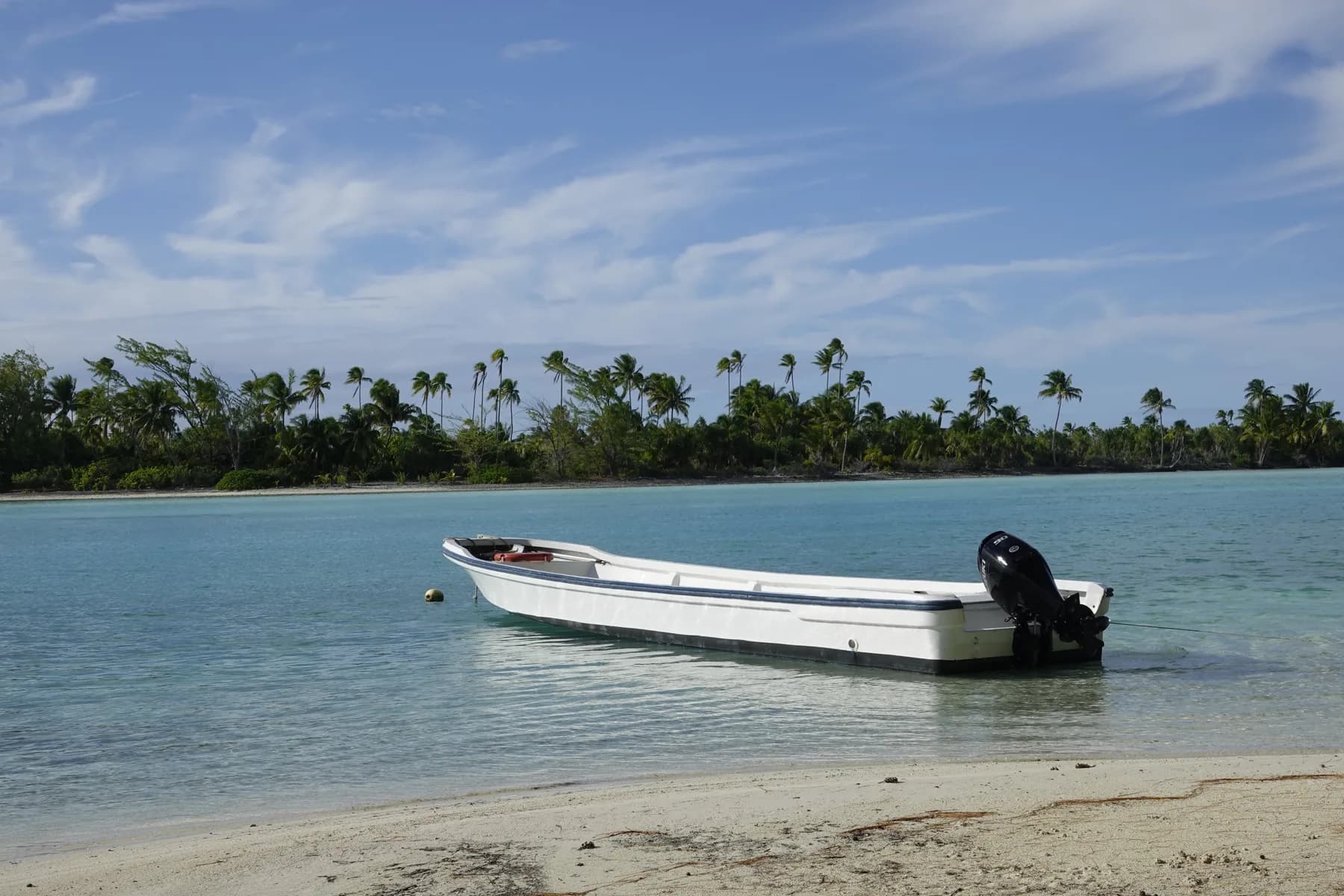
Shared with other researchers and with Tetiaroa Society’s field programs.
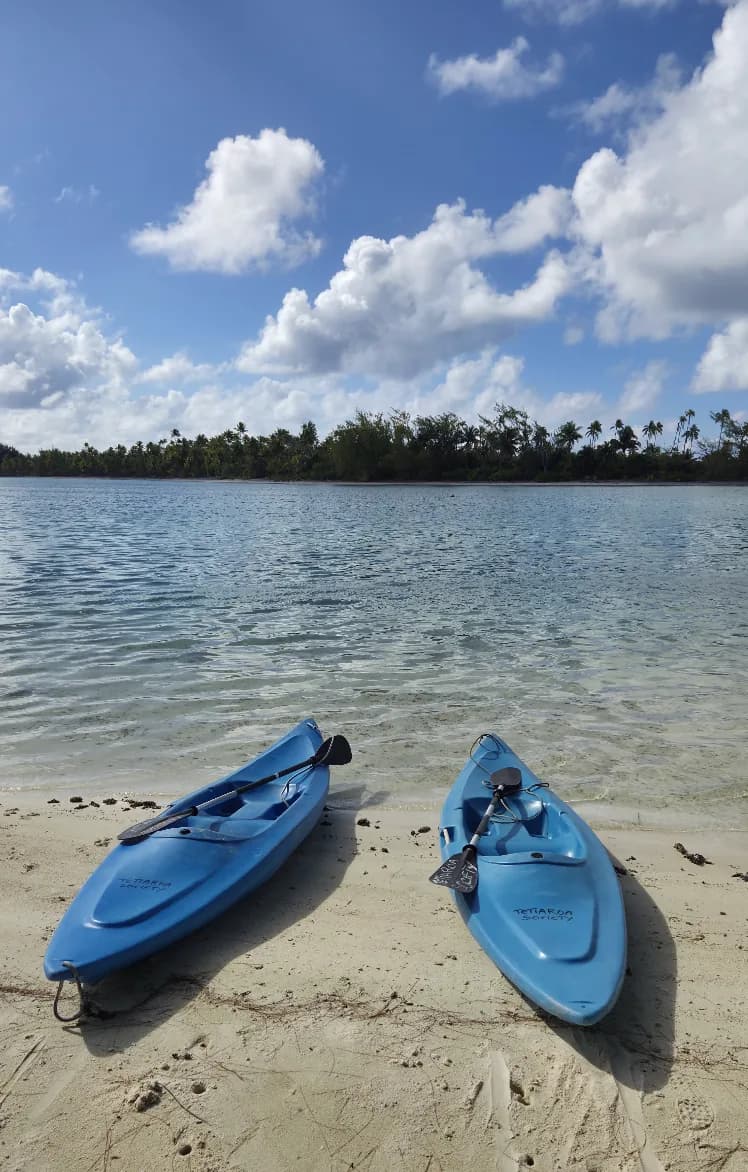
Explore the water under your own paddle power.
Provided at The Brando staff cantina, a short walk or pedal from the housing.
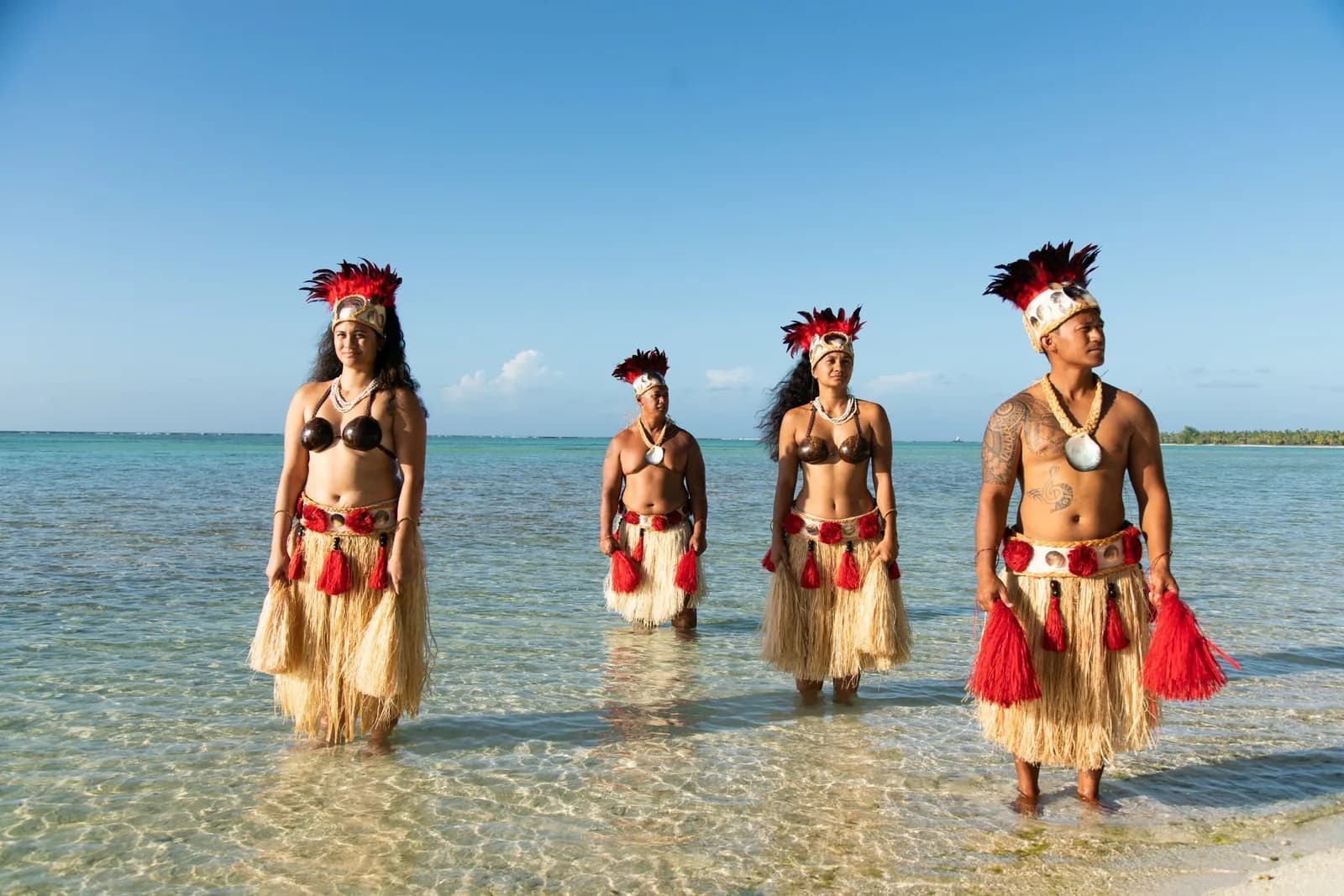
Thirteen motus in a ring, 53 kilometres north of Tahiti, reachable by boat, plane or helicopter. Long before anyone thought to put a laboratory here, Tetiaroa was the private retreat of Tahitian royalty — and it still holds a particular place in the hearts of Tahitian people.
Its marae sit among the palms a short walk from the lab: sacred sites, protected by the government of French Polynesia, and still very much alive in the stories told about them. You'll be working beside colleagues who grew up with those stories.
You'll share the island with Tetiaroa Society staff, which mostly means meals at the cantina, the same bike paths, and the same lagoon at the end of a working day.
Visiting researchers
Any researcher starting a scientific project — or bringing a university class — works through the steps below. Applications are managed in RAMS, the system Tetiaroa Society shares with the University of California Natural Reserve System.
Use the form at the bottom of this page.
Projects may be scientific, cultural, or educational, and must fit the mission of Tetiaroa Society. To be considered, a project needs the sponsorship of at least one member of the Scientific Advisory Board and must be fully funded — nothing is approved in anticipation of future funding.
Open the RAMS portalYou will review and agree to the station's waivers and policies as part of the reservation.
Non-EU citizens conducting research in French Polynesia need a convention d'accueil. Any work on genetic resources — DNA, RNA, or metabolic products of animal, plant, or microbial origin, commercial or not — needs a Commitment Act for a Prior Informed Consent Request from the Department of Environment.
PDF only, one file at a time, 2 MB limit per file.
There are also guests on the island who would like to hear about your work. Researchers may be asked to give one short presentation during their stay.
This reaches the station manager, who will tell you which permits your project needs and whether your dates work. It is the first step, not the whole application — the formal one is filed in RAMS.
Expect a reply within a few working days. The atoll is on Tahiti time (UTC−10).