humpback whale
Megaptera novaeangliae migrate from their feeding grounds in Antarctica, to their reproduction areas in the the Pacific islands - a journey of 6000 kilometers each way.
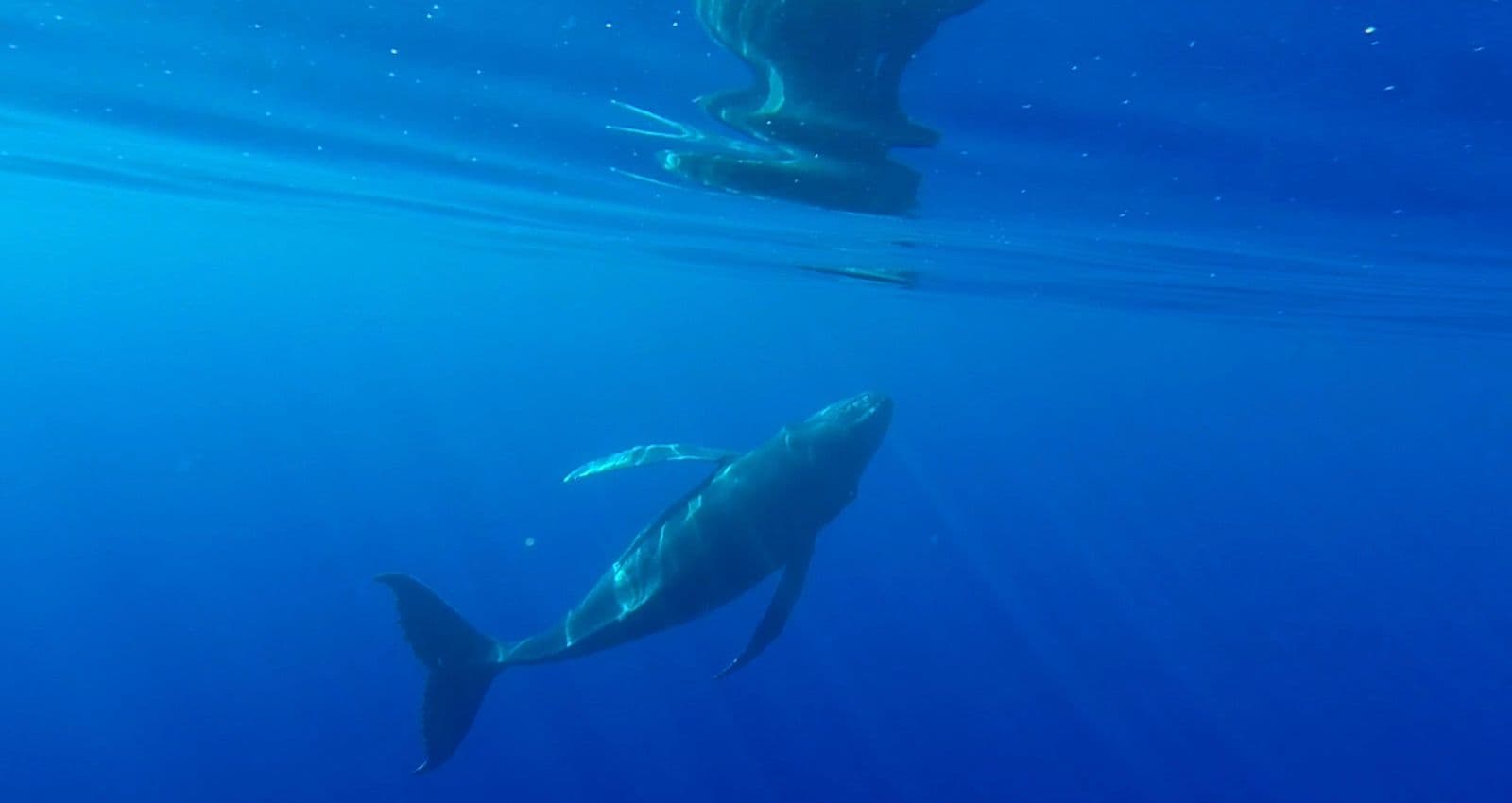
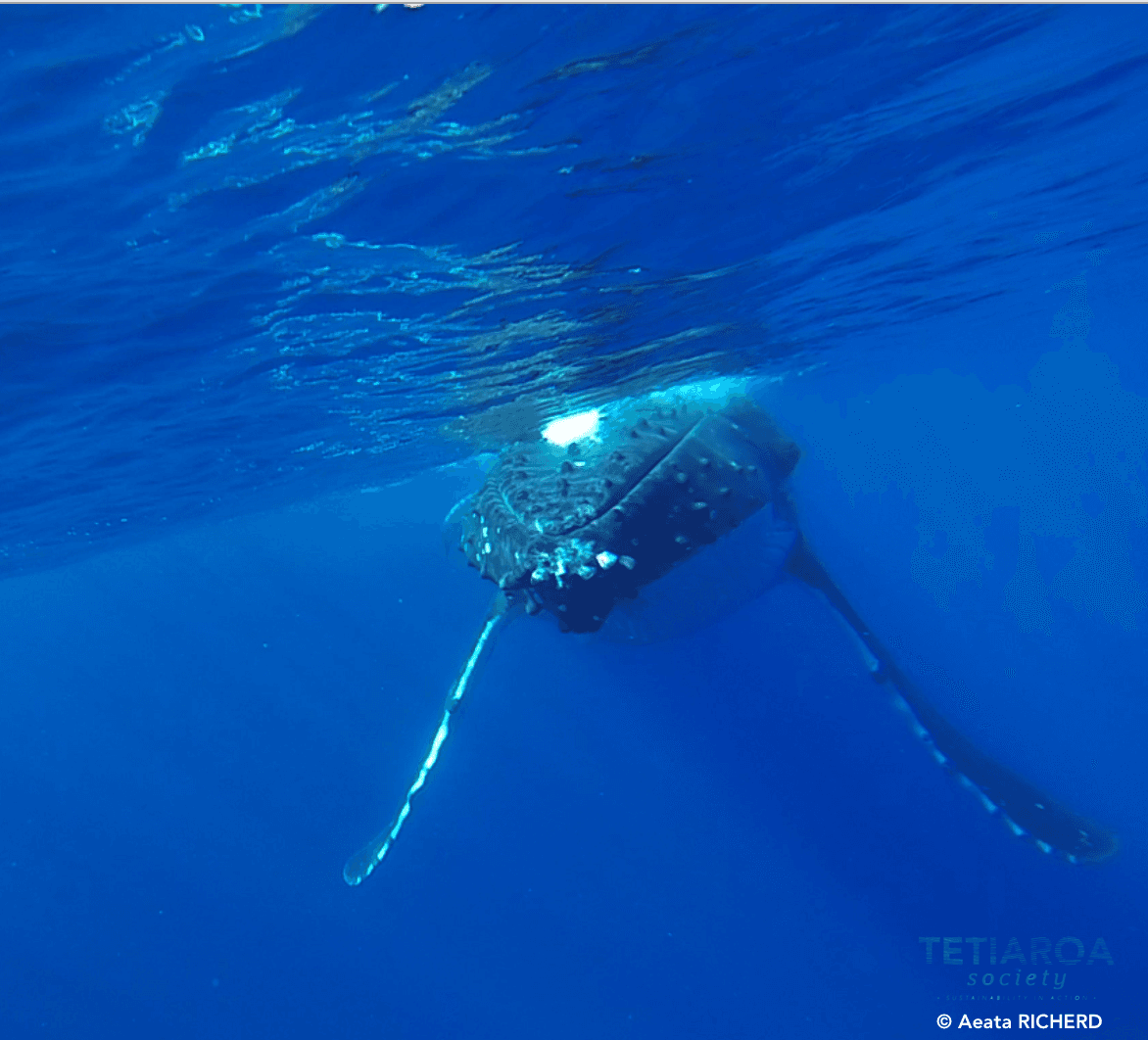
Each year, the first humpback whales make their appearance in late June off the atoll. These magnificent cetaceans stir a unique mix of emotions among Polynesians: excitement mingled with awe, a sense of insignificance before these giants of the sea and wonder in the face of such beauty. Emblematic figures of Polynesian myths and legends, these southern humpbacks embody wisdom and serenity : despite their phenomenal strength, they are naturally peaceful creatures, feeding solely on a tiny crustacean known as krill.
In 2002, French Polynesia became a sanctuary for the protection of whales and dolphins. This vast territory of 5,5 million square kilometers (the size of Europe) comprises 118 high and low islands, which offer the cetaceans different eco-systems (oceanic, coastal and lagoon) in which to evolve.
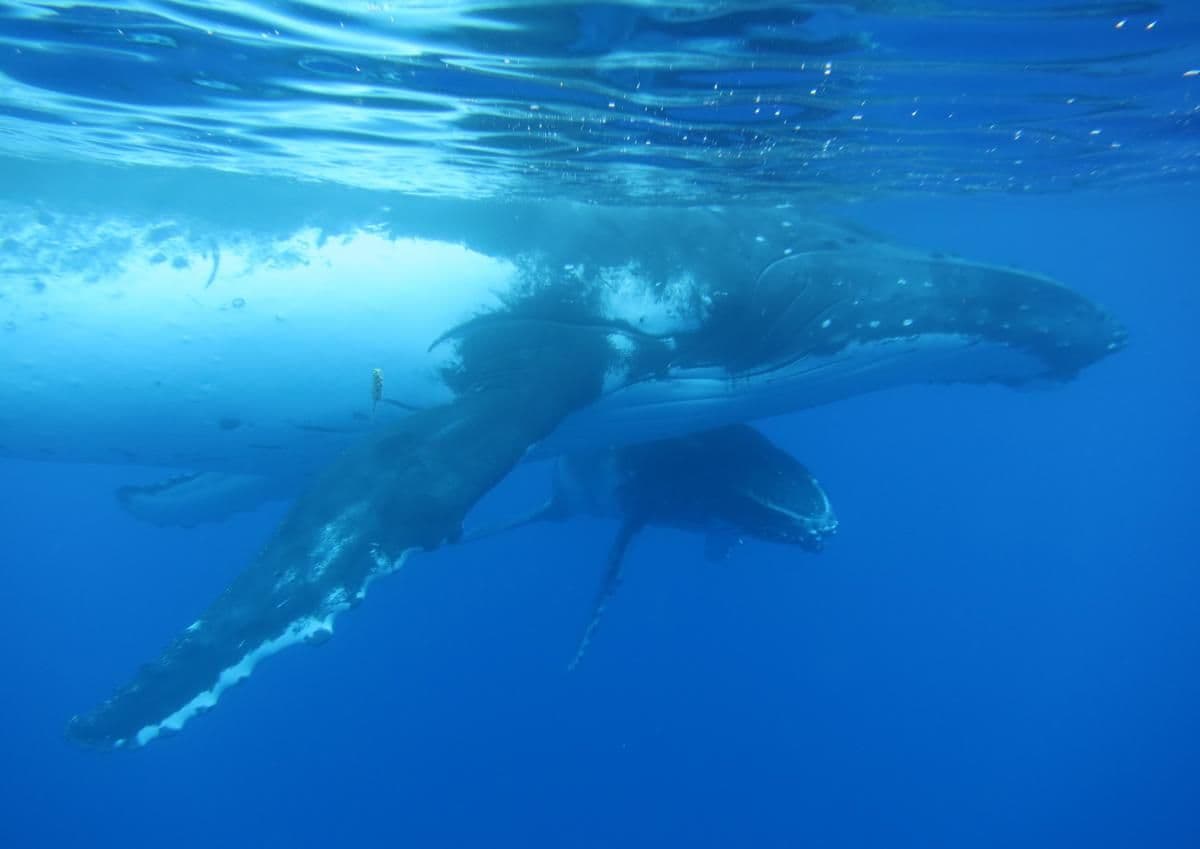
Humpback mama with her calf.
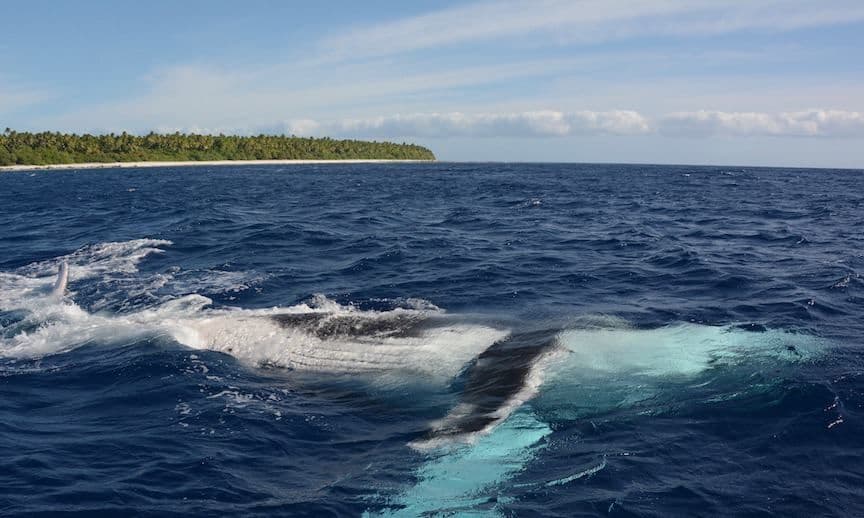
Migration
Megaptera novaeangliae migrate during austral winter from their feeding grounds in Antarctica, to their reproduction areas in the Pacific islands, where the whales will stay until summer. These migrations of 6000 kilometers each way take them 2 to 4 months to complete. The Polynesian waters, with warm temperatures (21-27°C) which offer both coastal and lagoon systems, provide optimum conditions for humpback whales to reproduce, give birth, care for their calves, and rest.
From late June to early December, these marine mammals treat us to a variety of spectacular displays, each more impressive than the last. The official whale watching season, governed by regulations, generally runs from July to November, with specific dates set each year.
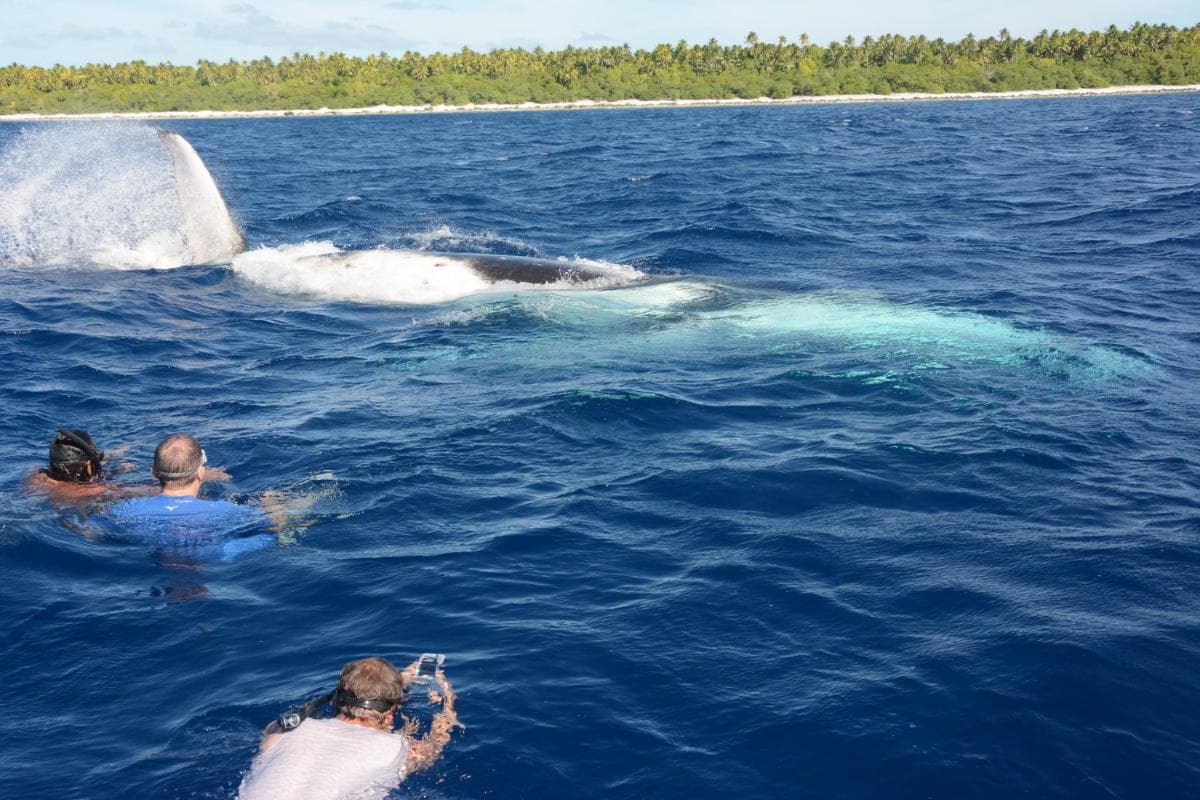
Oftentimes, in calm weather conditions, it is possible to get into the water and observe a resting female with her calf. More than one curious calf has been known to approach swimmers. However, swimmers must be careful not to initiate the approach, as this might bring about a change in their behavior. Other times, males asserting dominance and seeking to woo a female can be observed.
Guests can swim with the whales.
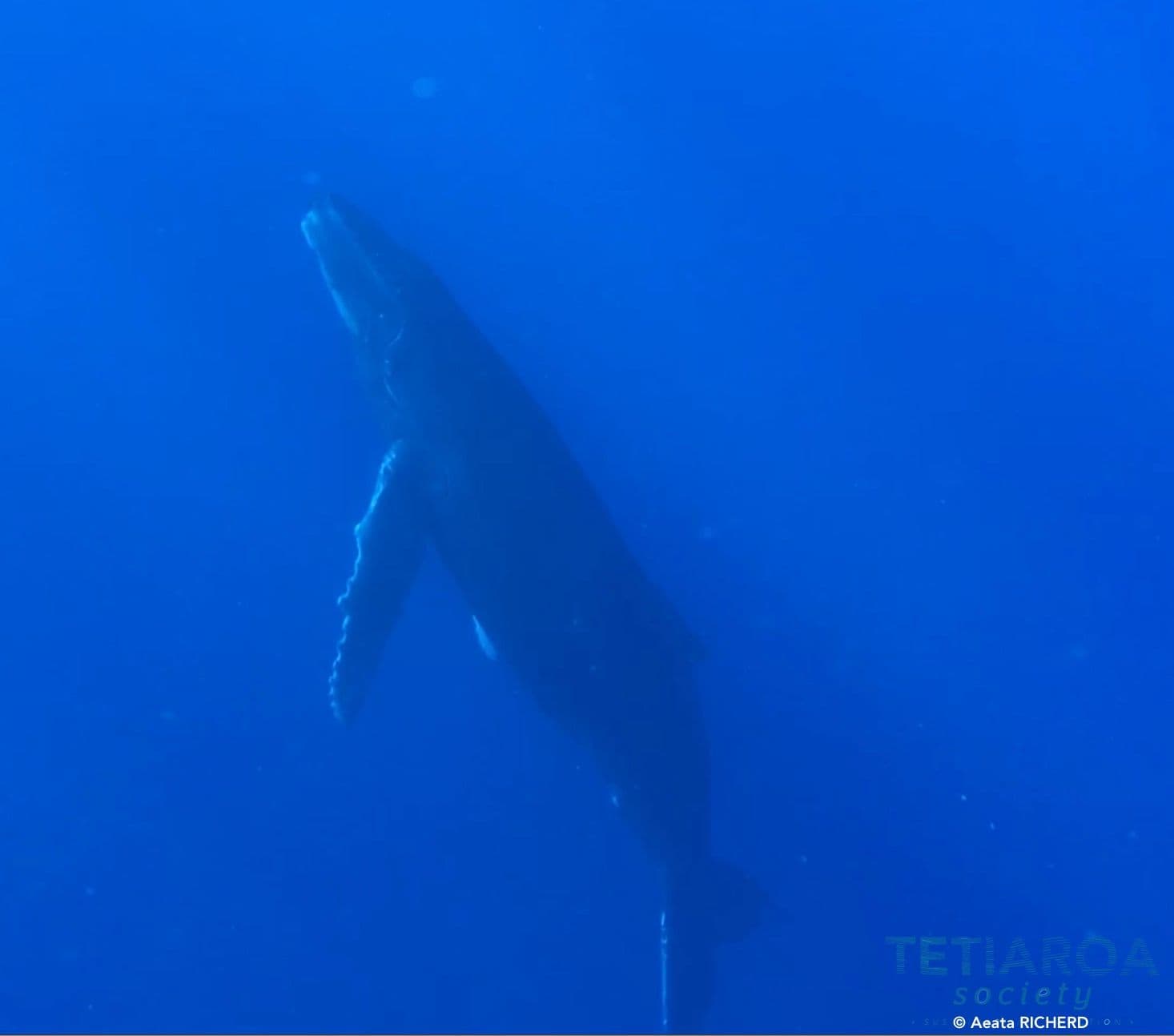
Whalesong
Classical concertos consist of 3 measures while humpback whales contain 3 and 6 measures. Only adult male whales sing, either during winter or during the breeding season. Females produce social vocalizations with their little ones but no real "songs". One of the greatest mysteries of the animal kingdom is that males sing the same song at the same time with the same changes. The longest song produced in Polynesia was recorded in Moorea, and continued, non-stop, for 54 minutes. The male had been singing for 24 hours. Several hypotheses exist as to the meaning of whale songs: Are they meant to attract females? Are they meant to establish dominance among the other males?
OBSERVATION TIPS:
On the surface, humpback whales are easily identified, thanks to their enormity, their acrobatics, and the spouts of air and water which rise up to 2 meters from the surface of the sea. Whales can dive to more than 50 meters and stay under water for up to 30 minutes.
When whale-watching, bring binoculars so that the whales can be observed at a distance. Be respectful of these creatures and remember that they have come from far away to Polynesian waters to find refuge and tranquility.
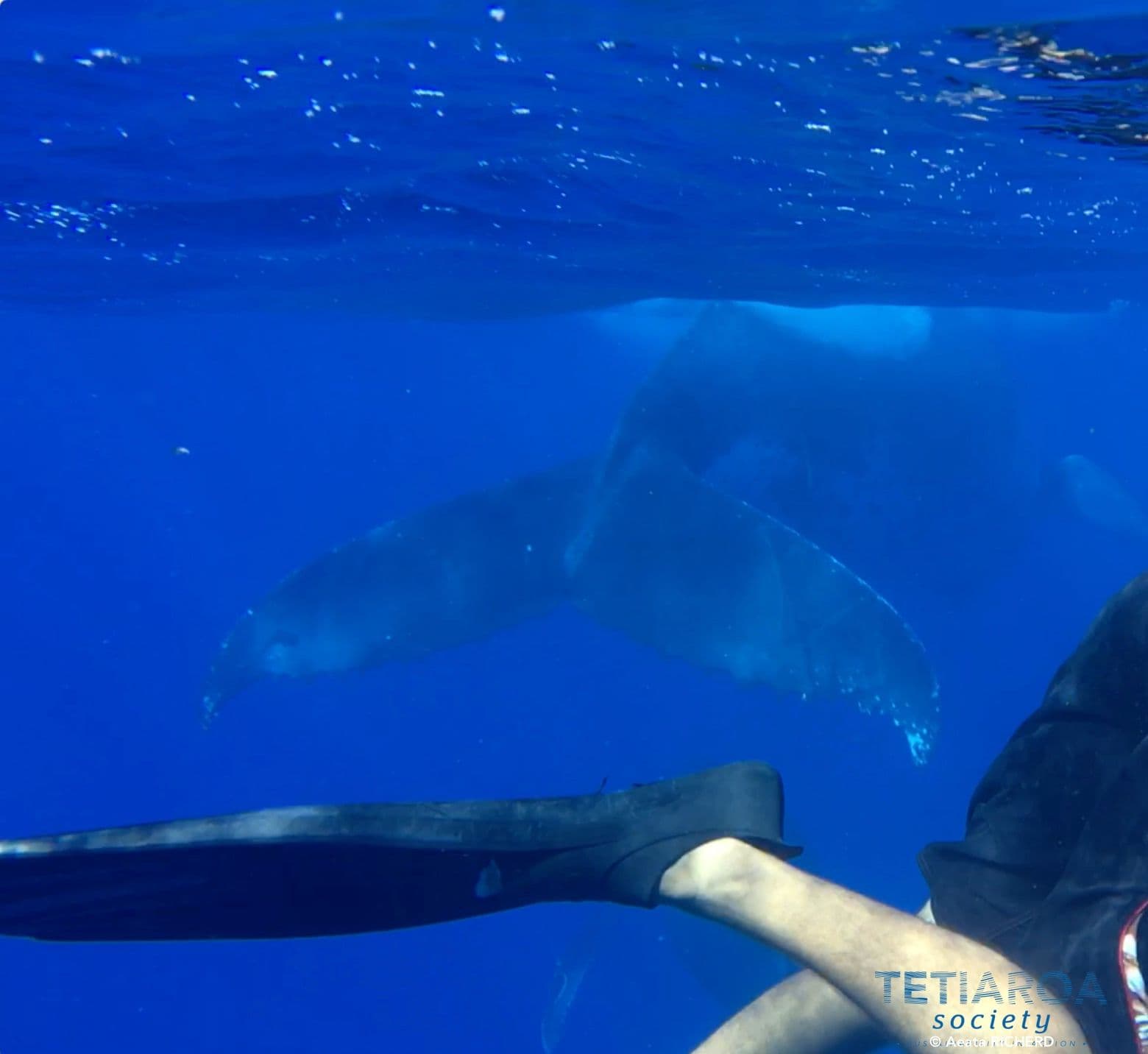
To preserve their tranquility, in-water activities are strictly regulated and may only be conducted with authorized operators, under specific conditions. Approach distances and observation guidelines have recently been strengthened to better protect these cetaceans.
The rules to follow are:
- Do not approach within 100 meters of a whale or calf (professional operators), or within 300 meters for private individuals.
- A distance of 30 meters must be maintained from dolphins and other marine mammals.
- Reduce speed to 3 knots within a range of 300 meters around whales.
- Always keep the engine running and shift to neutral if an animal voluntarily approaches the vessel.
- Any sudden change in direction or engine speed is prohibited.
- Follow a parallel course to moving animals, without cutting across their path or blocking them against the reef.
- Do not separate a whale from her calf.
- Do not touch, encircle, or swim or dive towards the animals.
- The minimum in-water distance is 15 meters.
- The number of people in the water is limited to a maximum of 6.