Plant and avian community dynamics on Tahuna Iti
This internship mission aimed to characterise vegetation and breeding bird communities on the motu Tahuna Iti, in order to understand how plant succession dynamics, linked to the atoll’s geomorphology, influence the distribution of avian species.
Summary of field activities
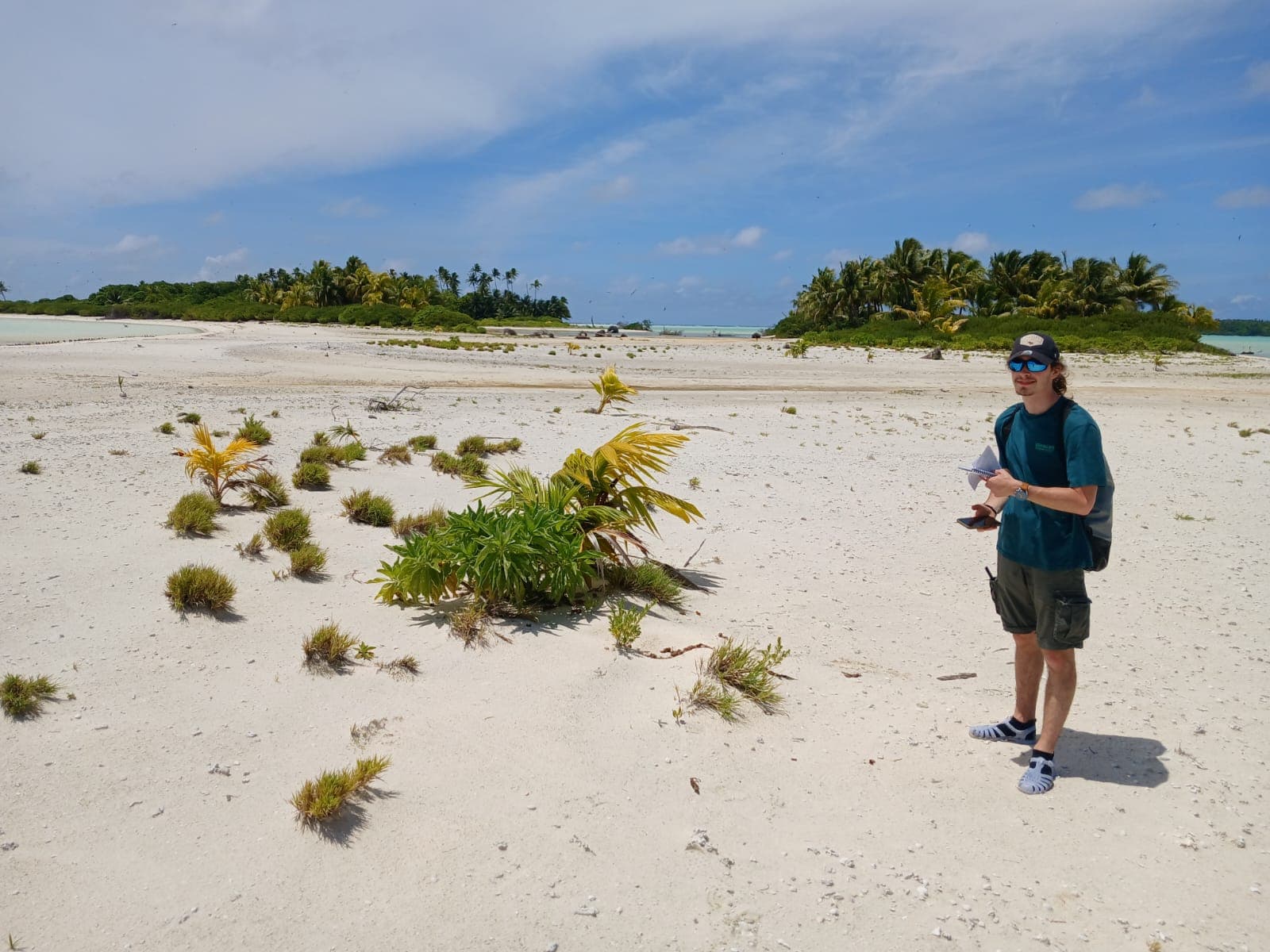
The mission began with field training led by Jean-Yves Meyer. The team then located the plots (circular sampling areas of 5 metres radius) previously established by Jayna Devore and Simon Ducatez, marked with flags, to which Henry Louvrier added new ones to extend spatial coverage.
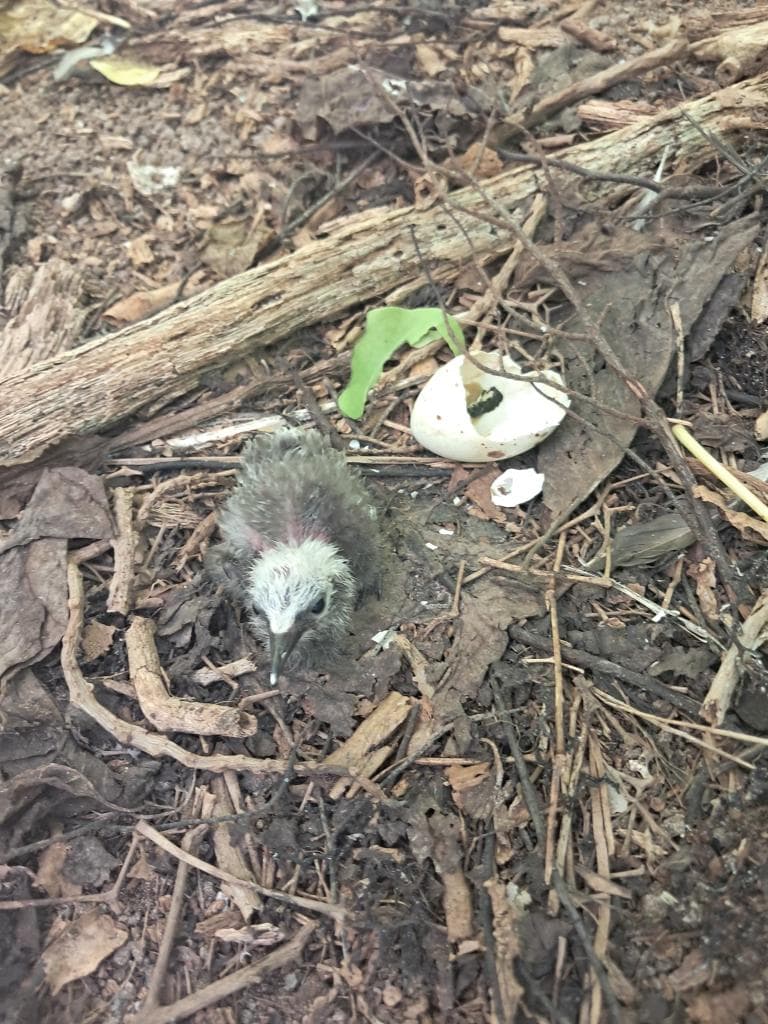
Phytosociological surveys (vegetation inventories) and bird counts at all breeding stages - eggs, chicks, adults - were carried out within these plots, distributed according to geomorphological age zones (areas of the motu that differ in how long they have existed). The aim is to assess whether vegetation is consistent within each zone and how it shapes the distribution of nesting birds. Half of the botanical surveys were completed during this mission
Preliminary results
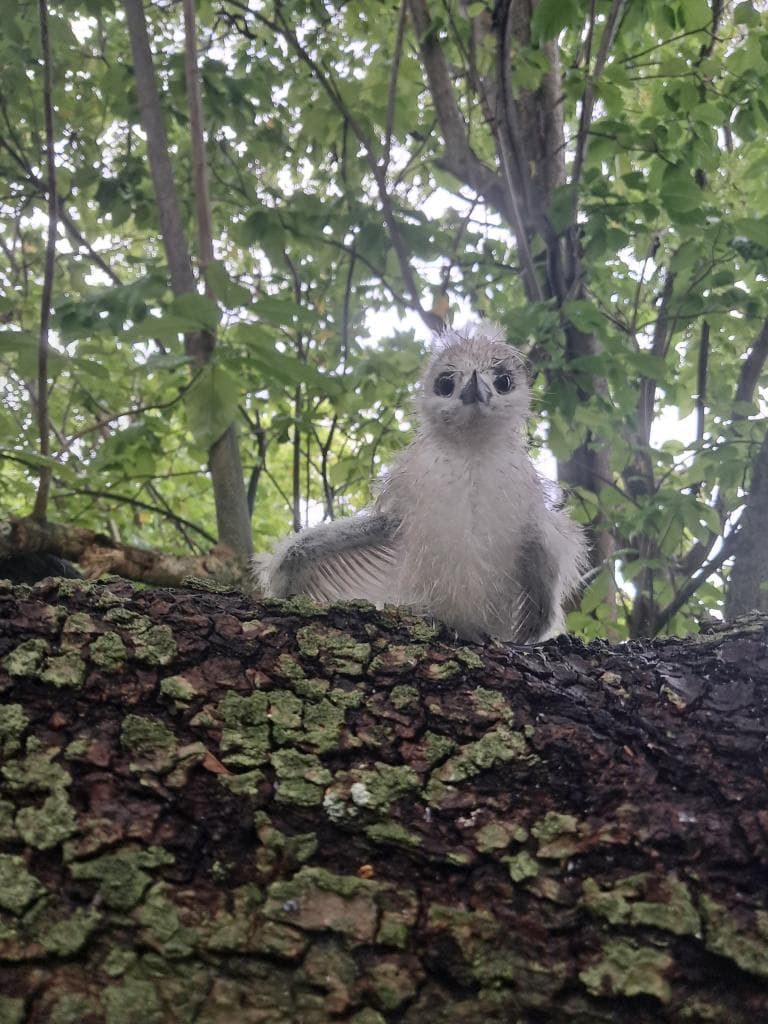
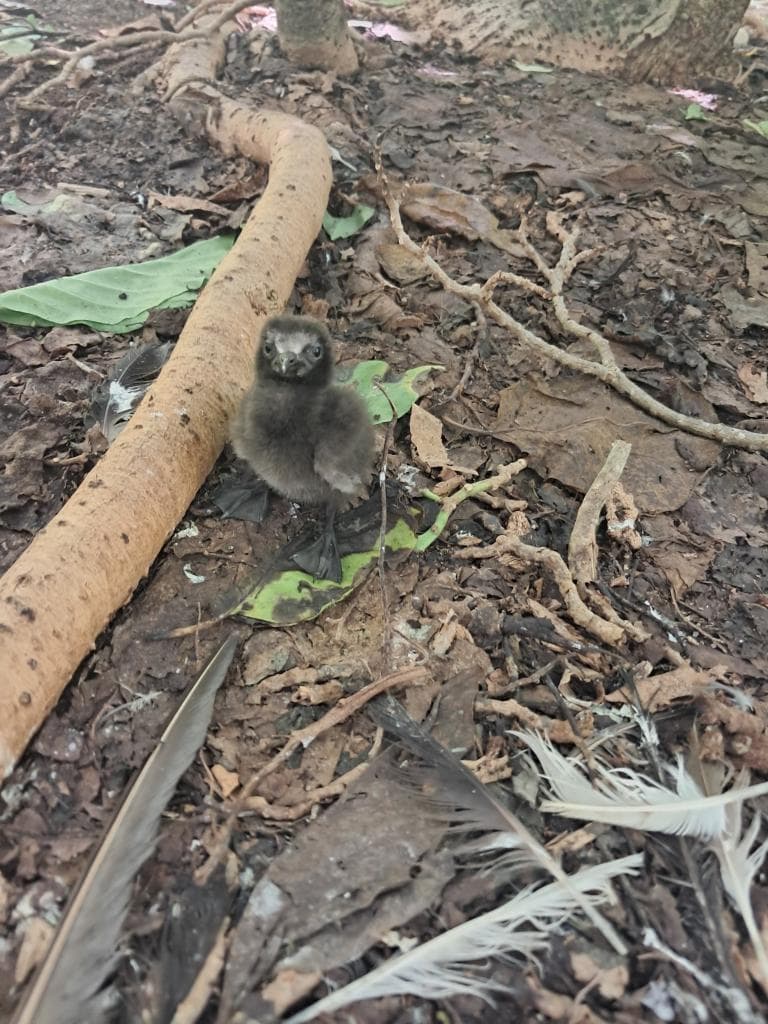
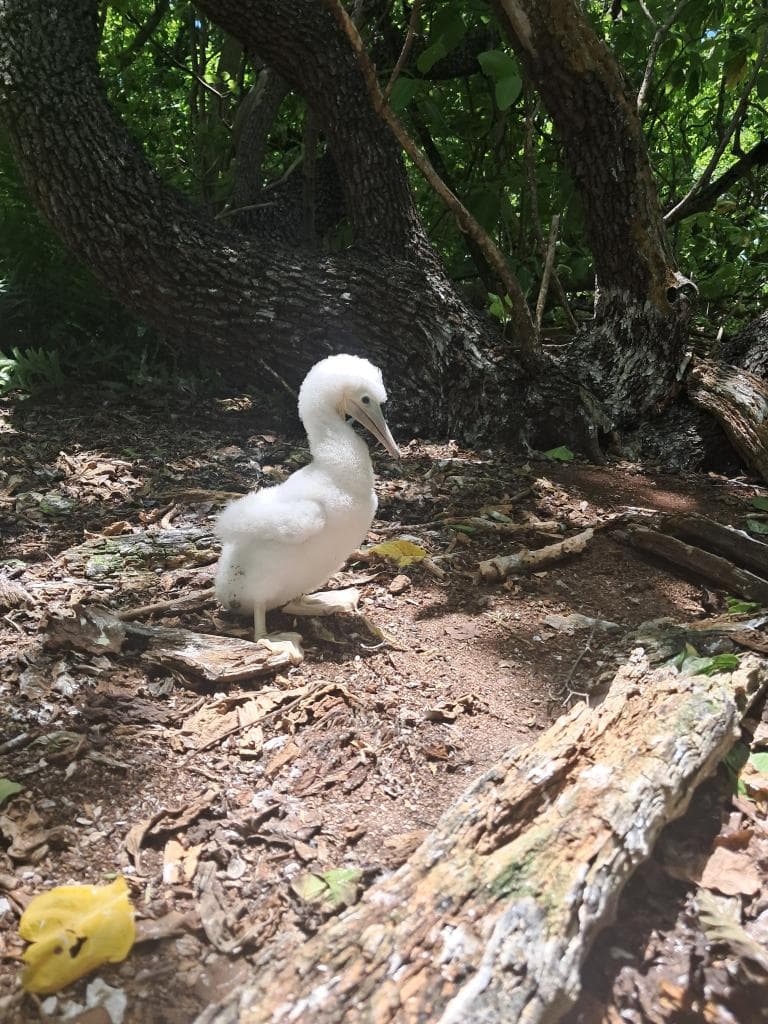
Initial observations confirm a clear distribution of vegetation and nesting birds according to zone age. The oldest sectors, dominated by Pisonia grandis forest, support high densities of Brown noddy and White tern nests. Zones of intermediate vegetation age, with a shrub layer dominated by Tahinu (Heliotropium foertherianum) and Suriana maritima, shelter more Red-footed boobies nesting at height, along with some Brown boobies in more open areas. The most open zones correspond to Crested tern colonies. Lower nesting activity is observed in sectors dominated by the coconut palm (Cocos nucifera).
Perspectives
A follow-up mission is planned for April 2026 to repeat bird counts across all plots and complete the botanical surveys. Plots will also be established on the motu Aie to serve as a reference site, enabling comparison of vegetation and bird dynamics with those observed on Tahuna Iti, particularly in a context where the presence of yellow crazy ants may exert additional pressure on nesting birds.
Gallery