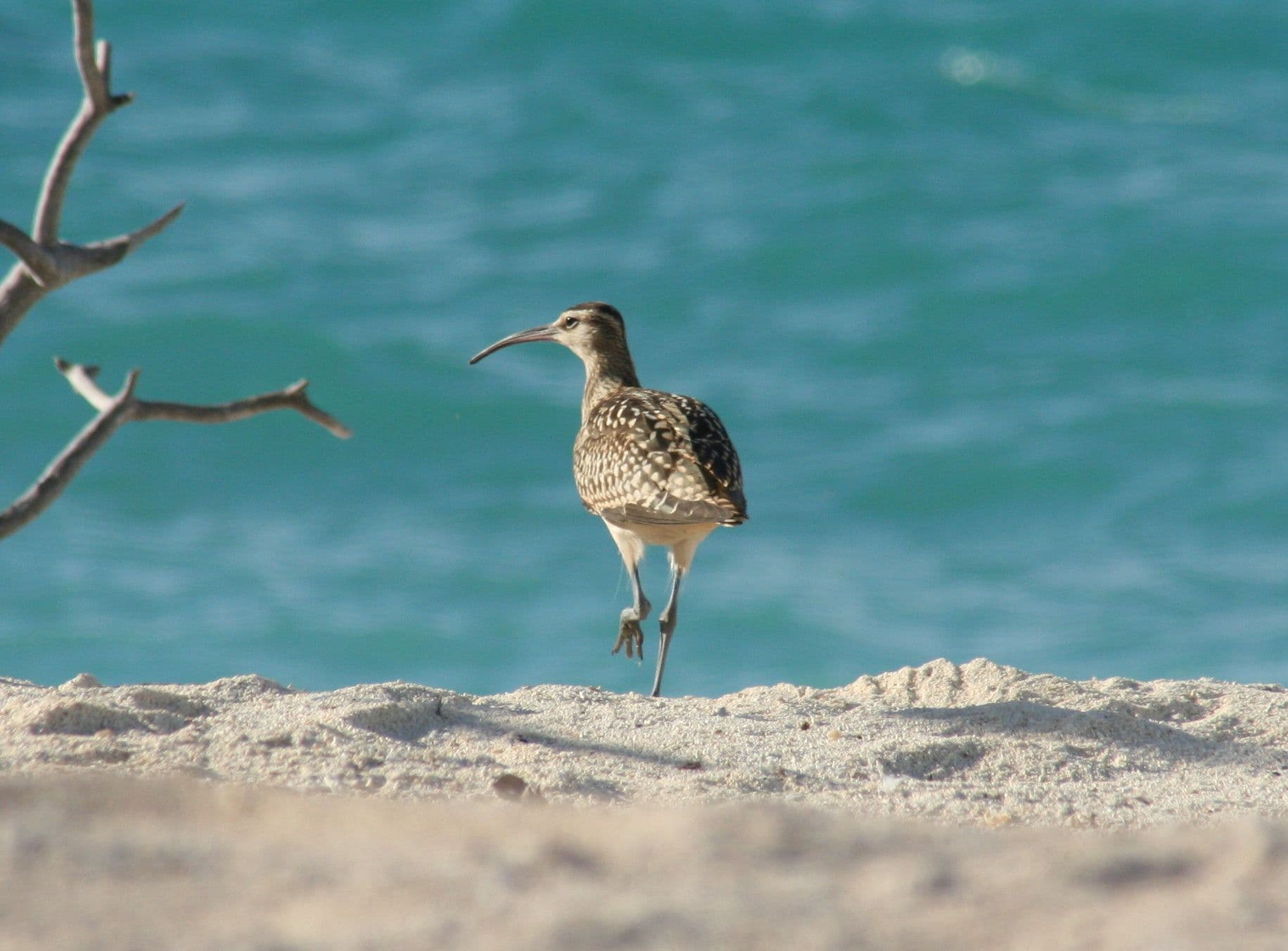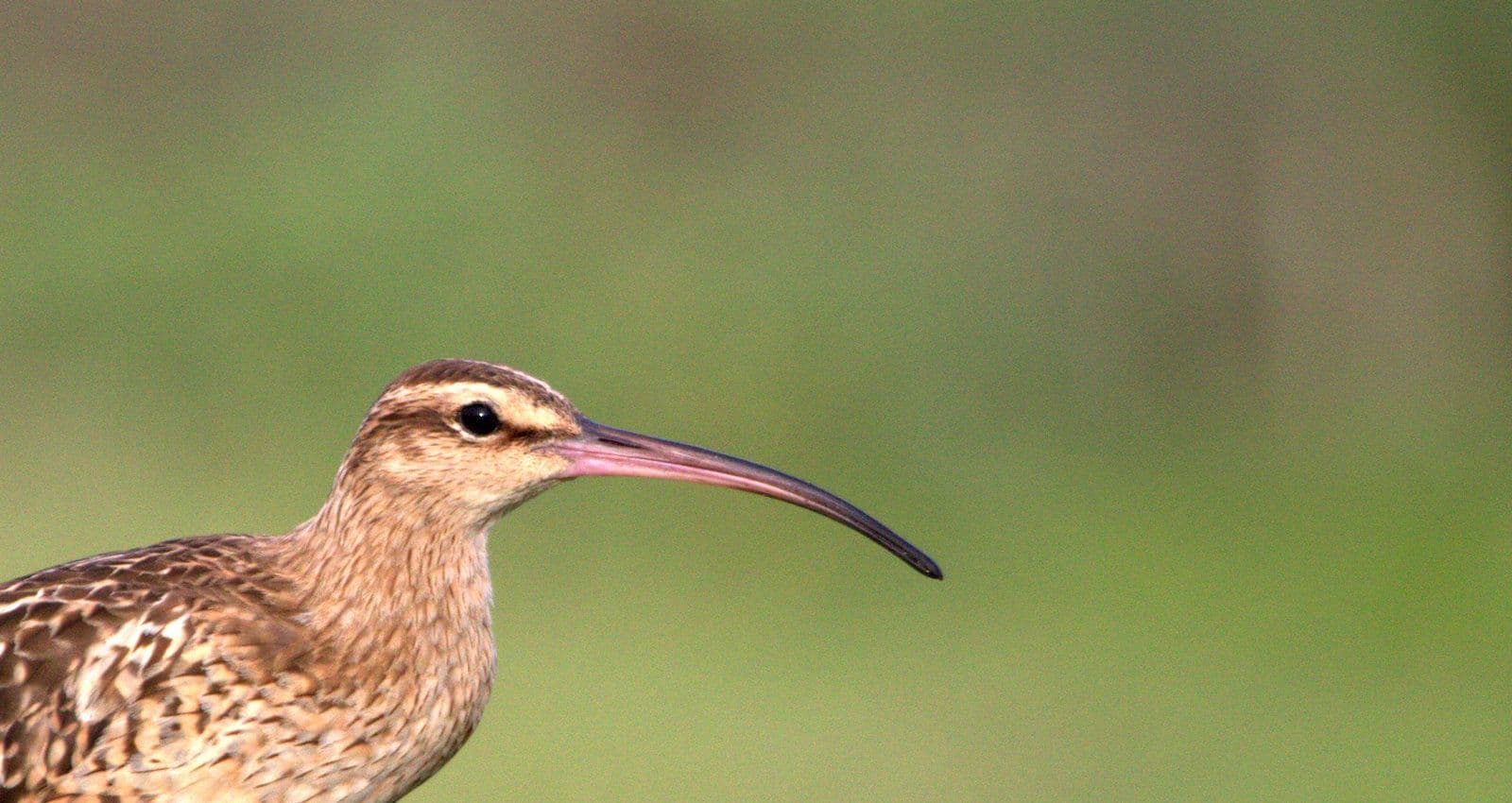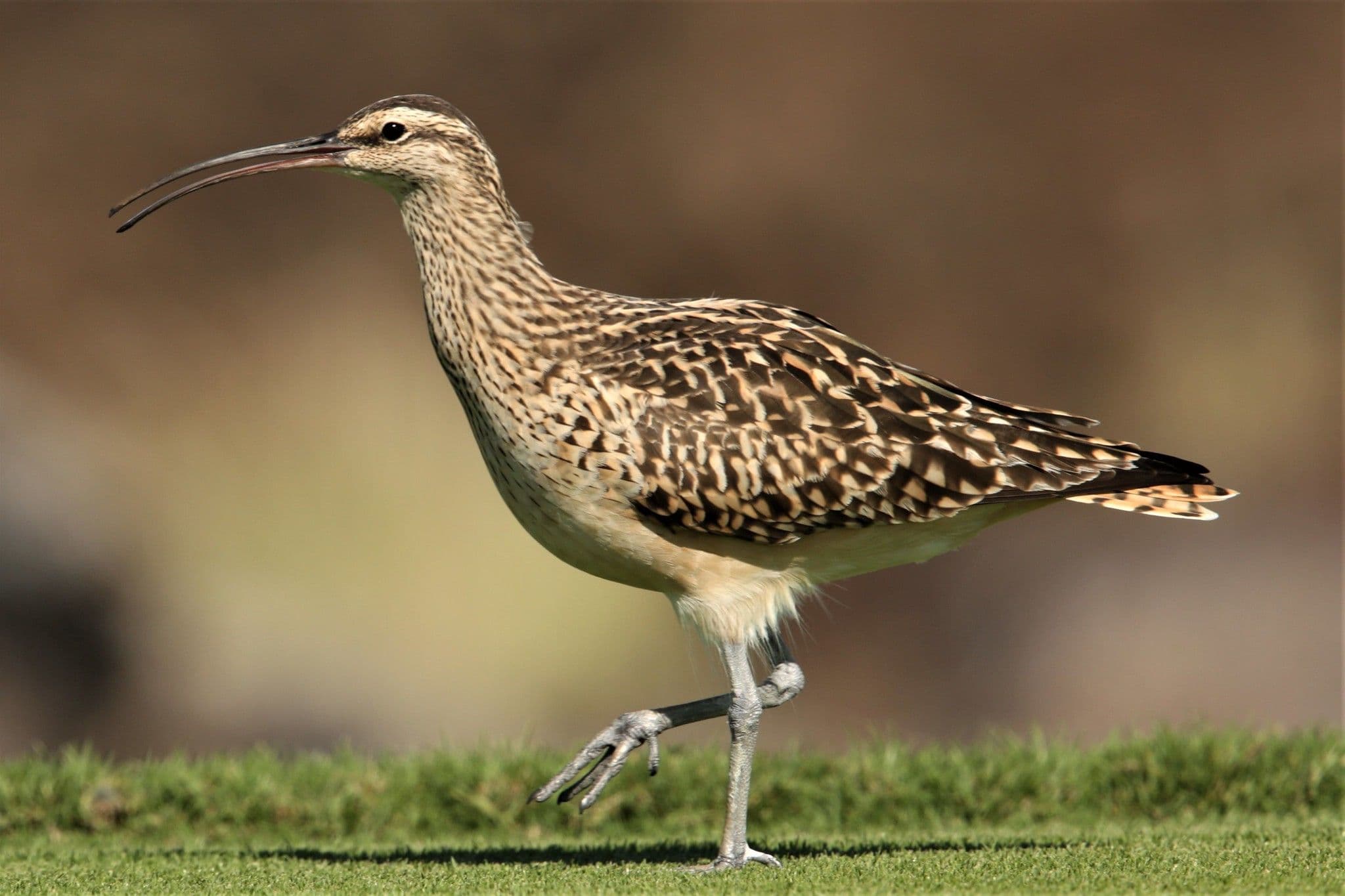
For part of its stay in the Pacific, this long-distance migrant can lose the ability to fly.
- Local names
- Te’ue, ‘Ivi
- Other names
- Courlis d’Alaska
About this species
About 44 cm long, the bristle-thighed curlew is buff and light brown with pale spots on the back, long bluish legs and a long down-curved bill. It probes sand, mud and rock crevices for molluscs, worms and crabs, and also eats plant material. It can break into eggs using stones.
On Tetiaroa it searches reef flats, beaches and the shores of motu, especially around low tide. Elsewhere its feeding habitats also include mudflats and occasionally short grass.
It breeds only in Alaska, laying a single clutch of usually four eggs in a ground nest. In the nonbreeding season it moves to tropical Pacific islands; the guide records its usual presence on Tetiaroa from September to April.
During its wing-feather moult, some birds become temporarily flightless, an unusual and vulnerable condition for a migratory shorebird. The old guide’s figure of about 7,000 birds refers to an earlier estimate for the wider population, not to birds on Tetiaroa or to a current census.
In the Polynesian traditions cited by the guide, Te‘ue embodied the gods of the coast.