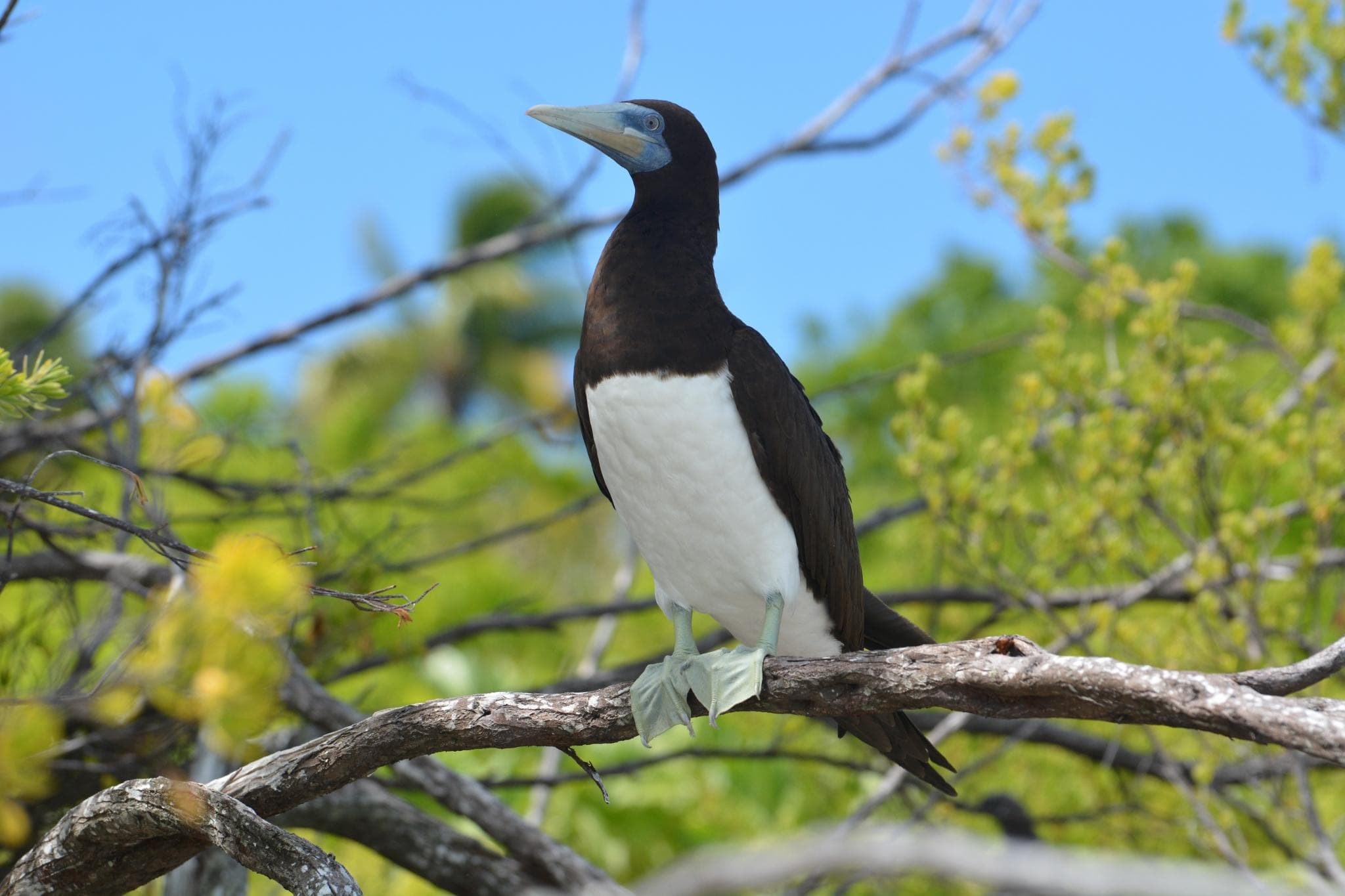
A plunge is only the beginning: the brown booby can keep chasing a fish underwater.
- Local names
- A’o
- Habitat
- Motu and shore
About this species
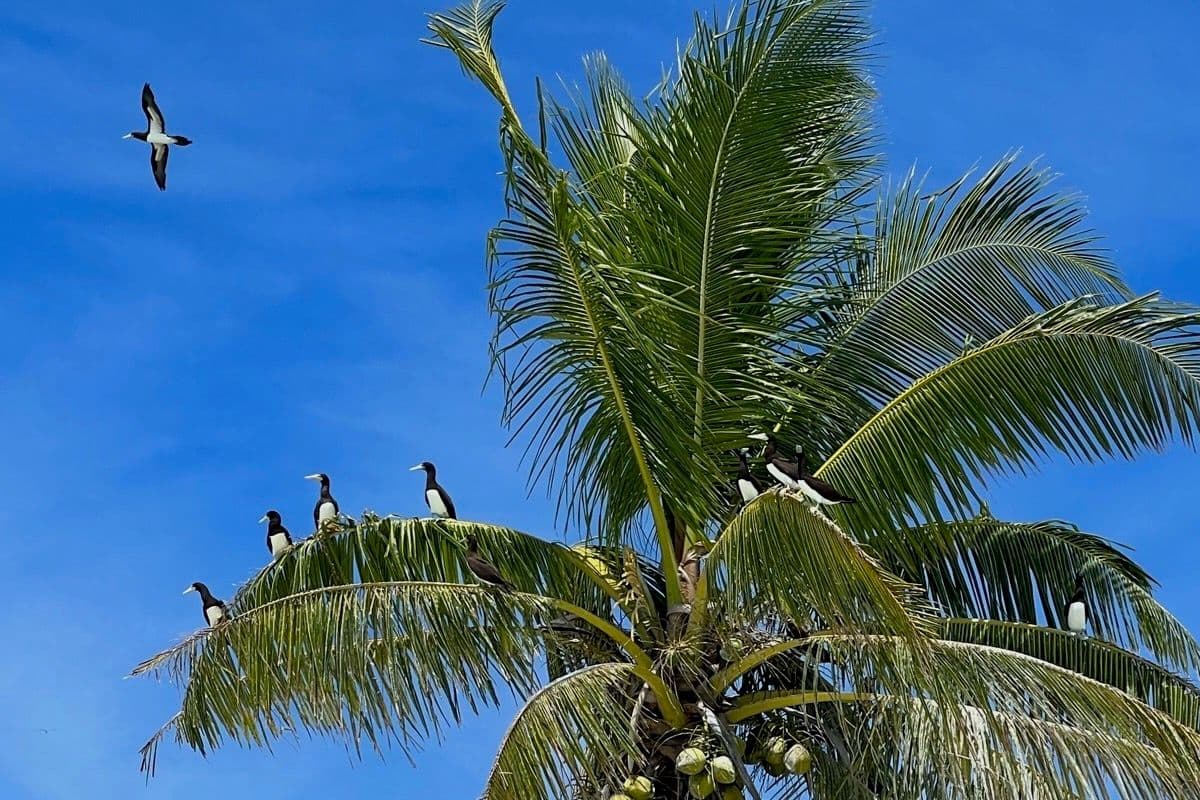
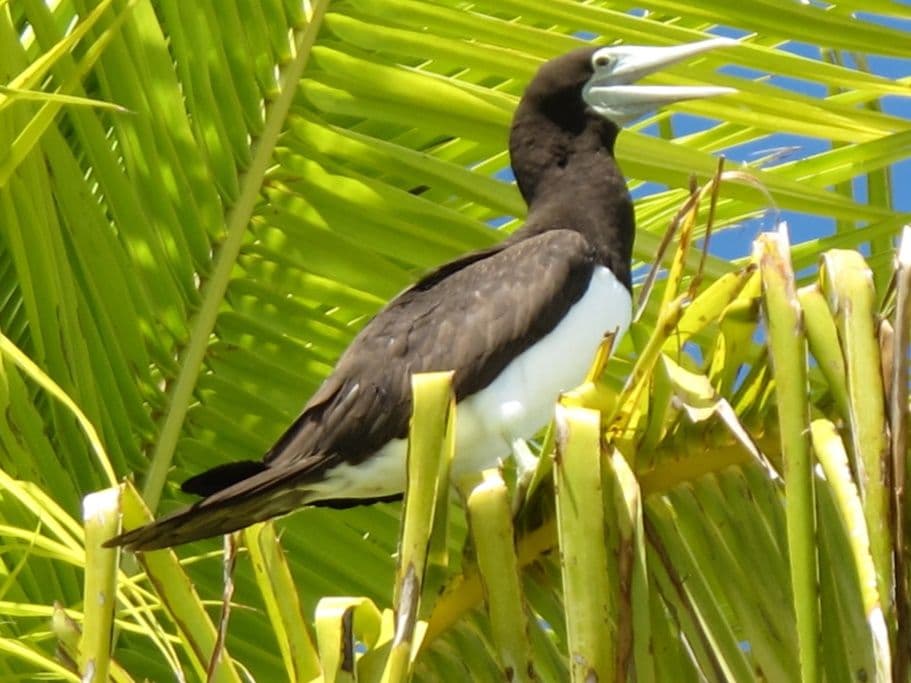
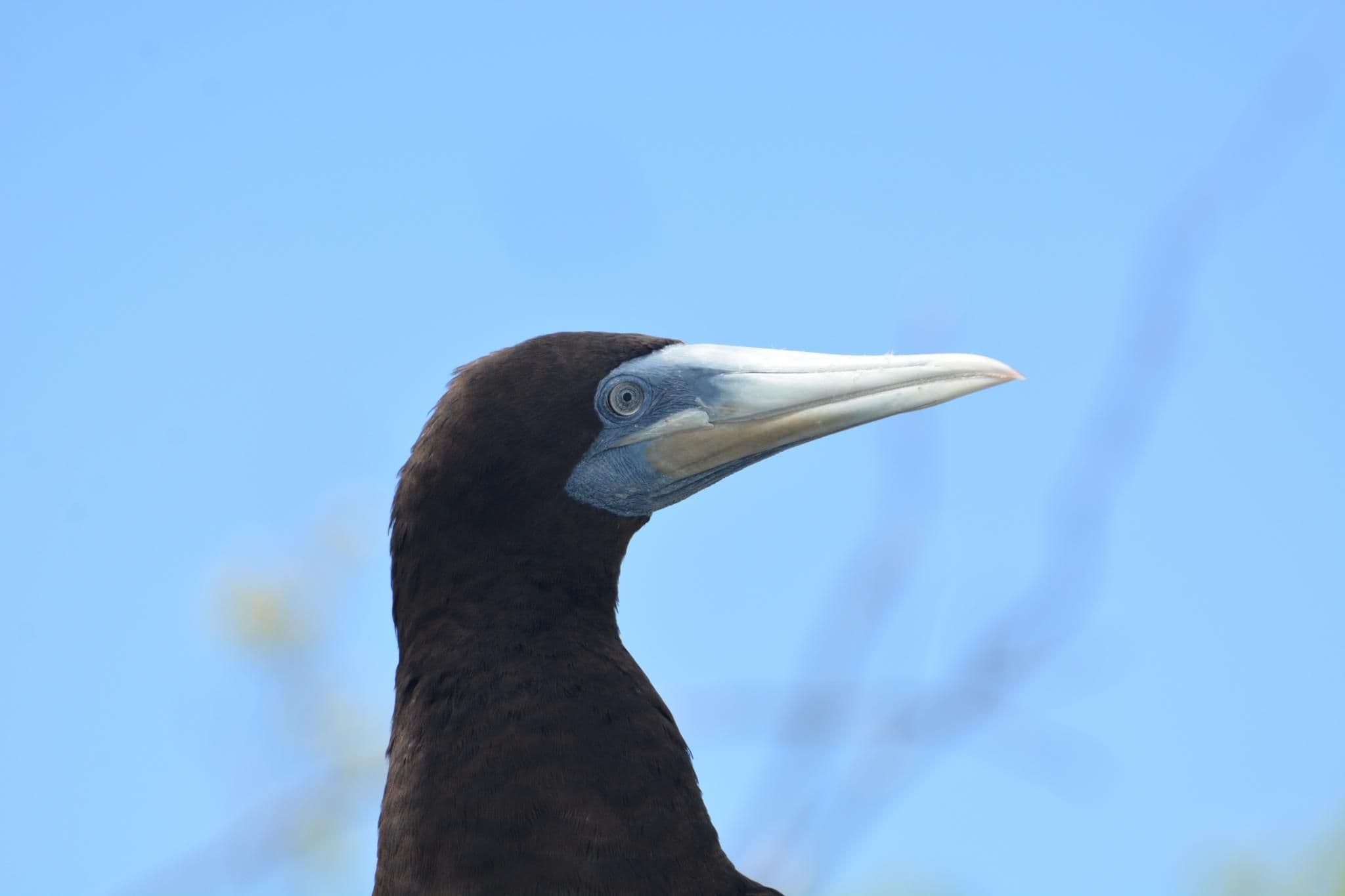
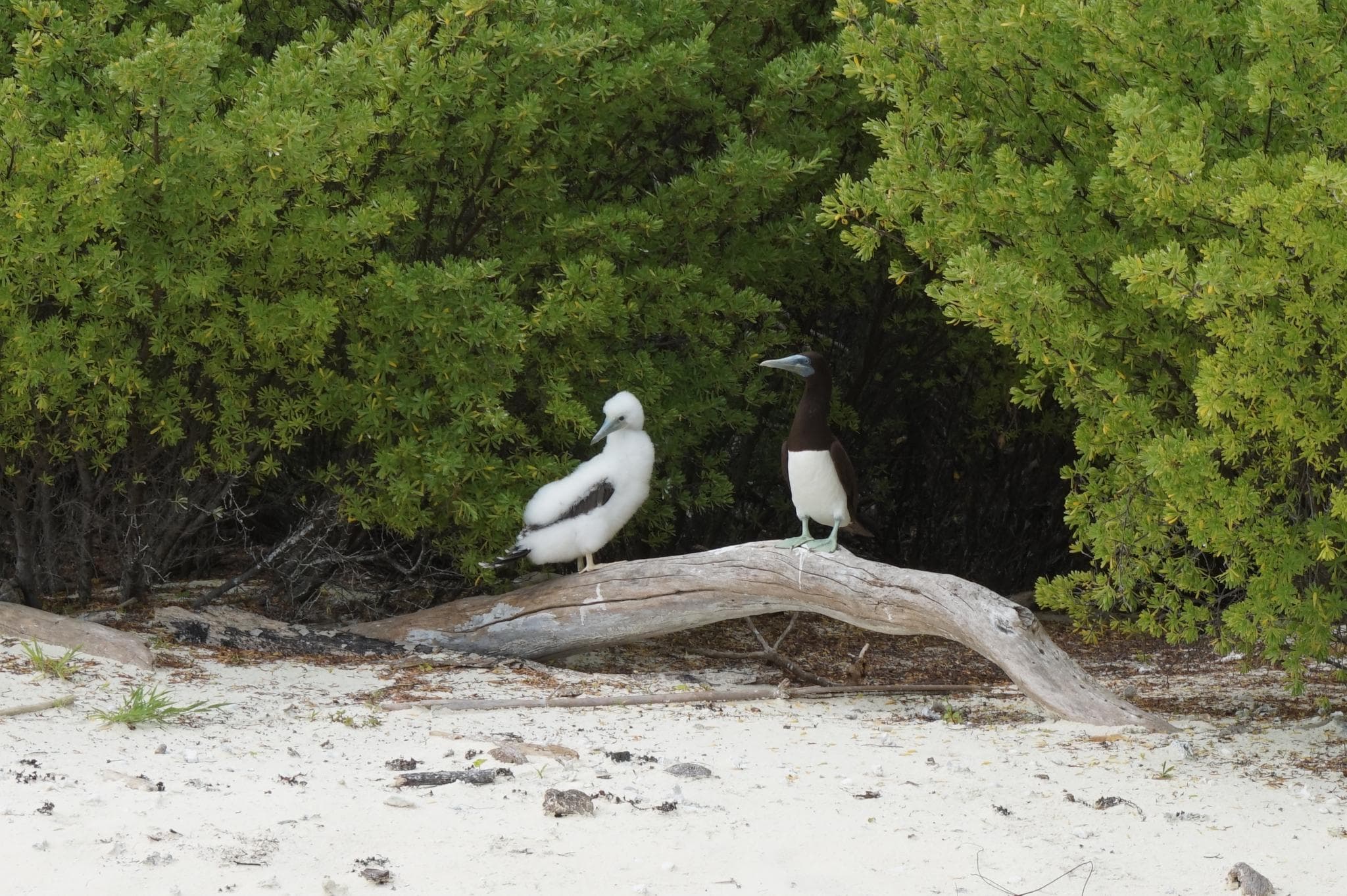
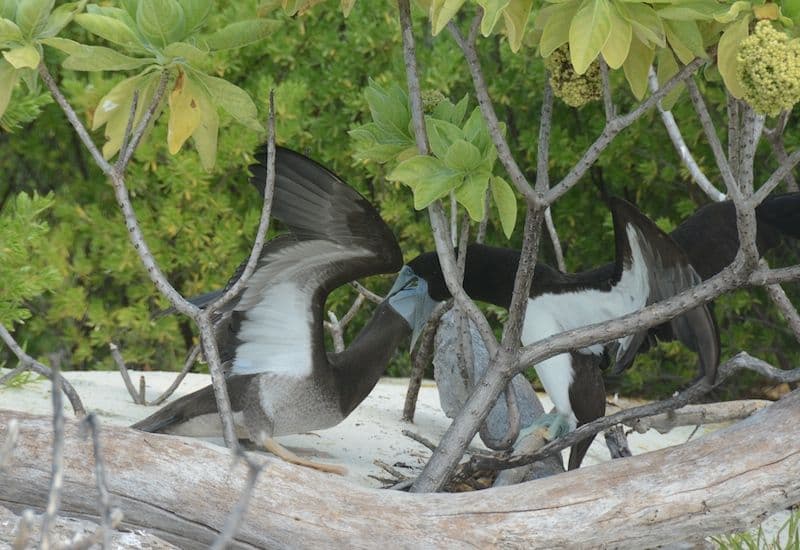
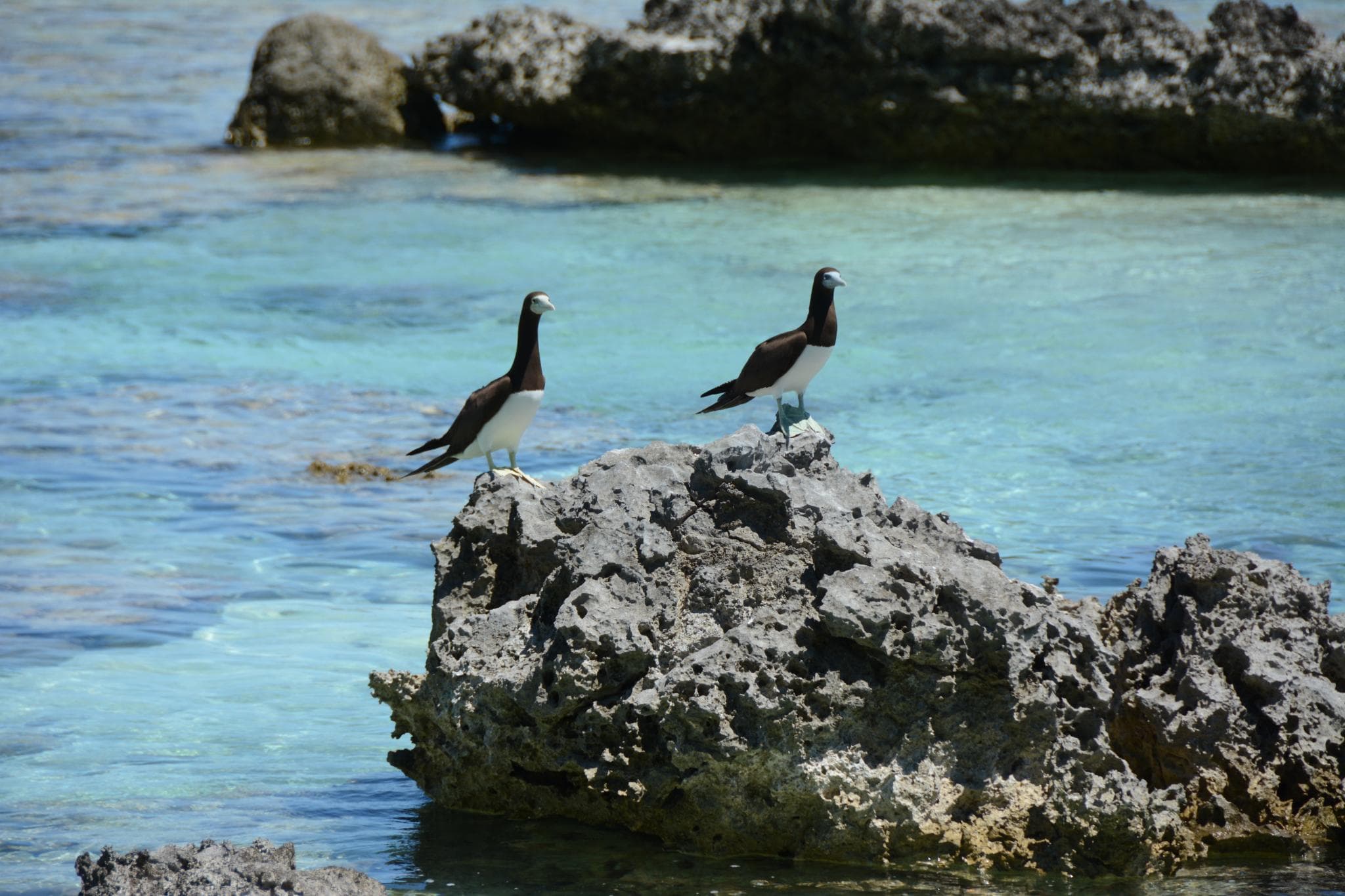
Brown above and white underneath, this booby has a yellowish bill and a wingspan of about 132–150 cm. Adult males can be distinguished by blue bare skin around the eye and the base of the bill.
It drops from heights of ten metres or more, sometimes several tens of metres, then uses its wings and webbed feet to pursue prey underwater. Flying fish and squid are among its food.
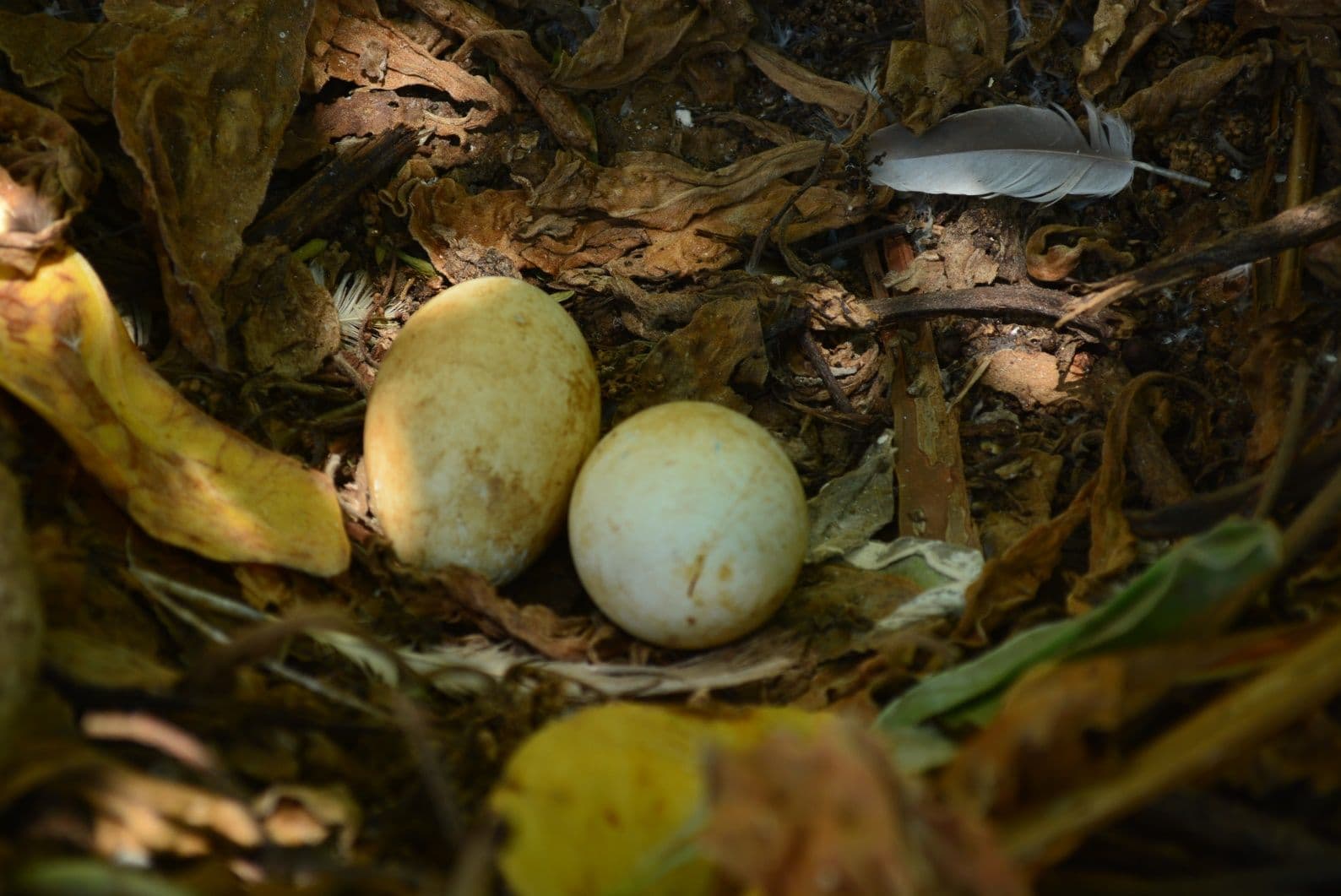
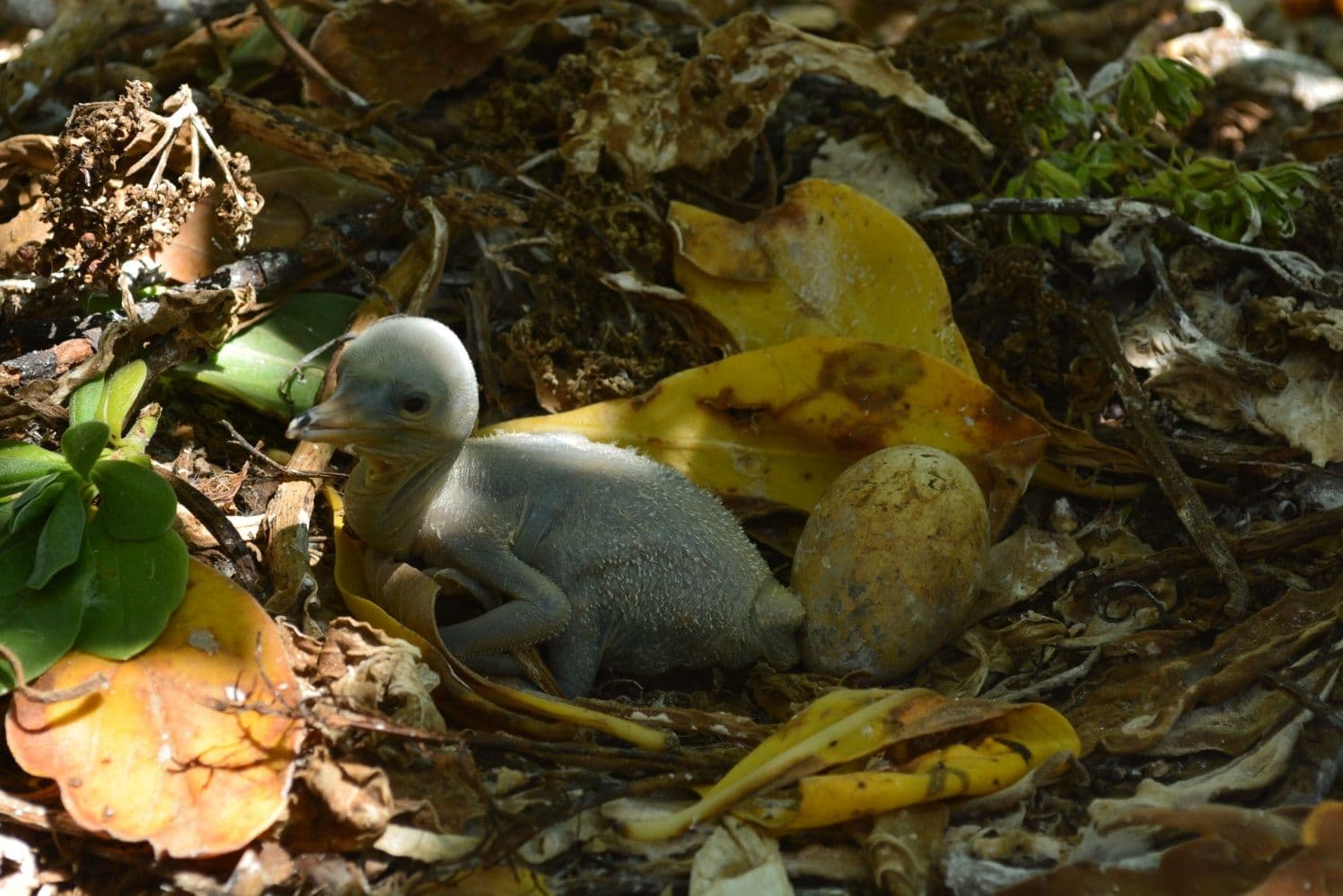
Breeding can occur throughout the year. Brown boobies nest on the ground, usually in colonies but sometimes alone, laying directly on the sand. Their pale, yellowish eggs measure about 6.4 × 4.6 cm. Both parents incubate for 43–47 days and care for the surviving chick for roughly 120 days.
A clutch may contain two eggs, but usually only one chick survives. The second egg provides insurance if the first fails; when both hatch, the older chick generally kills or displaces the younger.
The guide’s 2014 estimate was about 50 breeding pairs, with birds recorded on the northern motu and on Tahuna Iti in the south. They provide a reference point for following changes in the colony.
In Polynesian traditions recorded by Teuira Henry, the booby embodied Tū-ta-’iri’moana, associated with stability and the subduing of the sea. When the bird settled on the water, the sea was said to grow calm.