Tetiaroa is one stop in a life that runs between Arctic breeding grounds and the islands of the Pacific.
- Local names
- Torea
- Habitat
- Motu and shore
- Other names
- Pluvier fauve
About this species
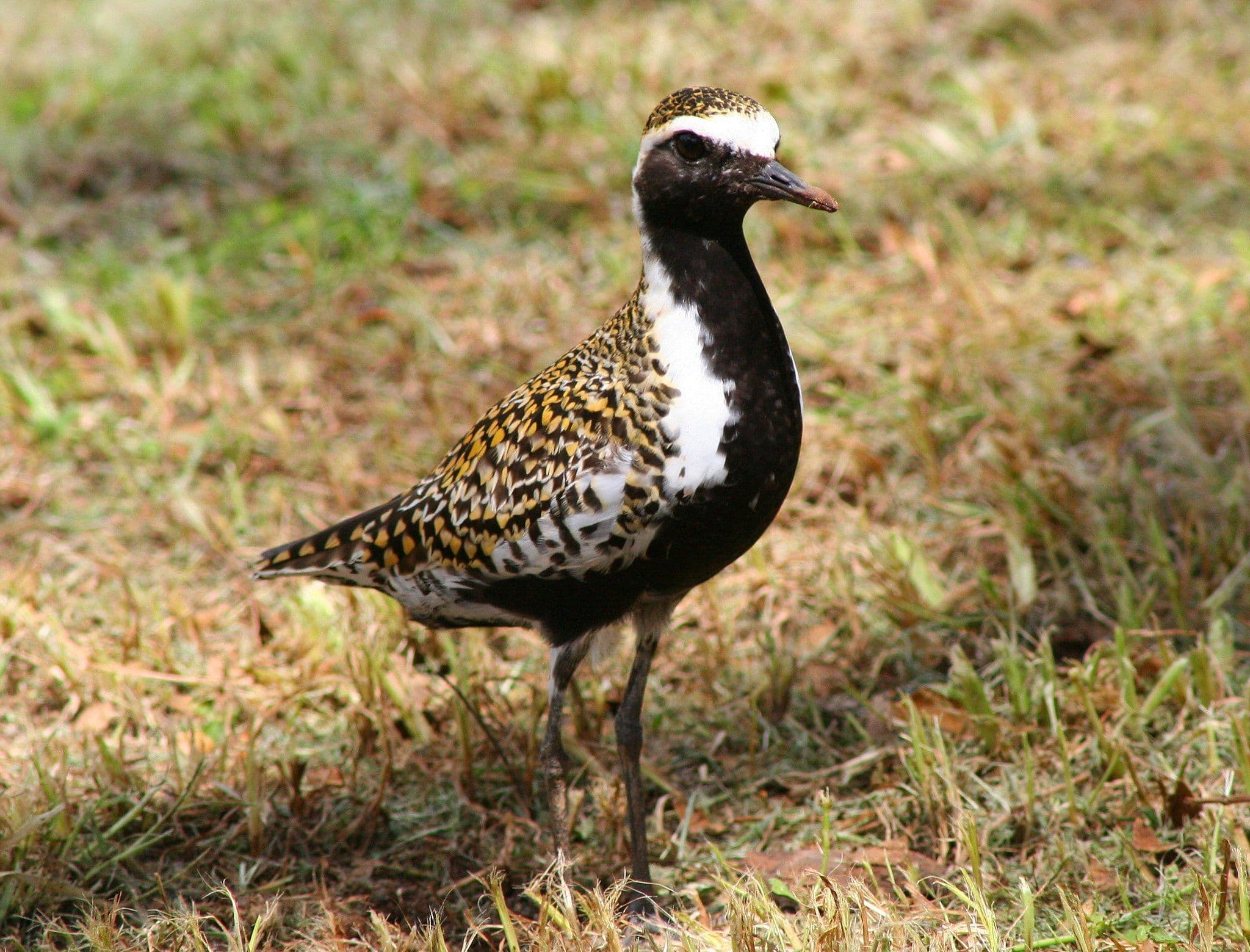
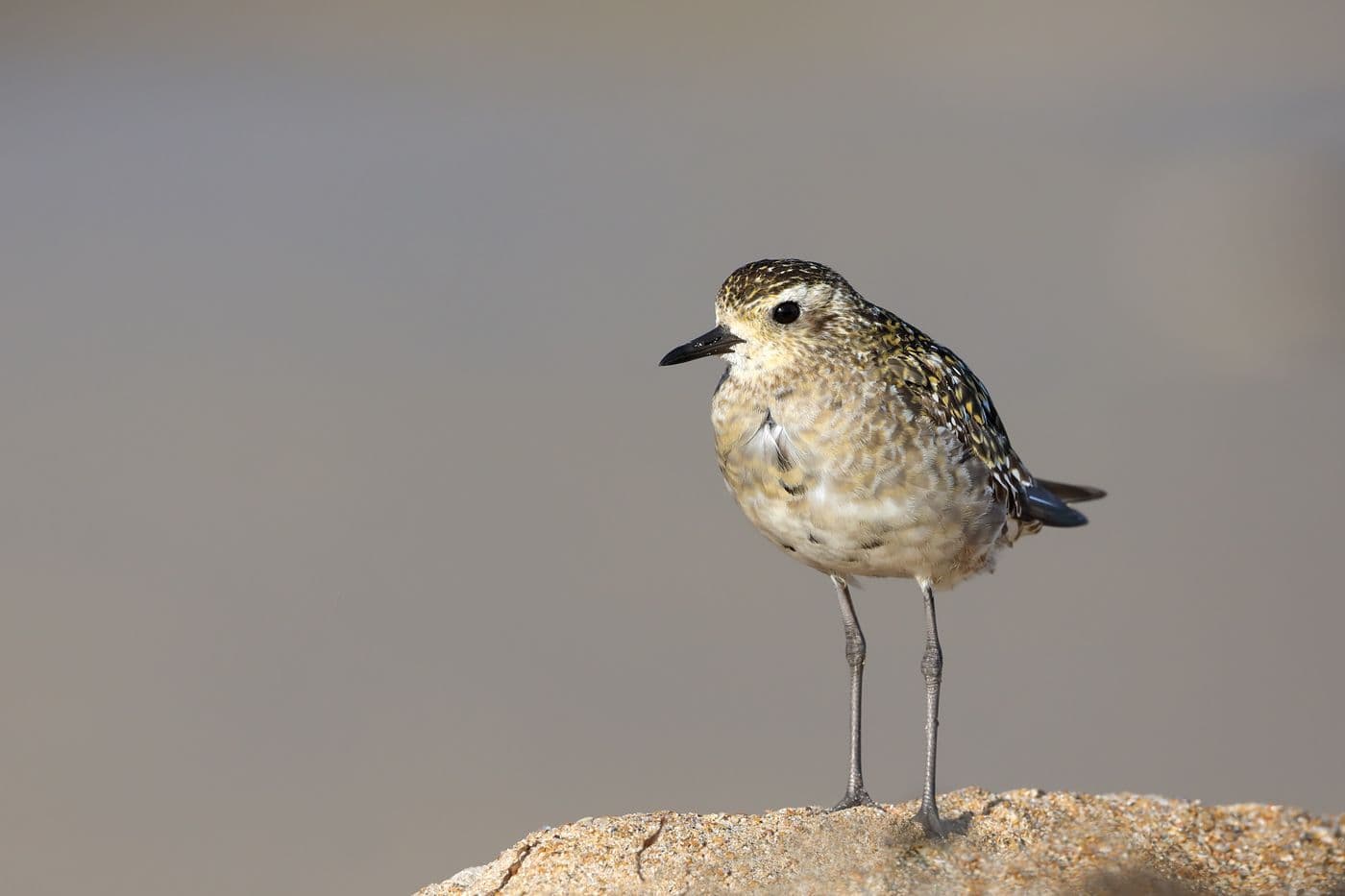
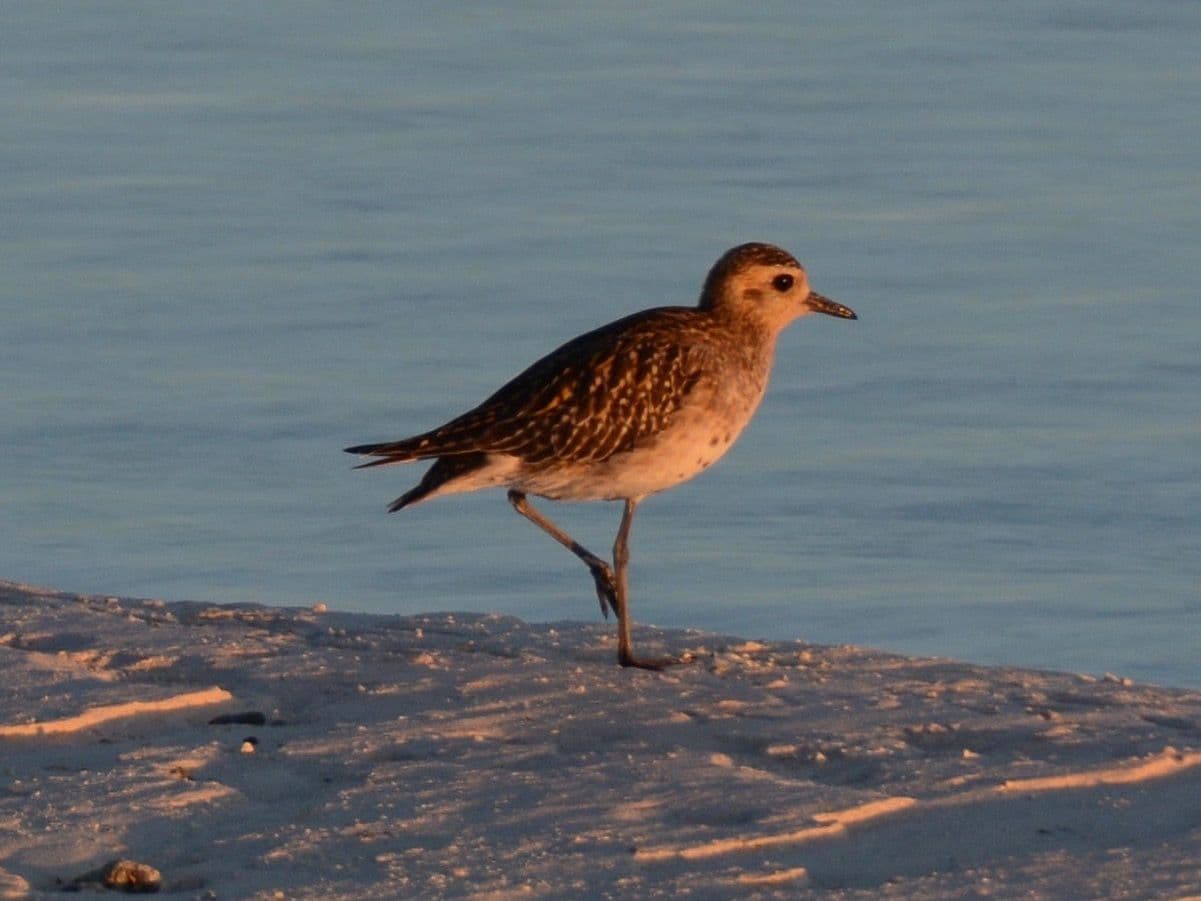
Pacific golden plovers measure about 23–27 cm from bill to tail. Outside the breeding season they are mottled brown, black, white and warm buff, with pale underparts. Breeding plumage brings a striking black face, throat and belly bordered by white. Both seasonal appearances can be seen in French Polynesia.
By day they search beaches and reef flats for small crustaceans, molluscs, insects and larvae. At night they gather near the water’s edge.
They breed on the ground in Alaska and Siberia during the northern summer, from May to July. The guide describes clutches of three to five eggs, incubated by both parents for about 26 days.
After breeding, they fly south across the Pacific, making uninterrupted journeys of more than 2,000 miles—about 3,200 km—and reaching islands and coasts as far as Australia. They are usually present on Tetiaroa from September to April before heading north again.
The guide recounts the suggestion that northbound plovers helped early Polynesian navigators in Tahiti and the Marquesas infer the existence of land towards Hawai‘i. It is presented as an interpretation, not proof of a particular voyage.
In the traditions cited by the guide, Tōrea’s call warned of danger. The bird embodied Te Meharo, associated with strangulation, and a warrior said to possess the plover’s eye could detect an enemy’s traps.