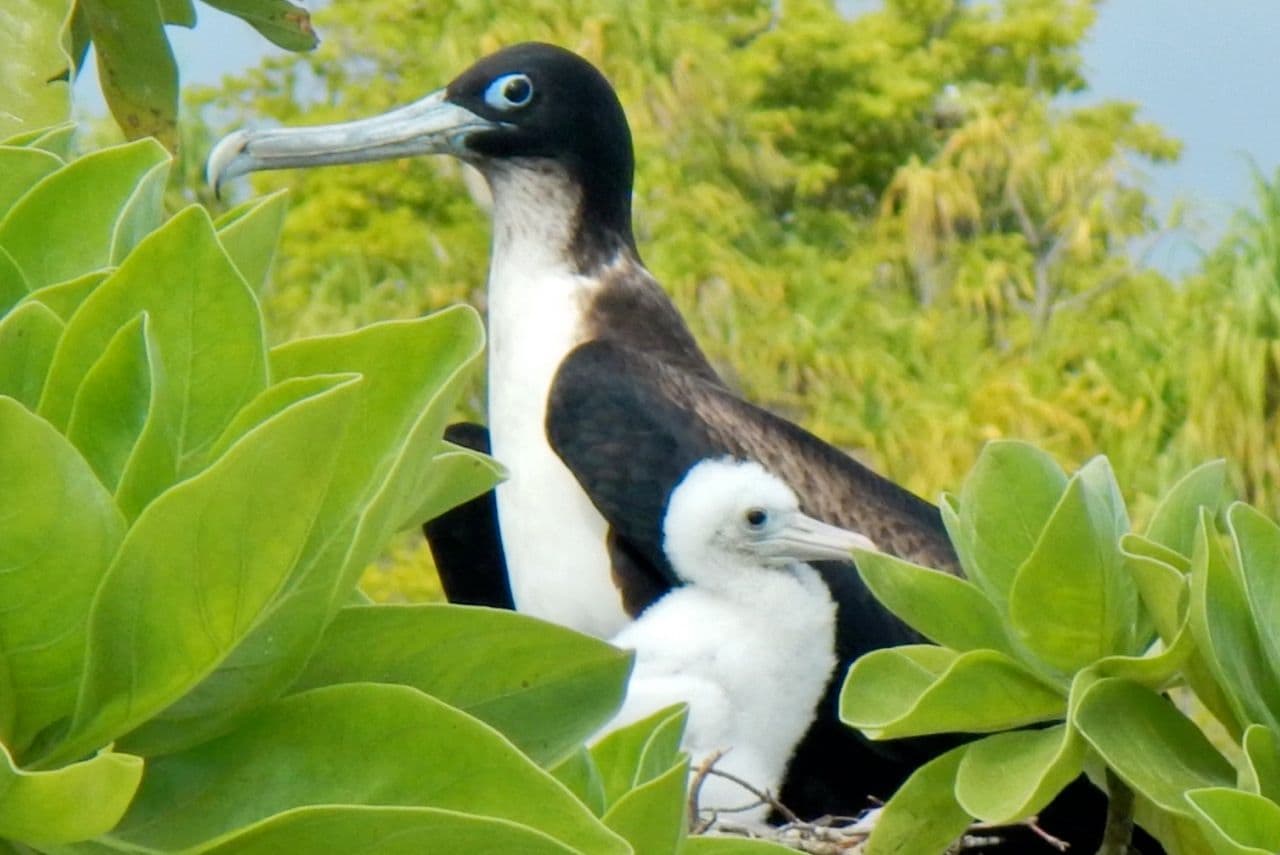
A hooked bill, wings spanning more than two metres, and a red throat pouch: the great frigatebird is built to command the air.
- Local names
- ’Otaha
- Habitat
- Motu and shore
- Other names
- Frégate du Pacifique
About this species
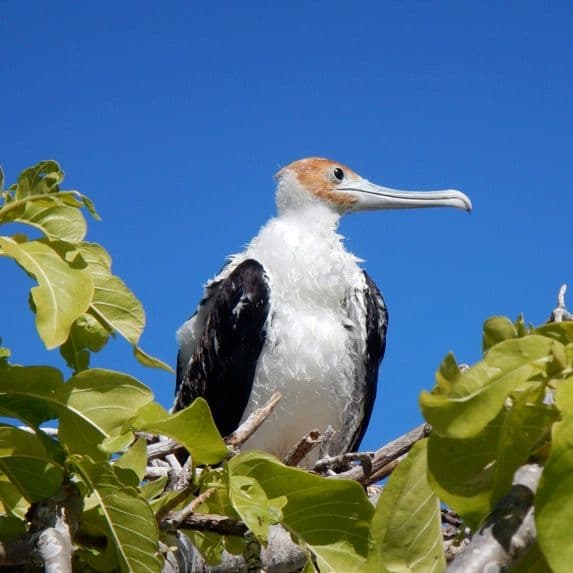
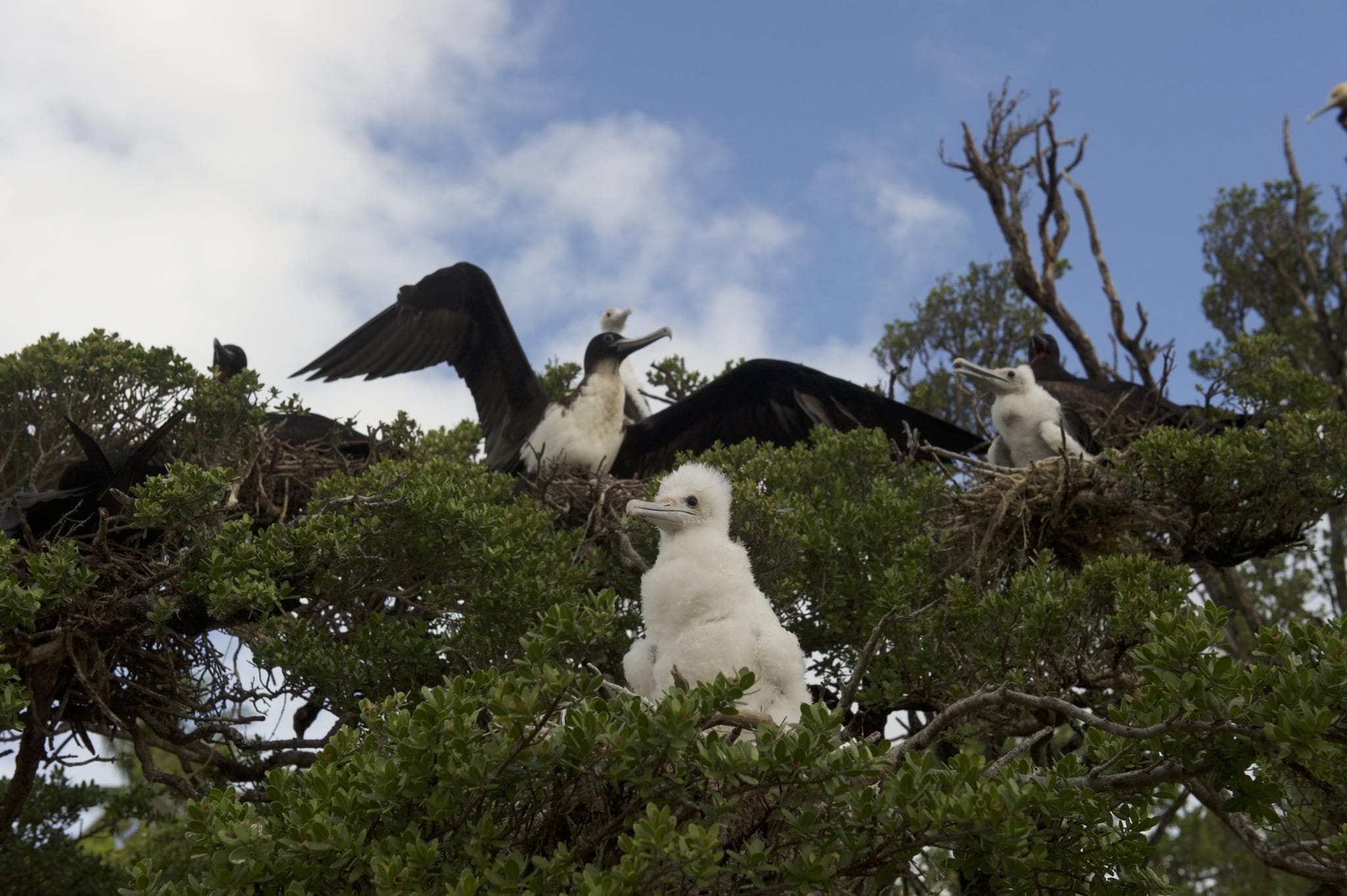
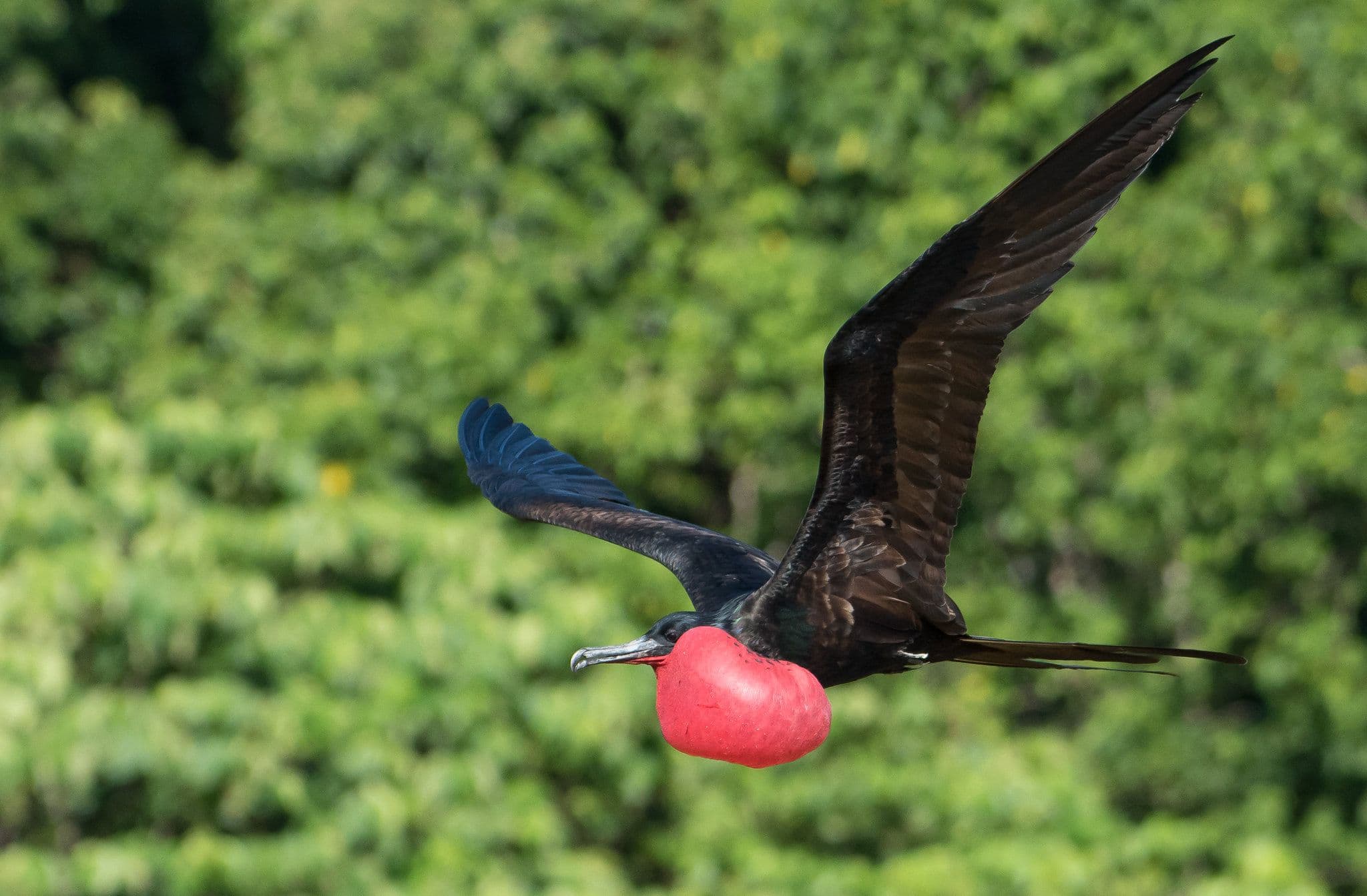
The guide describes this as French Polynesia’s largest seabird. Its long bill ends in a hook and its wings can span more than two metres. Males are dark, with brownish bars on the upper wings and a red throat pouch that they inflate during courtship. Females have a red eye-ring and a broad white patch running from the neck across the chest. Juveniles combine a pale belly with a pale to rusty head and upper chest; their appearance changes as they mature.
Great frigatebirds take flying fish and squid at the surface. Their plumage is poorly suited to prolonged immersion, so they do not dive after prey. The guide also lists crabs, eggs and hatchling turtles in the species’ diet, while explicitly noting that turtle predation had not been observed at Tetiaroa.
They also chase other seabirds until the pursued bird drops or regurgitates its meal. This theft of another animal’s catch is called kleptoparasitism and takes time for young birds to master.
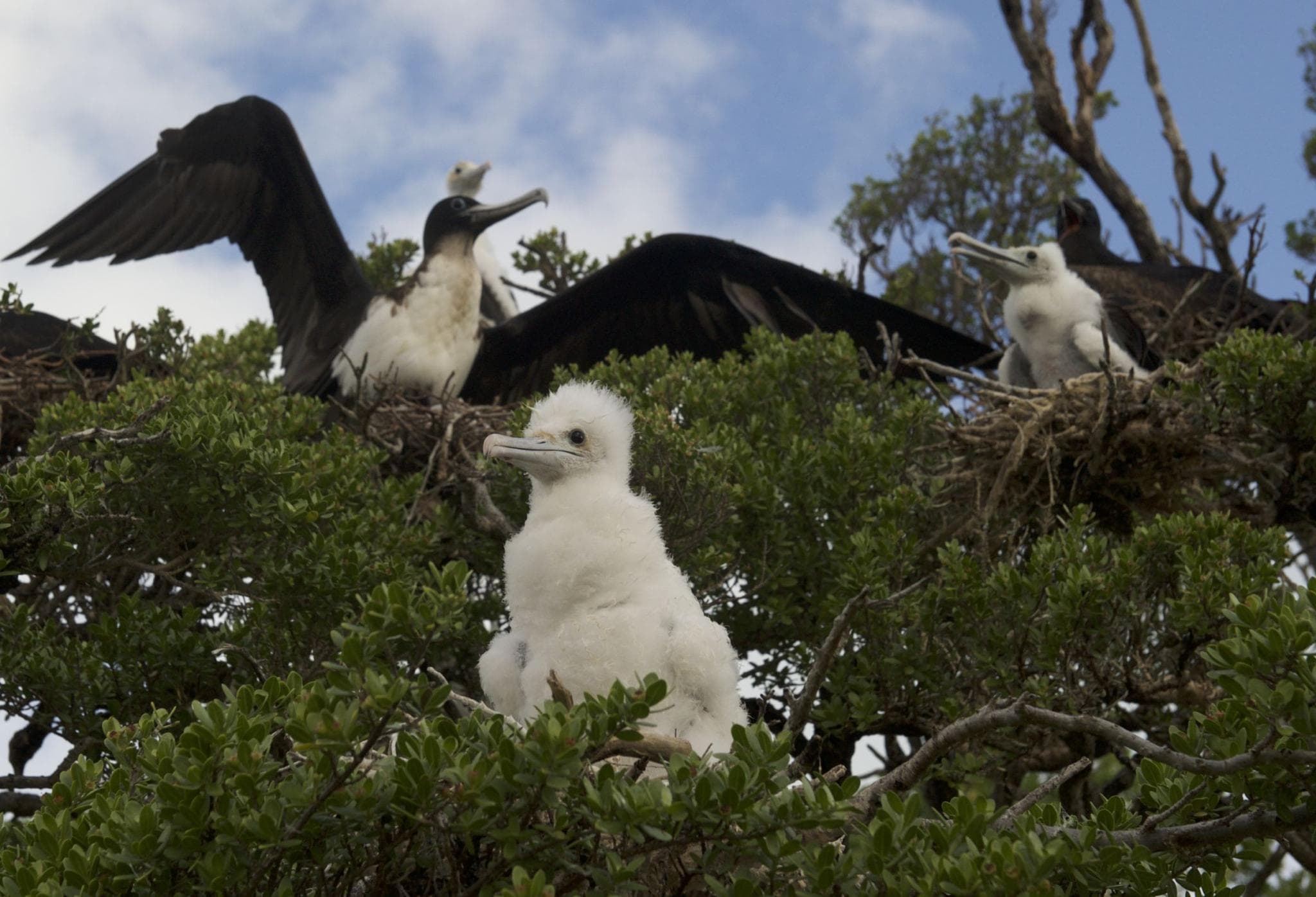
Breeding may begin in any season. A large nest is usually built in a coastal tree or shrub several metres above ground, though ground nesting also occurs. Both parents incubate a single white egg for about 55 days. The chick stays in the nest for four to five months and may continue to receive food for another six months or longer after fledging. The full breeding commitment can exceed a year, making undisturbed islands especially valuable.
The guide recorded the birds in the northern half of Tetiaroa and estimated about 100 individuals in 2014; it did not label that figure as breeding pairs.
Frigatebirds are sacred birds in the Polynesian traditions cited by the guide. They embody ‘Oro, god of war and son of Ta‘aroa.