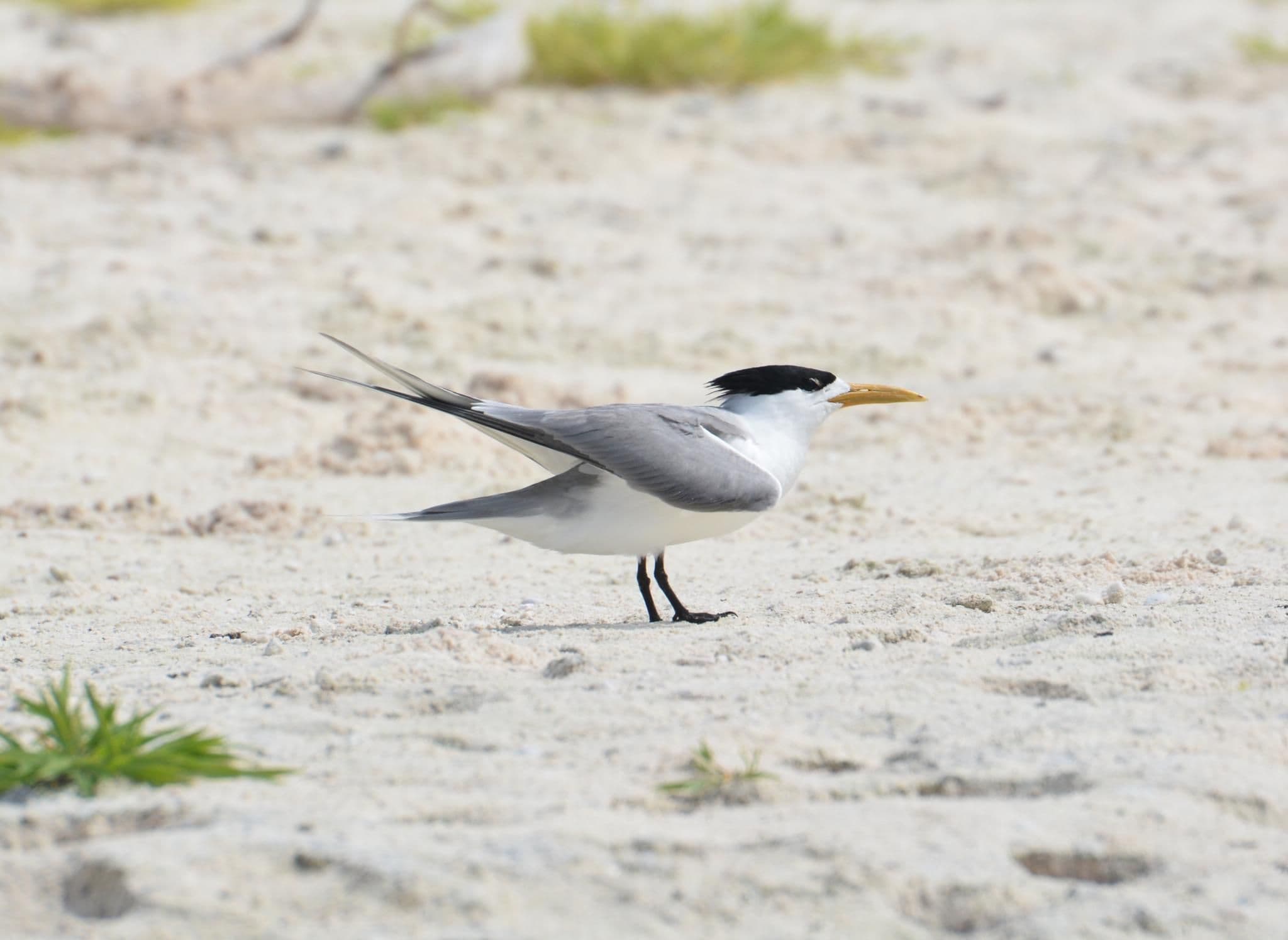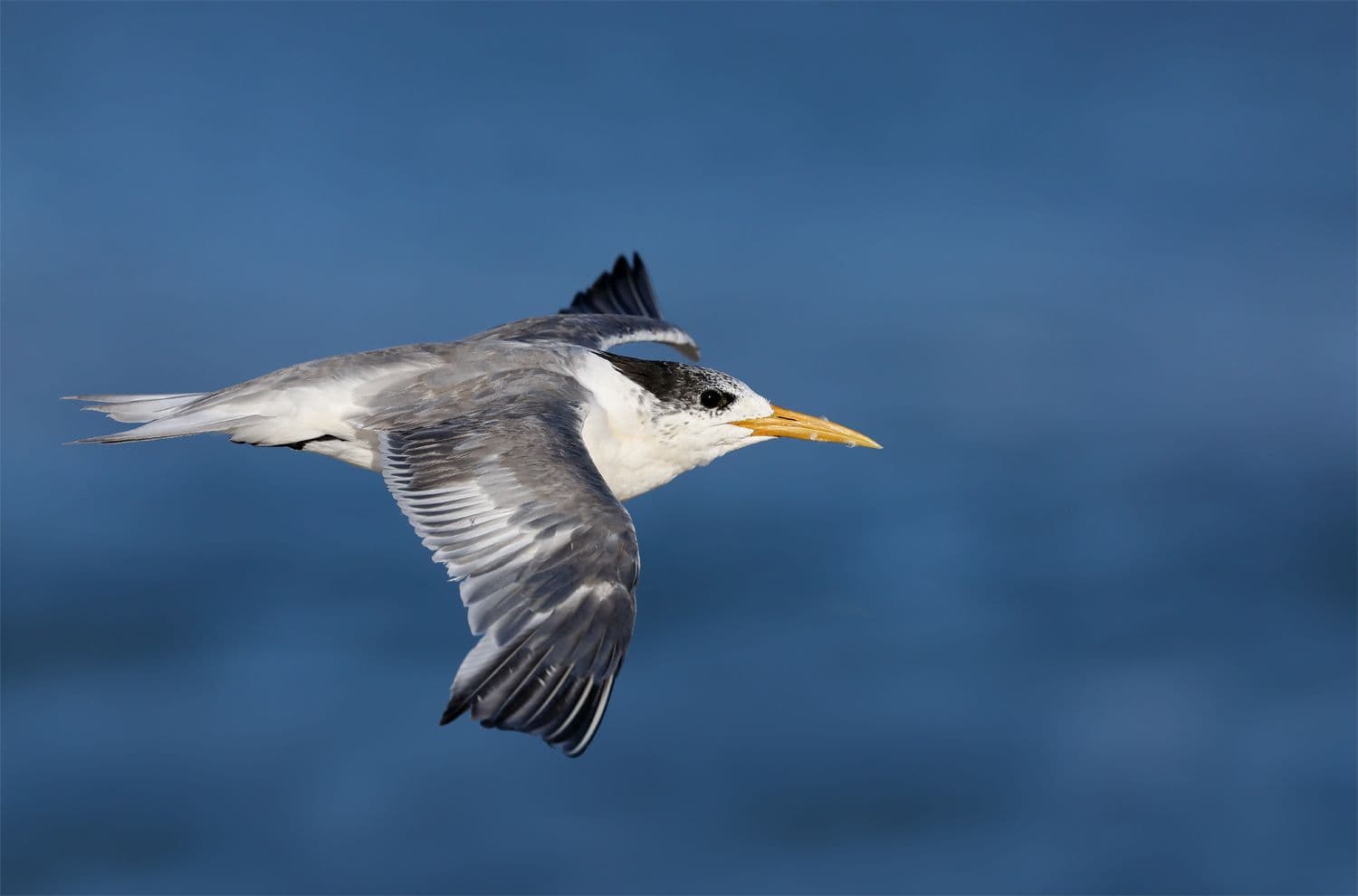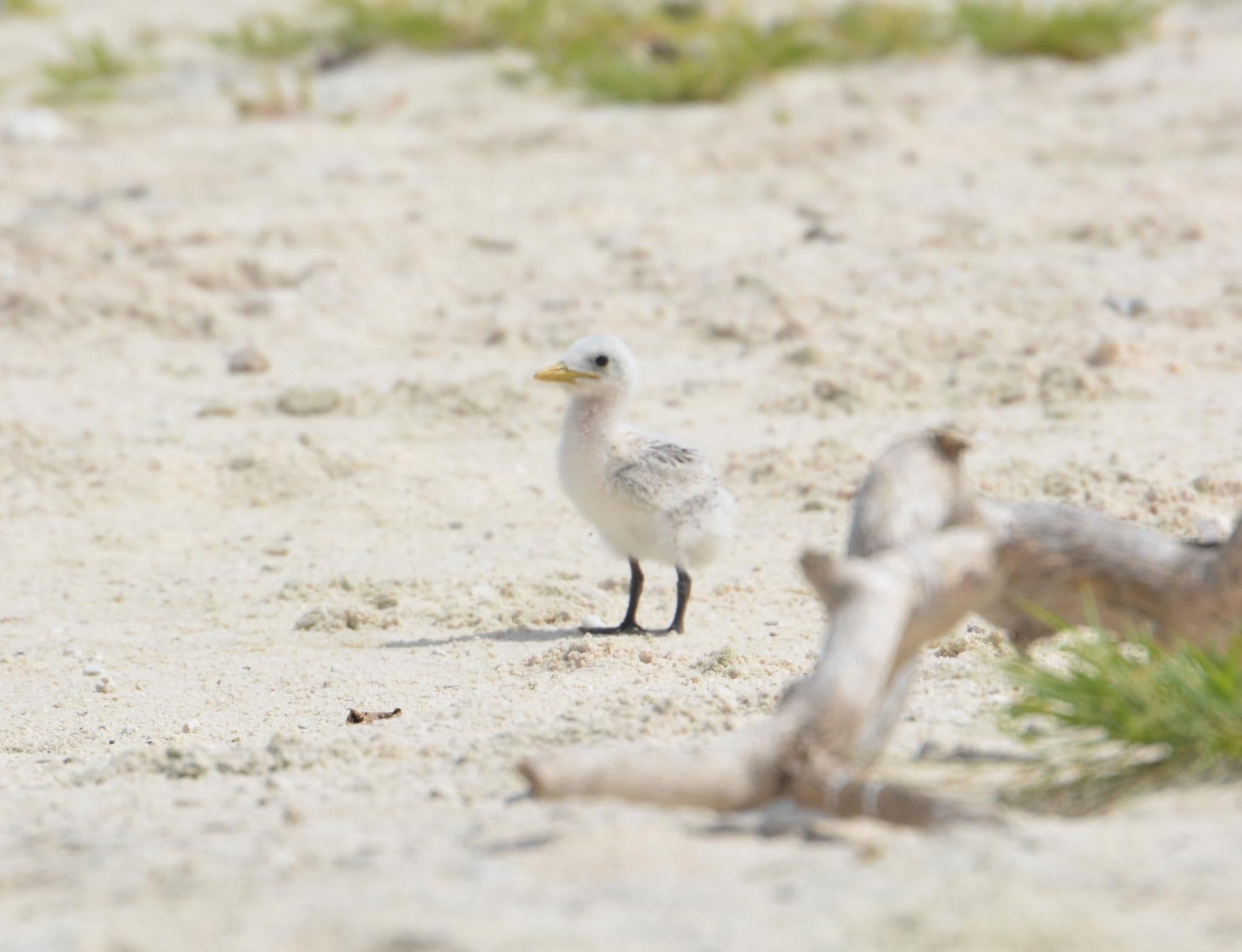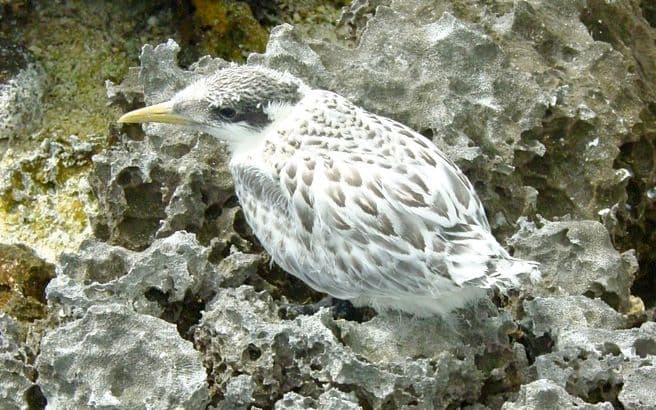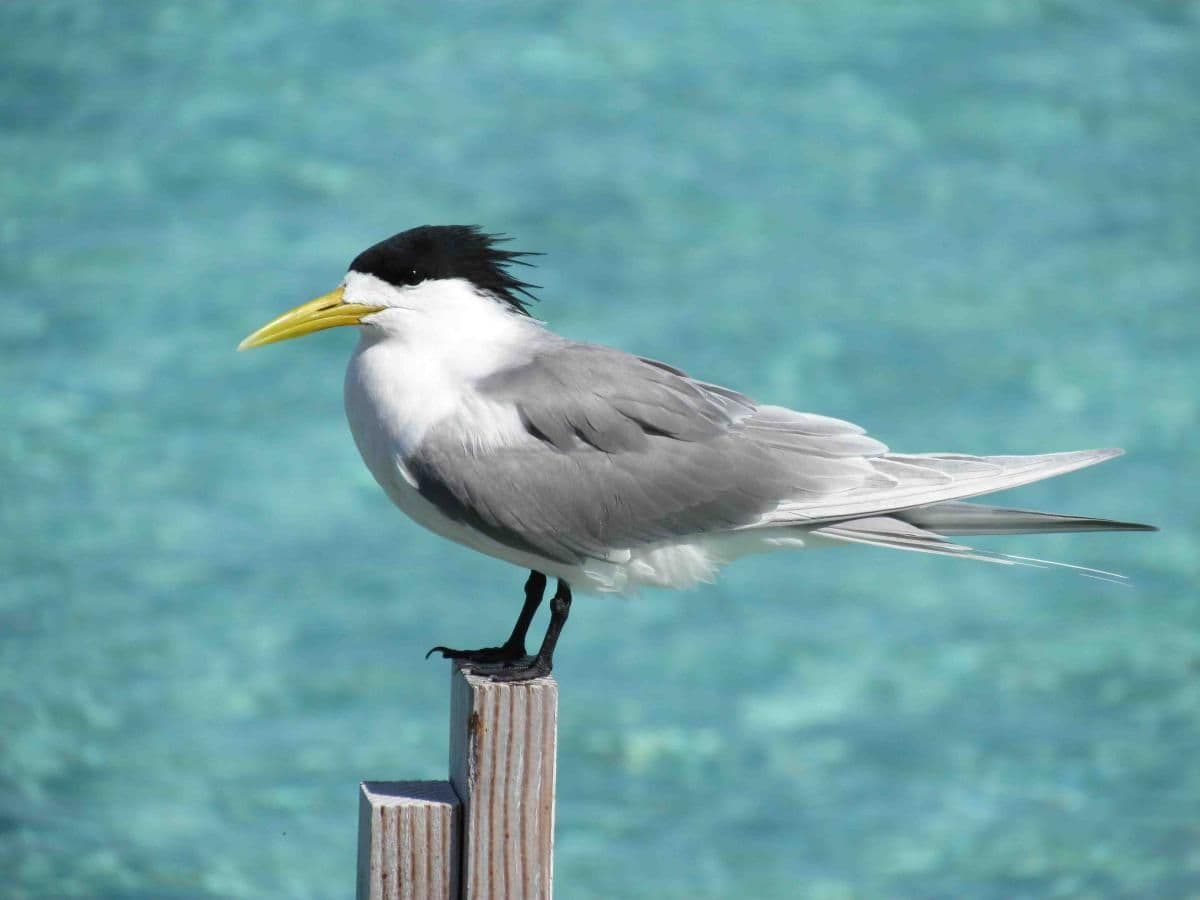
A black crest, a yellow bill and an egg laid straight on the sand: Tarāpapa keeps its nesting arrangements simple.
- Local names
- Tarapapa
- Habitat
- Motu and shore
- Other names
- Sterne huppée
About this species
The greater crested tern is white with a grey back, black feet and a yellow bill. Its black crown becomes a pronounced crest in breeding plumage. Its wingspan is about 99–109 cm.
It usually fishes within one or two kilometres of shore, over the lagoon or the ocean. Small fish, including flying fish, make up much of its diet.
The Tetiaroa guide records its breeding colony on Tahuna Iti, the small bird island, with an estimated 20–50 pairs in 2014. Nesting may occur throughout the year. Birds can defend their nesting area vigorously when approached.
One or two greyish eggs, about 6.1 × 4.1 cm, are laid in a shallow hollow in the sand. Both adults incubate for about 25 days. At around 15 days old, chicks gather in a crèche and can escape danger by swimming.
In the Polynesian traditions recorded in the guide’s sources, Tarāpapa was an embodiment of the gods of the air.