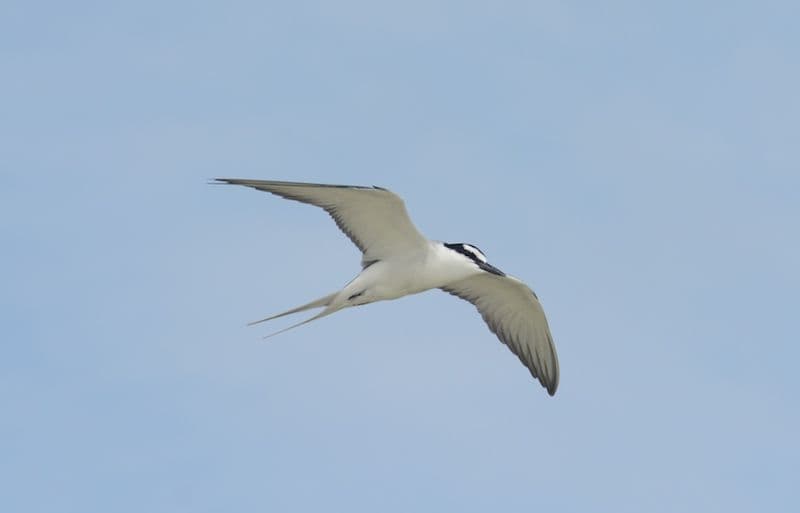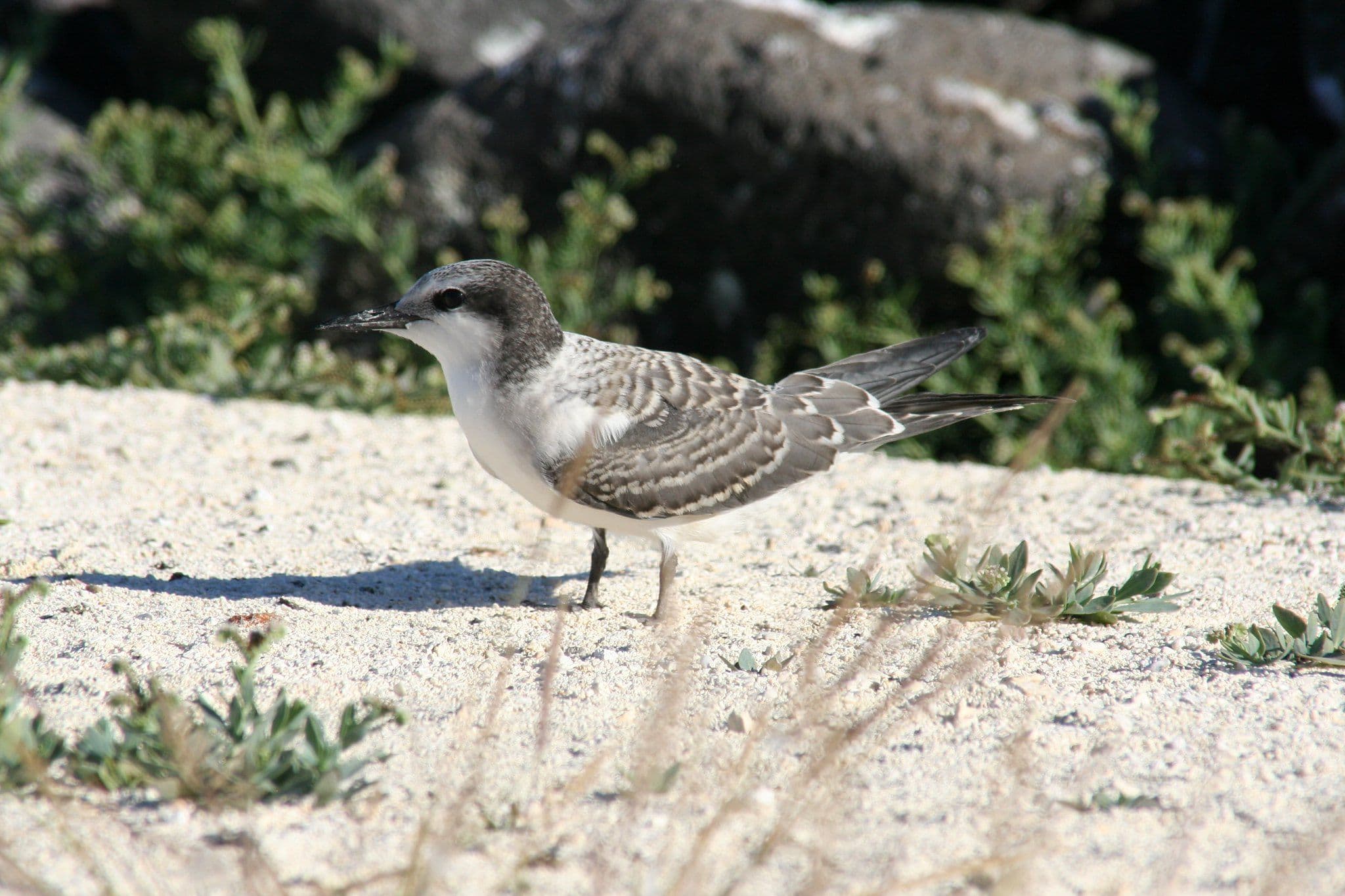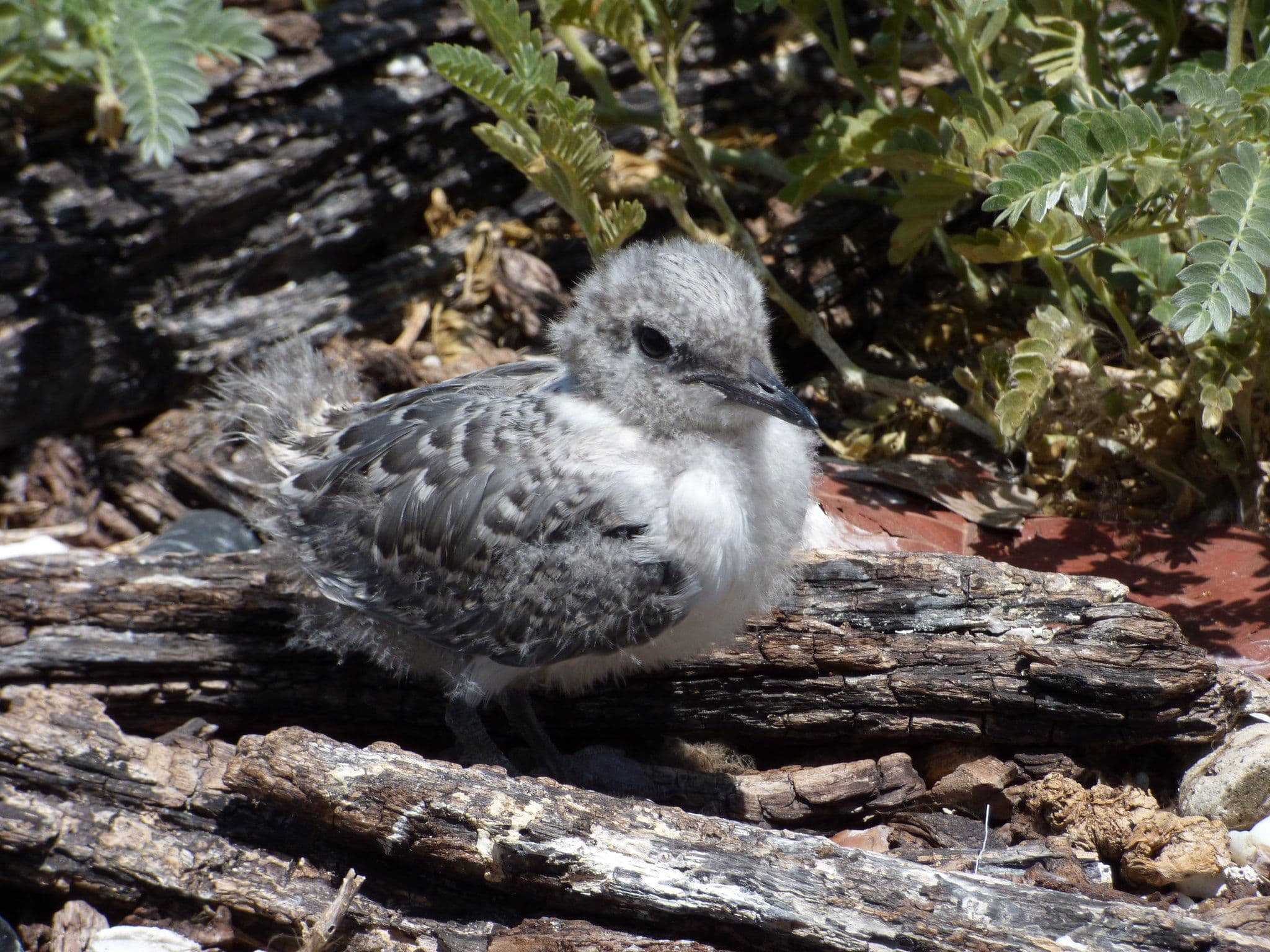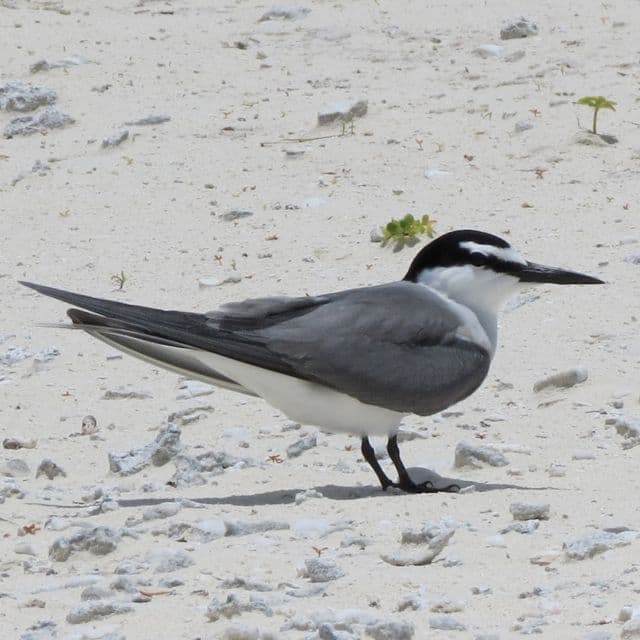
A fine white eyebrow separates this small ocean-going tern from the darker sooty tern.
- Local names
- Oreore
- Habitat
- Motu and shoreOpen ocean
- Other names
- Sterne à dos gris
About this species
The grey-backed tern has a grey back, white underparts and a dark cap and eye-line. A narrow white stripe extends from the forehead beyond the eye, an important distinction from the sooty tern. It is also smaller, with a wingspan of about 73–76 cm.
It takes small fish and cephalopods near the surface and, unlike the sooty tern, may dive for them. During breeding it usually feeds near its nesting islet, venturing farther out at other times.
An ocean-going bird outside breeding, it returns to land to nest in groups between June and November. The guide records nesting only on Tahuna Iti, where an estimated 16 pairs were present in 2014.
A single pale pink egg with brown markings, approximately 4.3 × 3.3 cm, is laid in a sandy hollow. Both parents take turns incubating it.
The older French account described it as Tetiaroa’s rarest seabird. That is a historical assessment, not a current ranking. The colony is sensitive to predators and disturbance, and the guide notes that information about the species in French Polynesia remains limited.