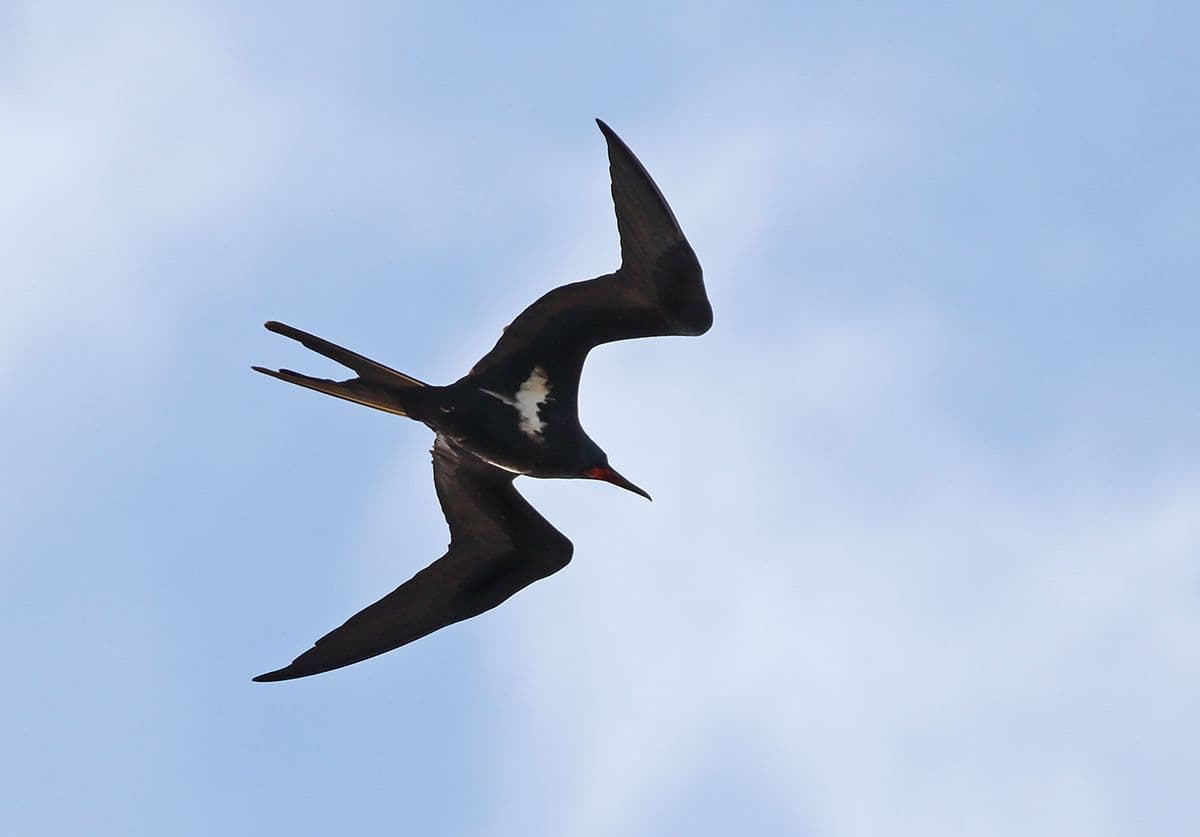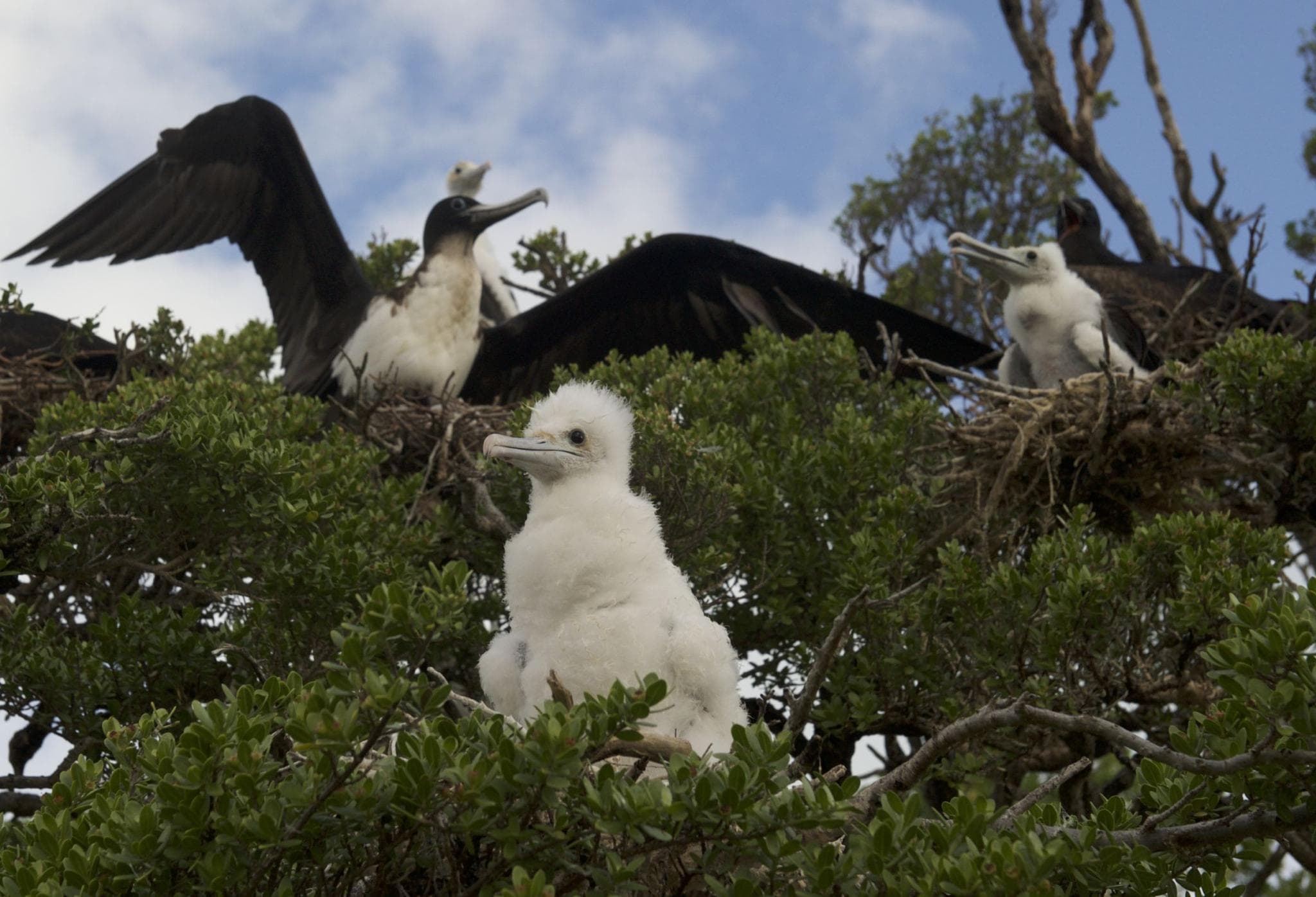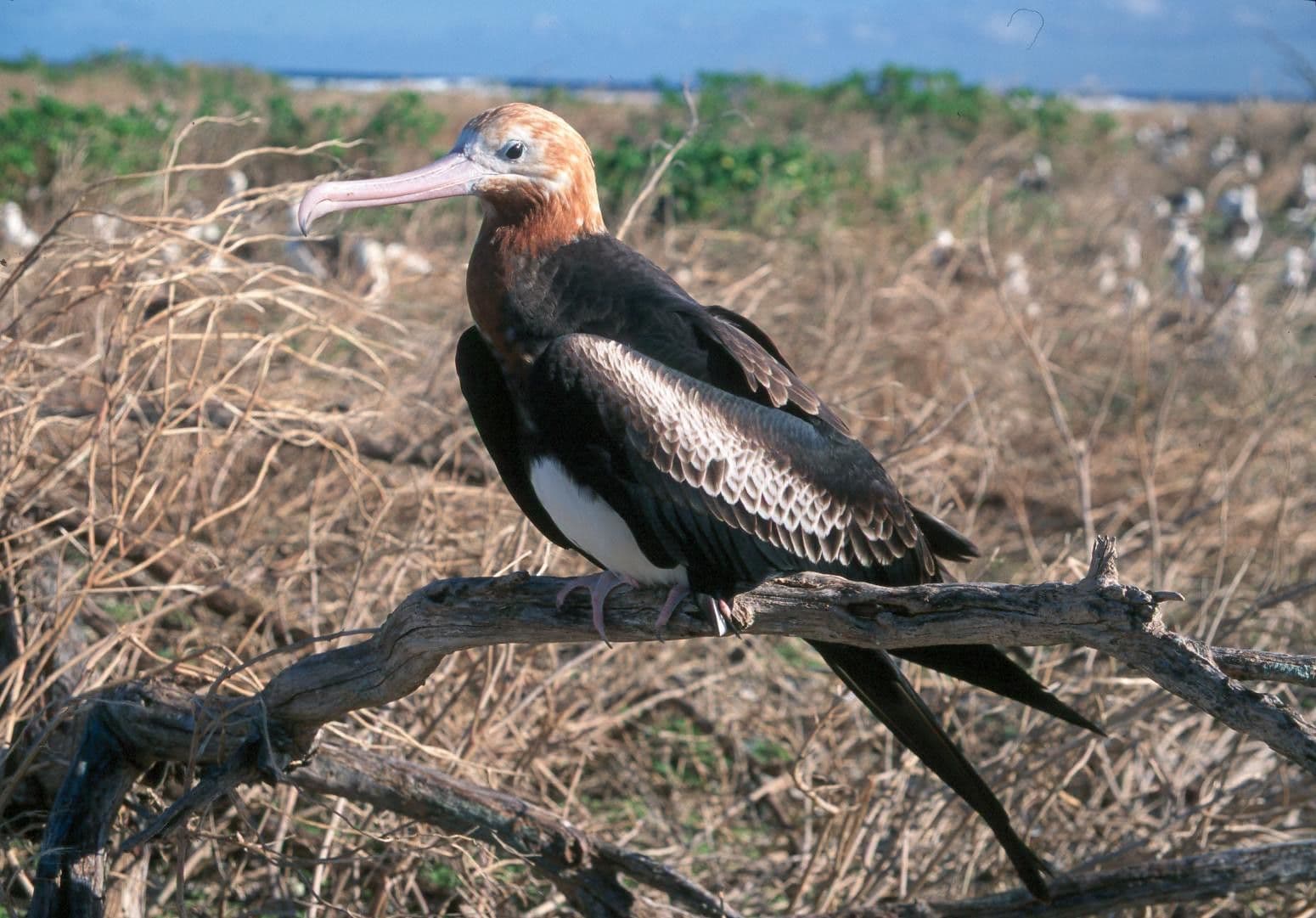
Look beneath the wings: the male’s paired white patches distinguish it from its larger relative.
- Local names
- ‘Otaha
- Habitat
- Motu and shore
- Other names
- Frégate Ariel
About this species
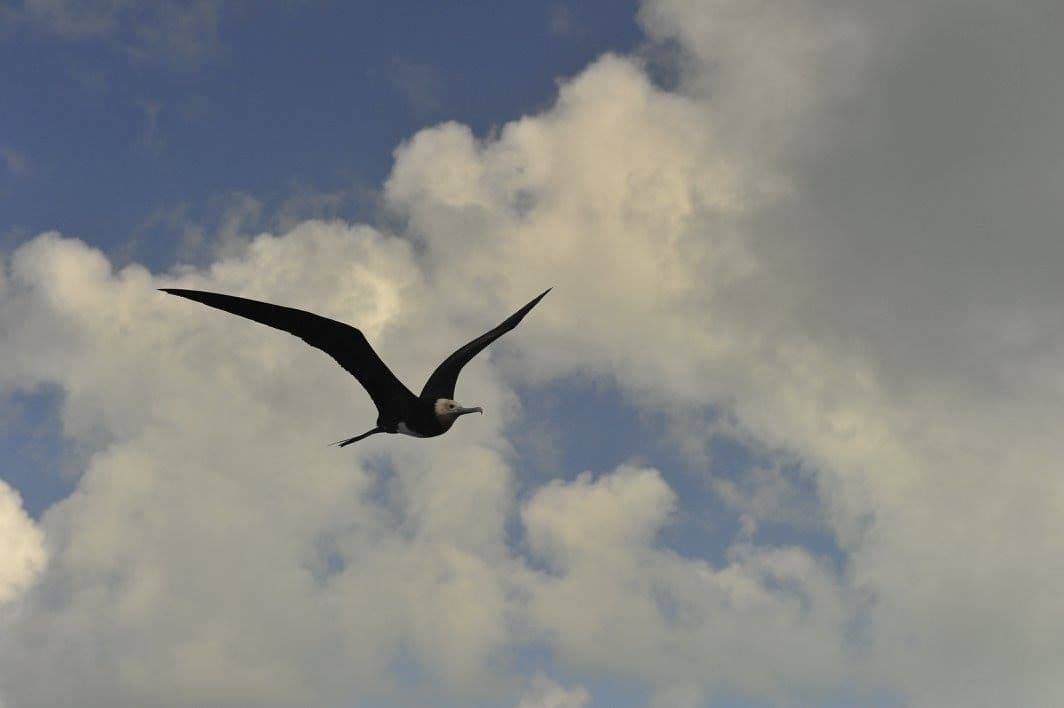
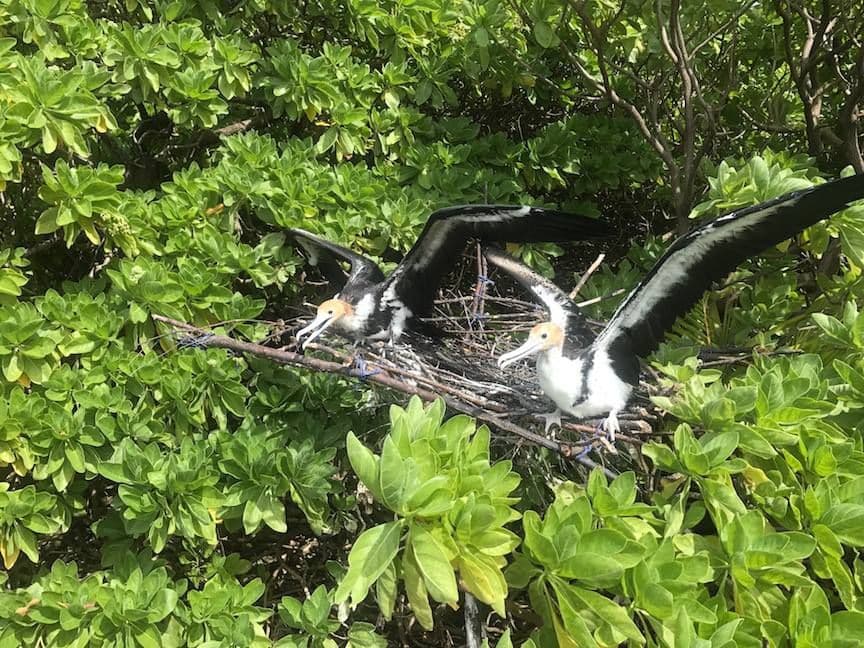
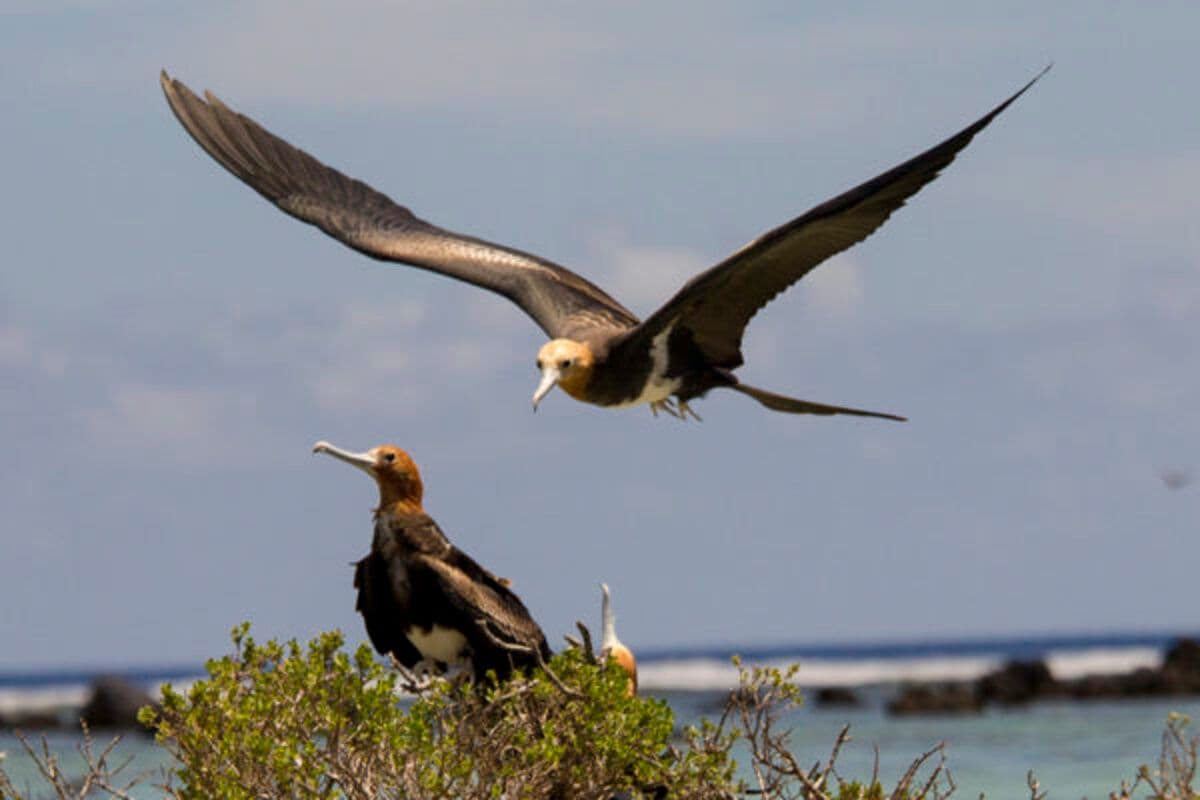
The lesser frigatebird has a long hooked bill and a wingspan approaching two metres. Males are predominantly black with a white patch beneath each wing and a bright red throat pouch inflated during courtship. Females are slightly larger, with red eye-rings and white on the chest and belly, including a rounded belly patch. Young birds have a rusty head and a white belly.
Fish, squid, crabs and young turtles feature in the species’ diet. Its plumage is not suited to diving, so it takes food from the surface while remaining airborne. It also harasses other seabirds until they drop or regurgitate their catch.
Nesting colonies may be close to the birds from which frigatebirds steal food. Large nests are built in trees or shrubs and occasionally on the ground.
Breeding can begin at any time of year. Both adults incubate a single yellowish-white egg, about 6 × 4.2 cm, for roughly 41 days. The chick spends around 130 days in the nest and may remain dependent for another eight months after fledging. Care can therefore extend beyond a year, and adults may breed only in alternate years.
The guide records the species in the northern half of Tetiaroa, alongside great frigatebirds, and estimates 20–30 pairs in 2014.
Like the great frigatebird, ‘Otaha is associated in the cited Polynesian traditions with ‘Oro, god of war and son of Ta‘aroa.