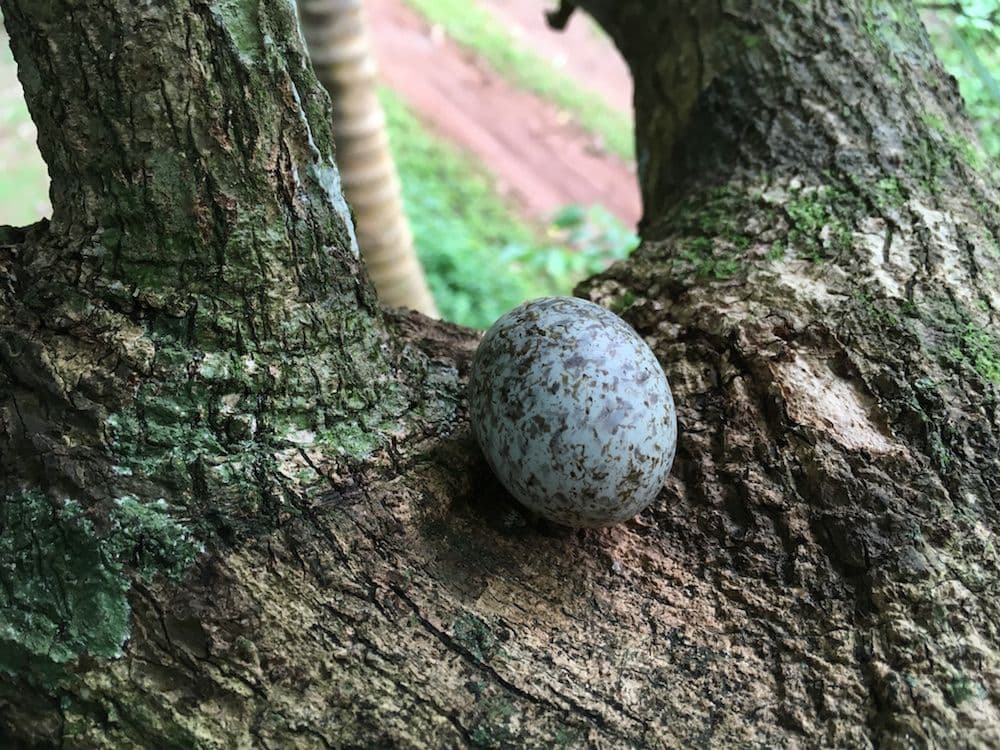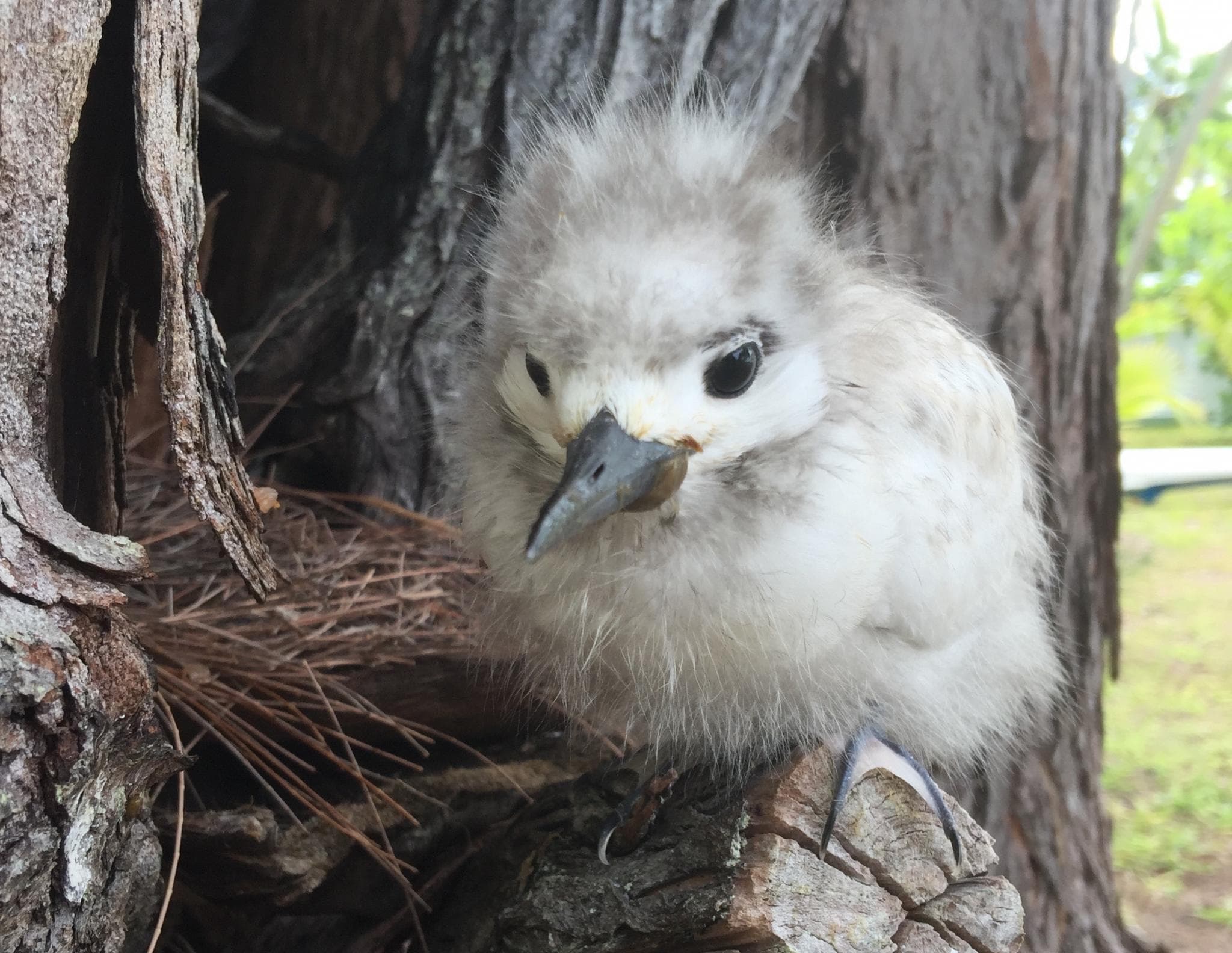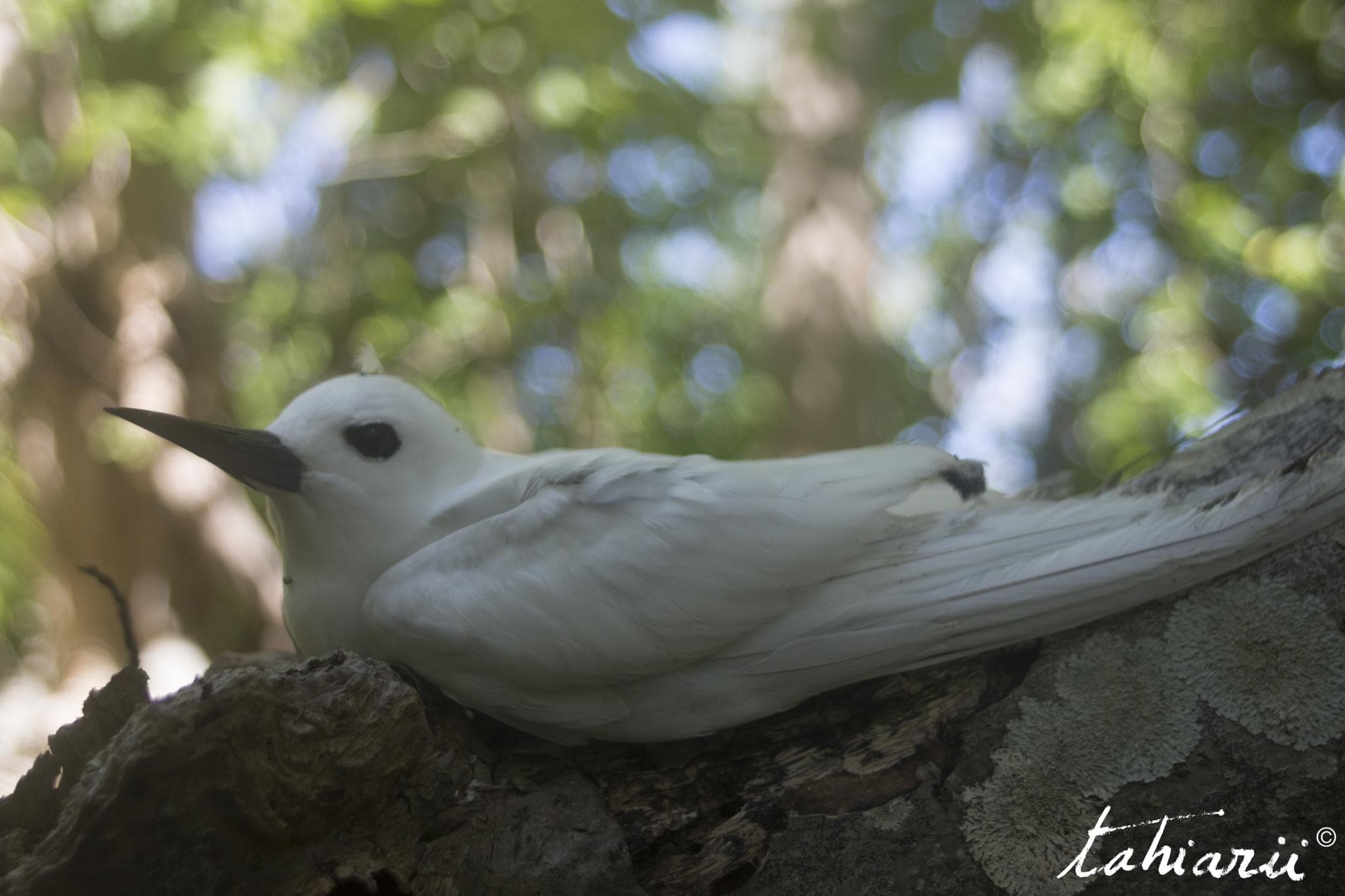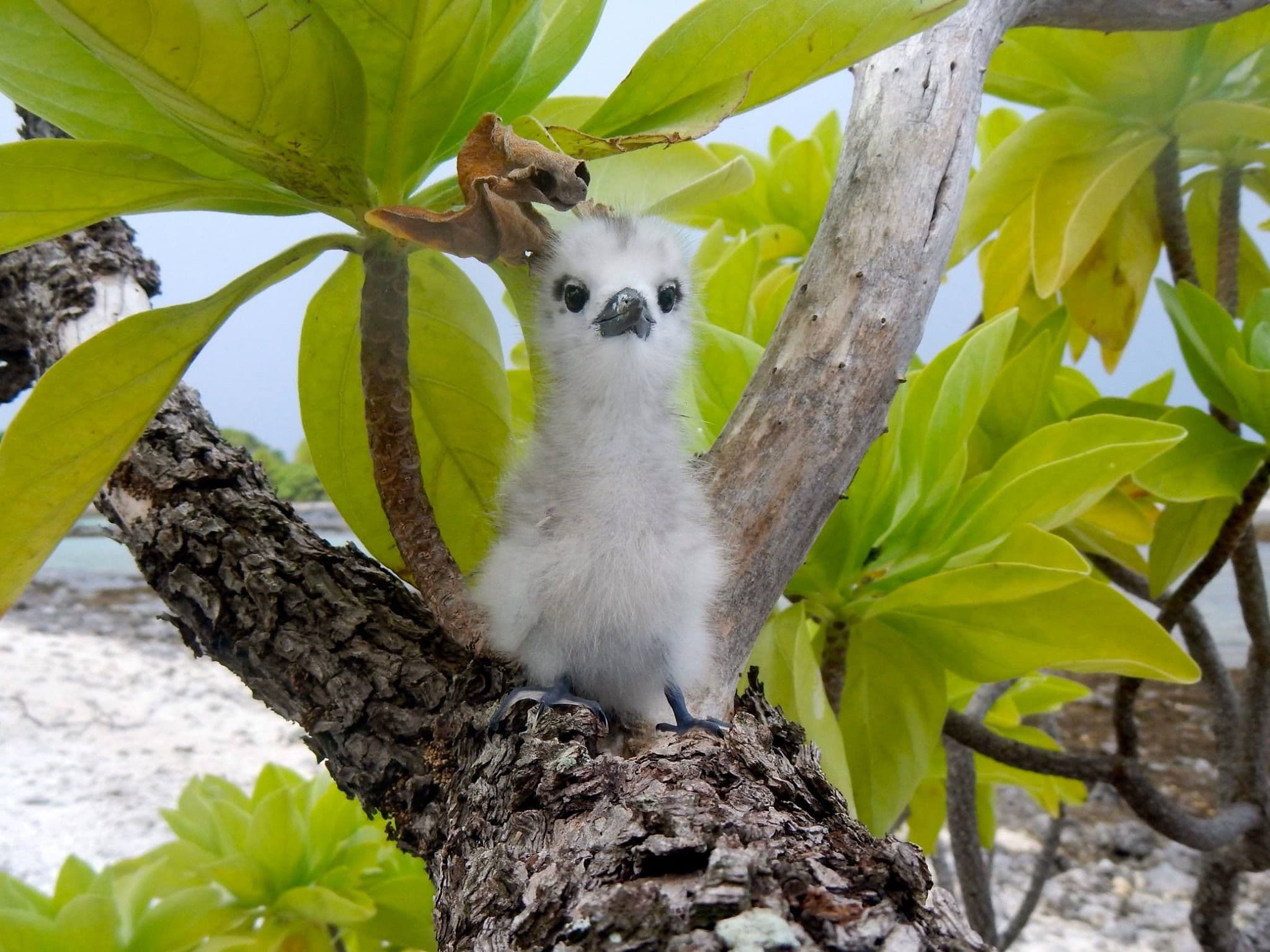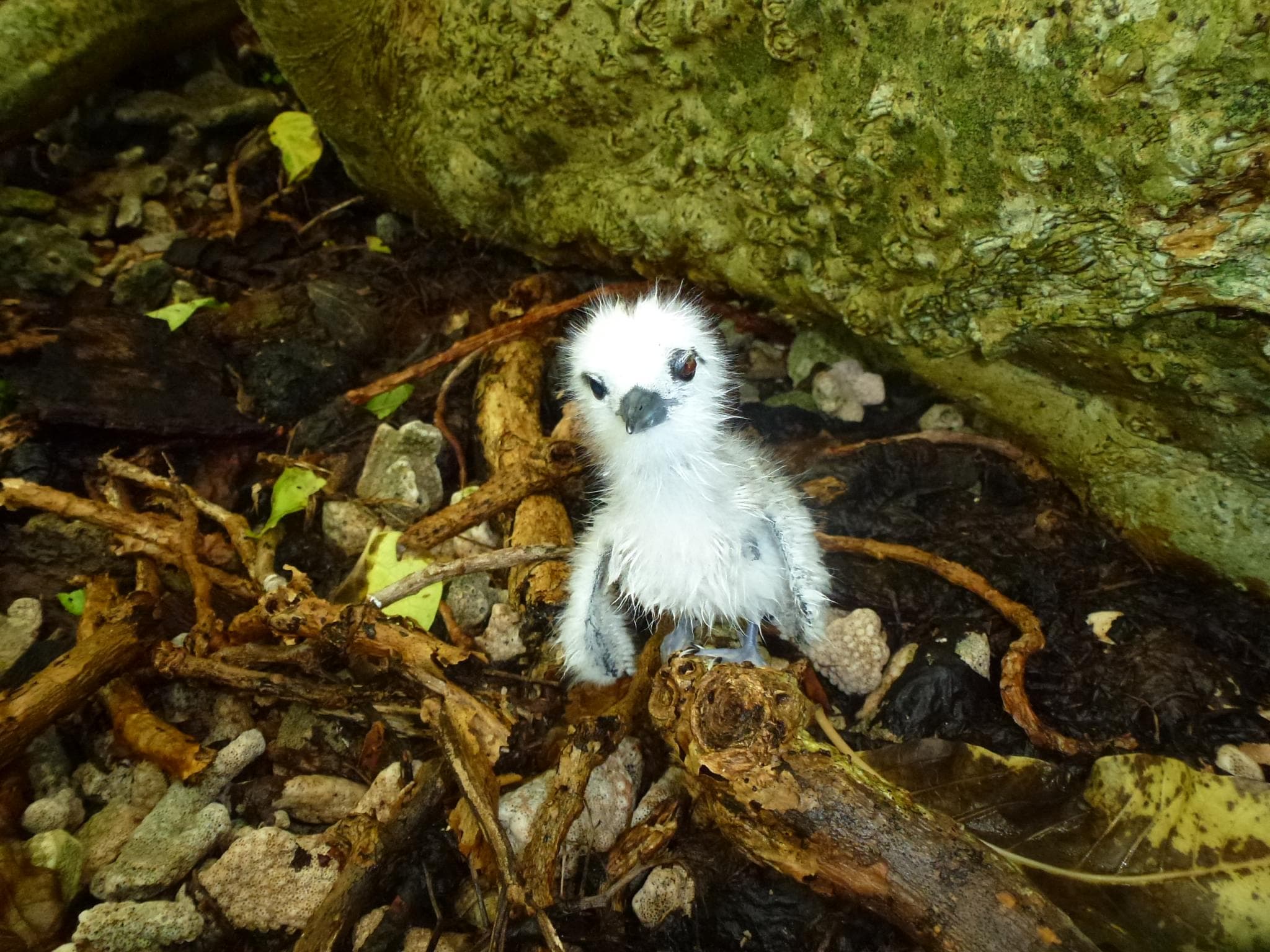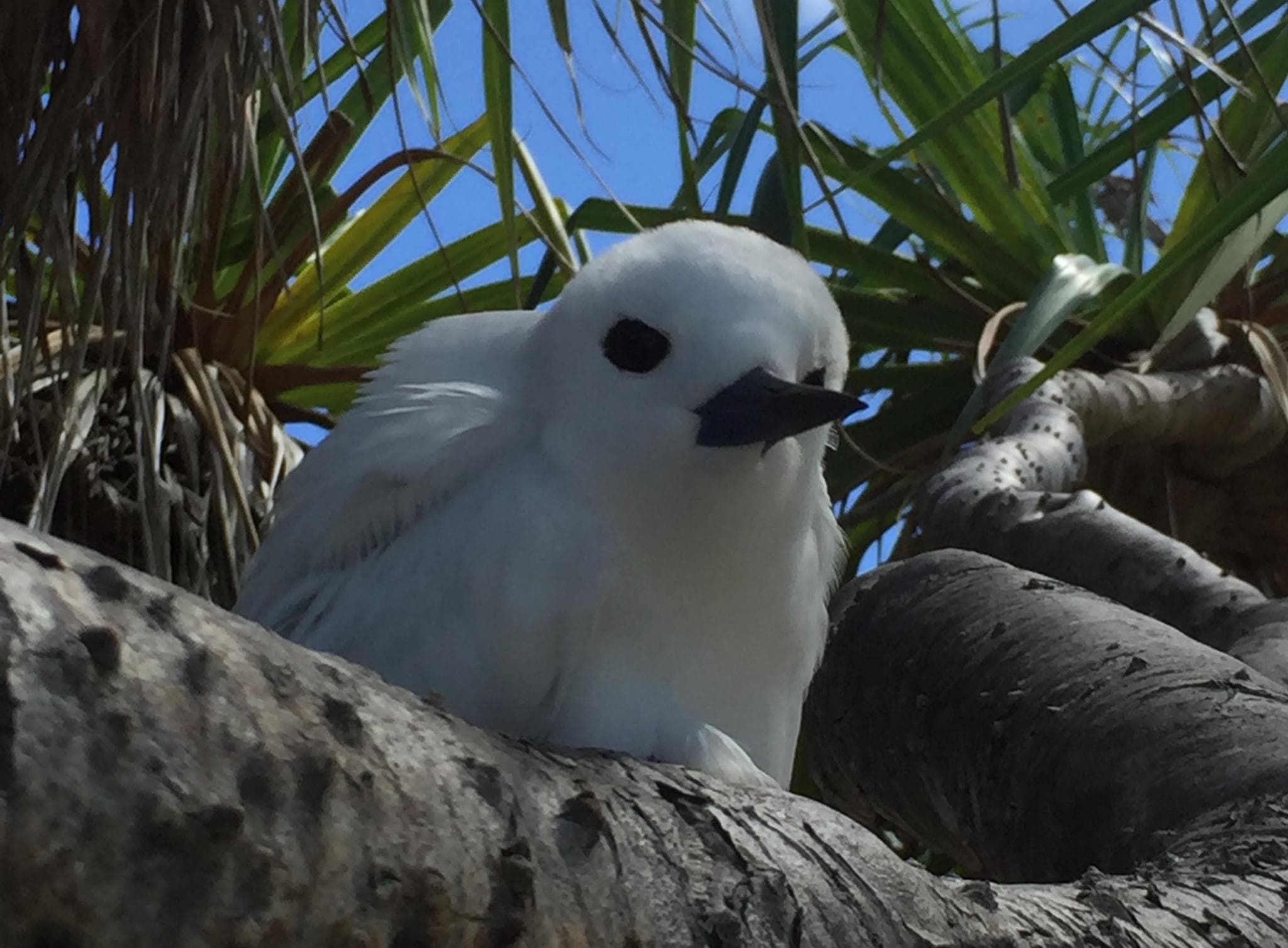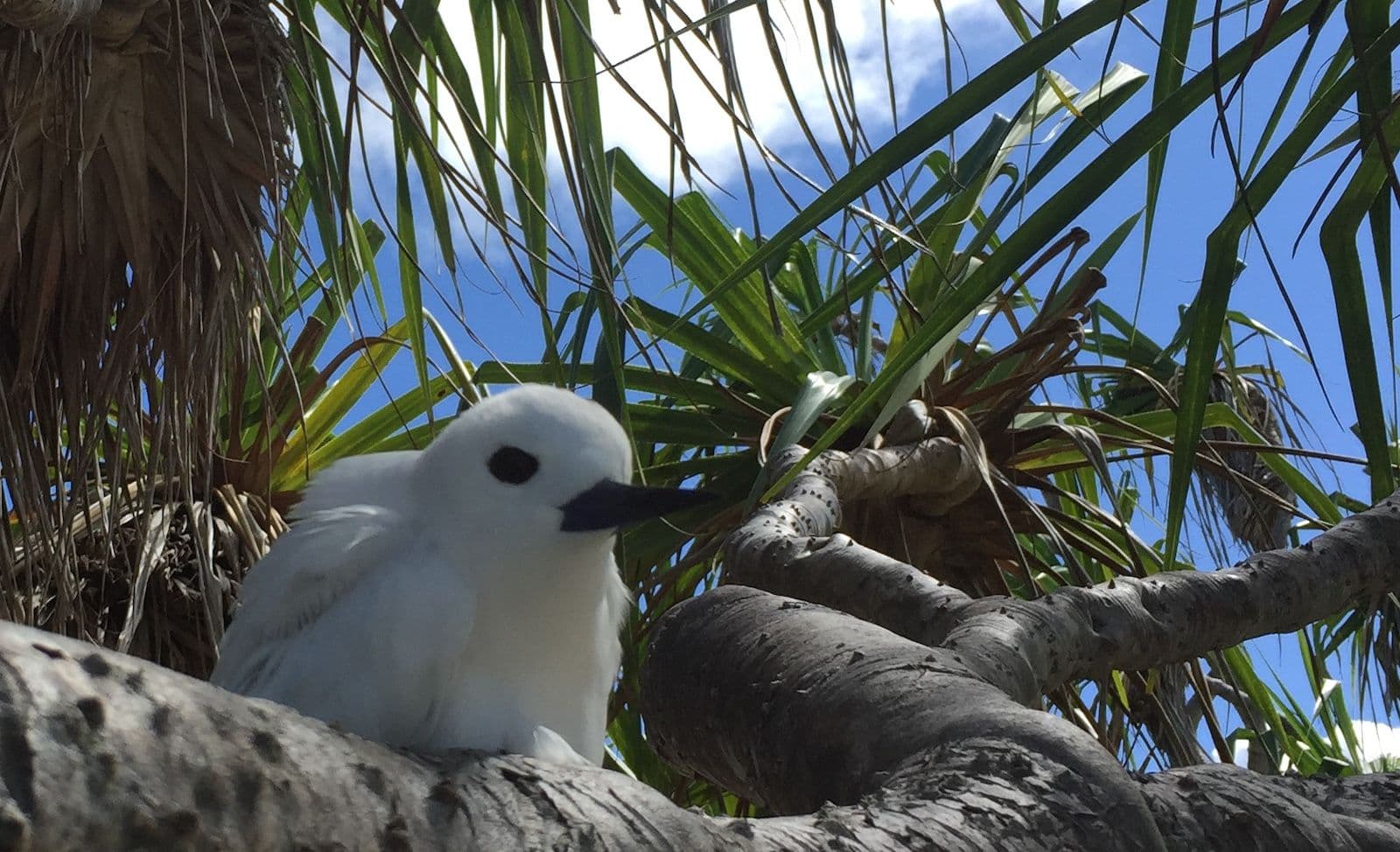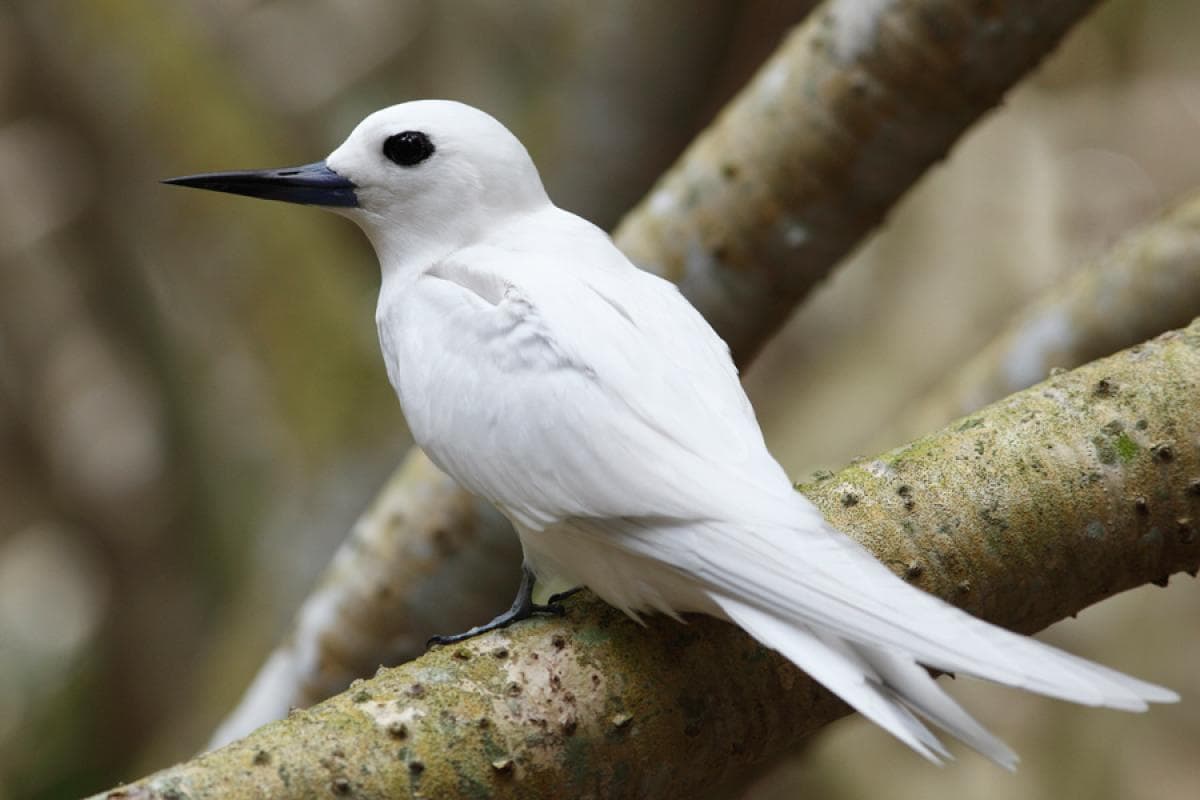
The white tern balances a single egg on a branch. There is no woven nest beneath it.
- Local names
- Itata’e
- Habitat
- Motu and shore
About this species
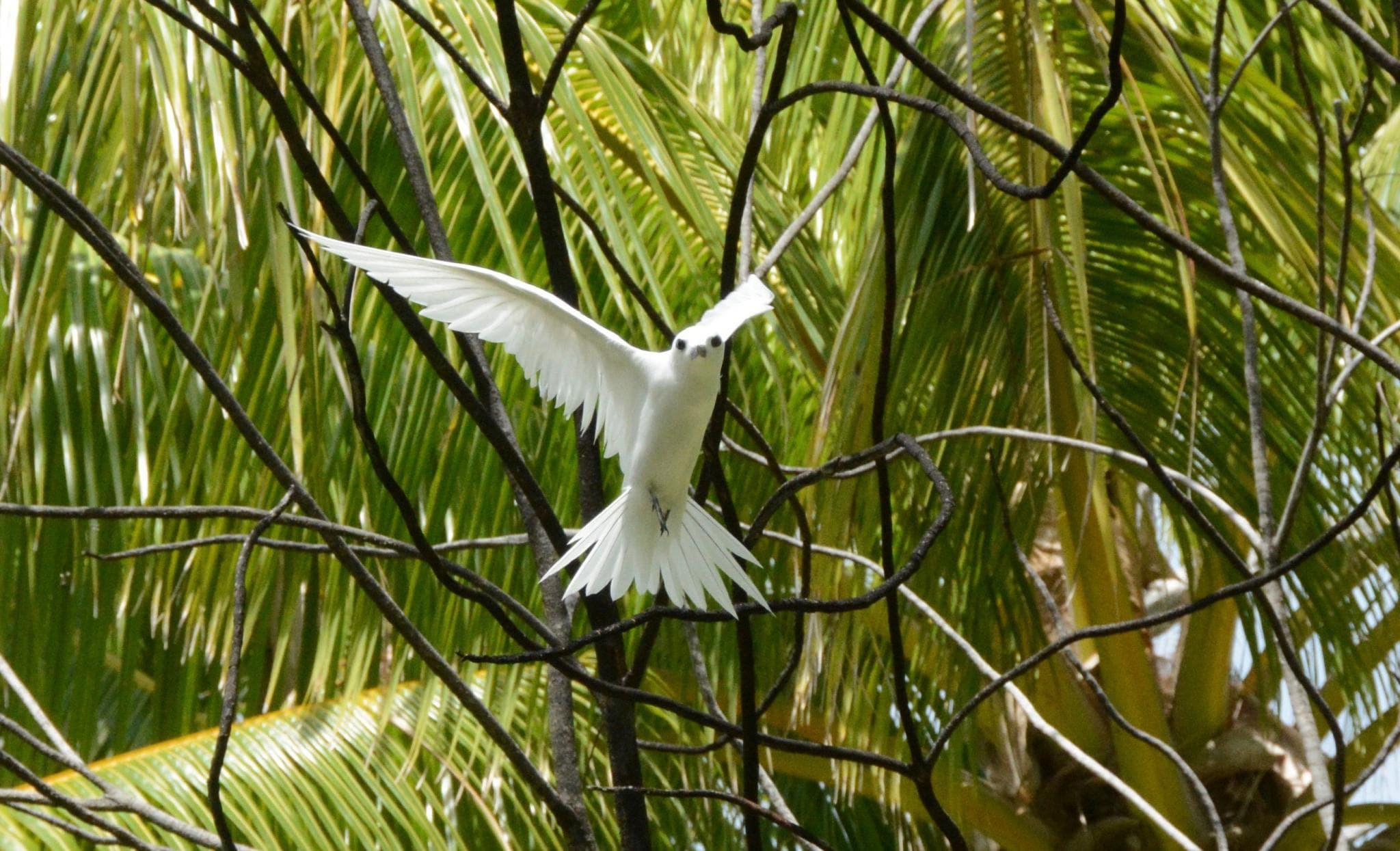
Entirely white, with a deep blue bill that darkens towards the tip, the white tern has a wingspan of about 70–87 cm. Pairs are often seen flying together, and small groups may feed together.
It catches fish roughly 3–10 cm long at the water’s surface, sometimes diving for cephalopods. The guide also records occasional feeding on insects on land.
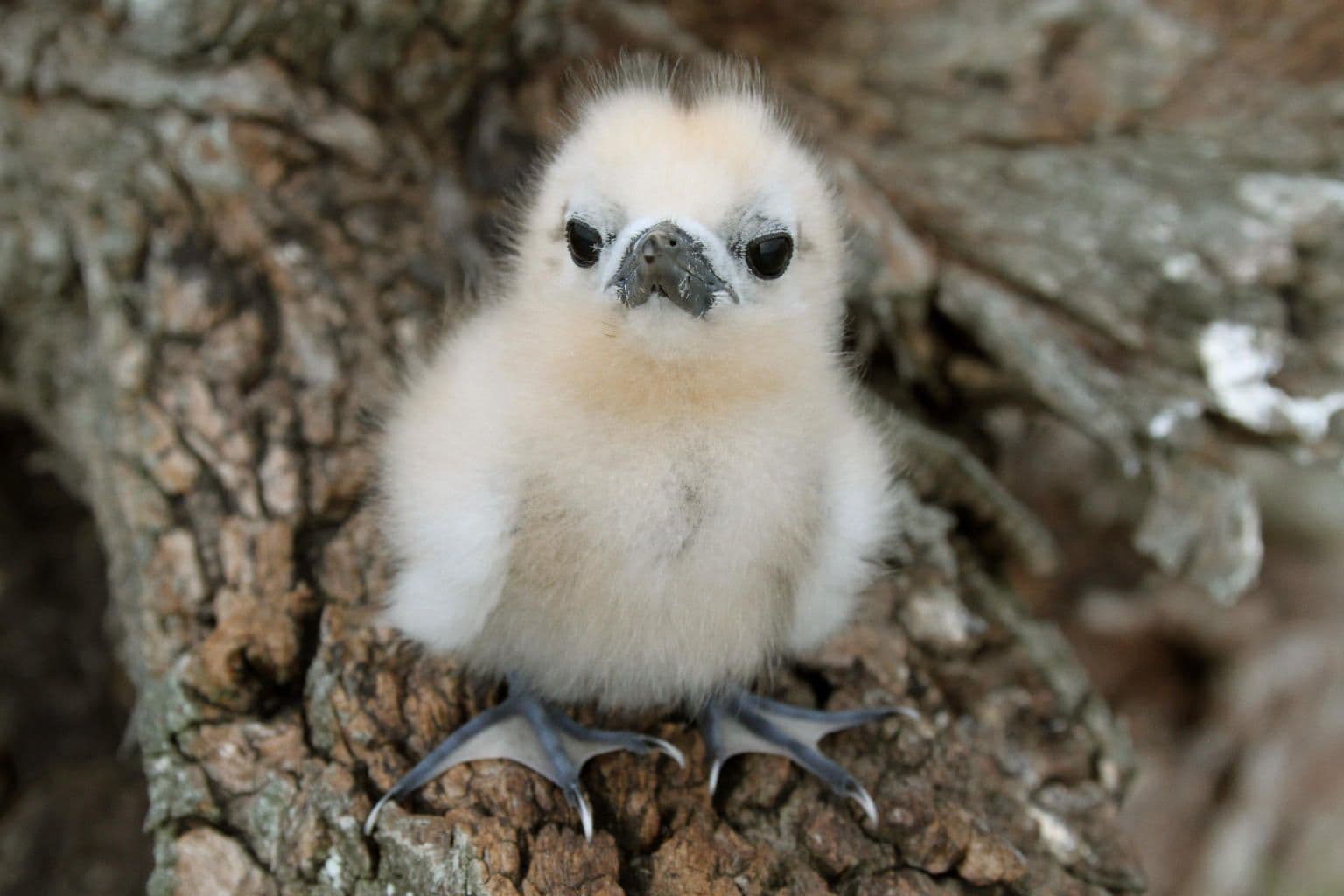
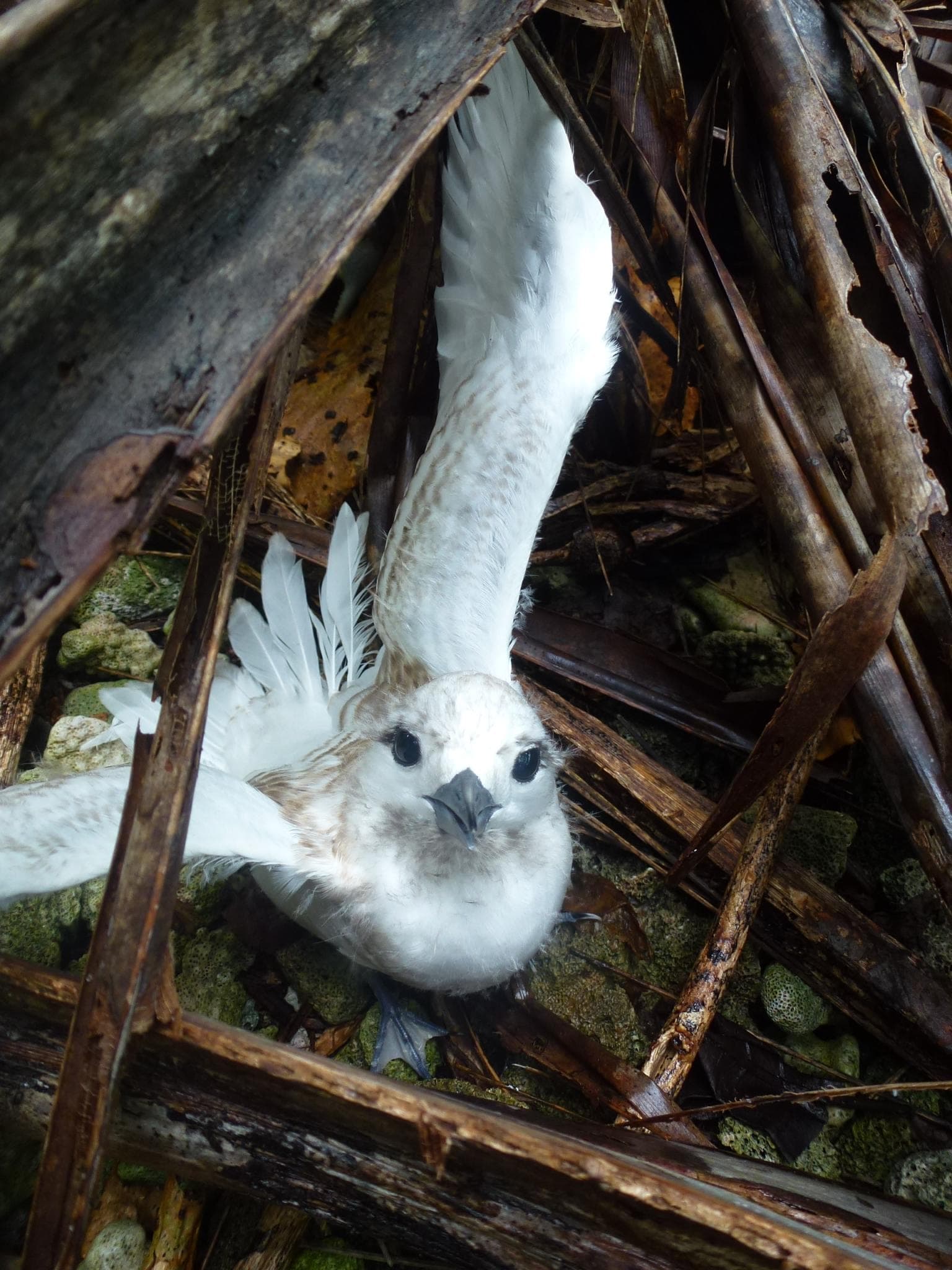
White terns breed throughout the year across Tetiaroa’s motu. A single beige egg, marked with grey and brown, rests in a fork or a shallow hollow in a branch. Both parents incubate for about 36 days. Once hatched, the chick grips the branch with strong claws and receives care for about 60–75 days.
The atoll guide estimated approximately 400 pairs in 2014.
In the traditions recorded by Teuira Henry, the white tern embodied Tāne, associated with the sky and beauty. One account places the tame little bird beside his neck, resting on his shoulder.