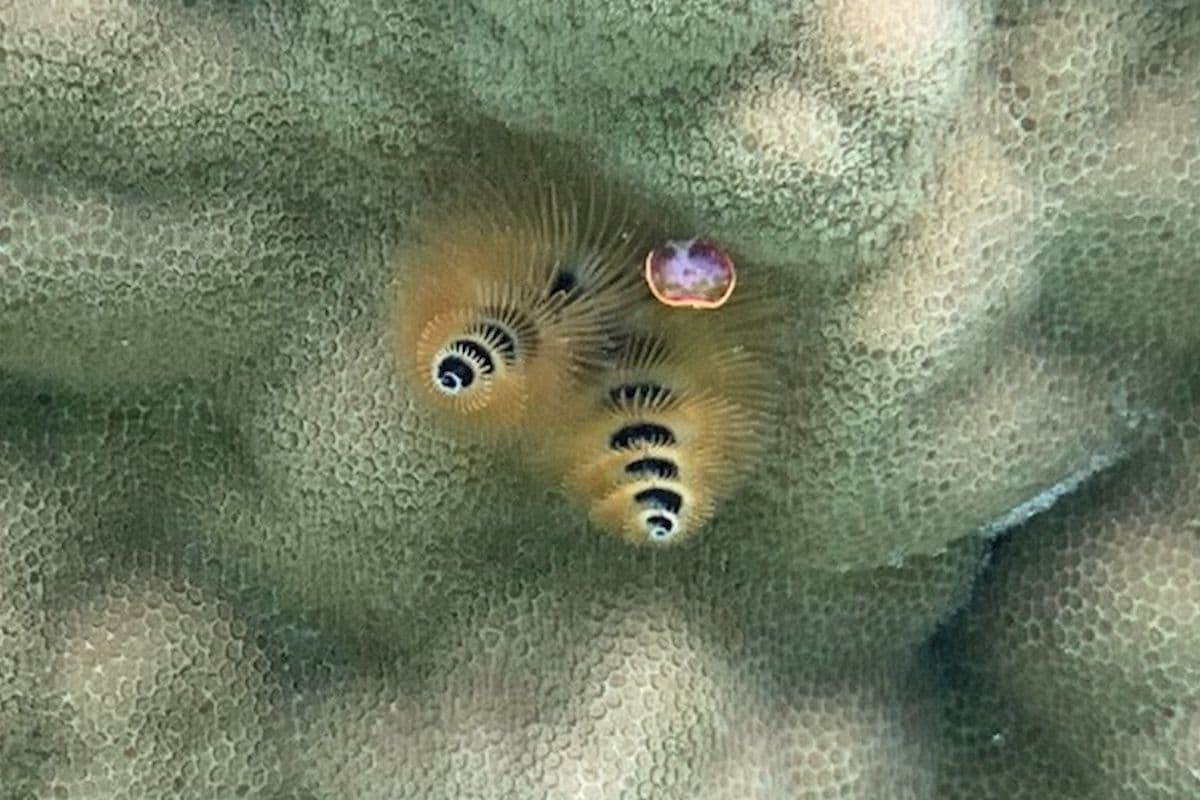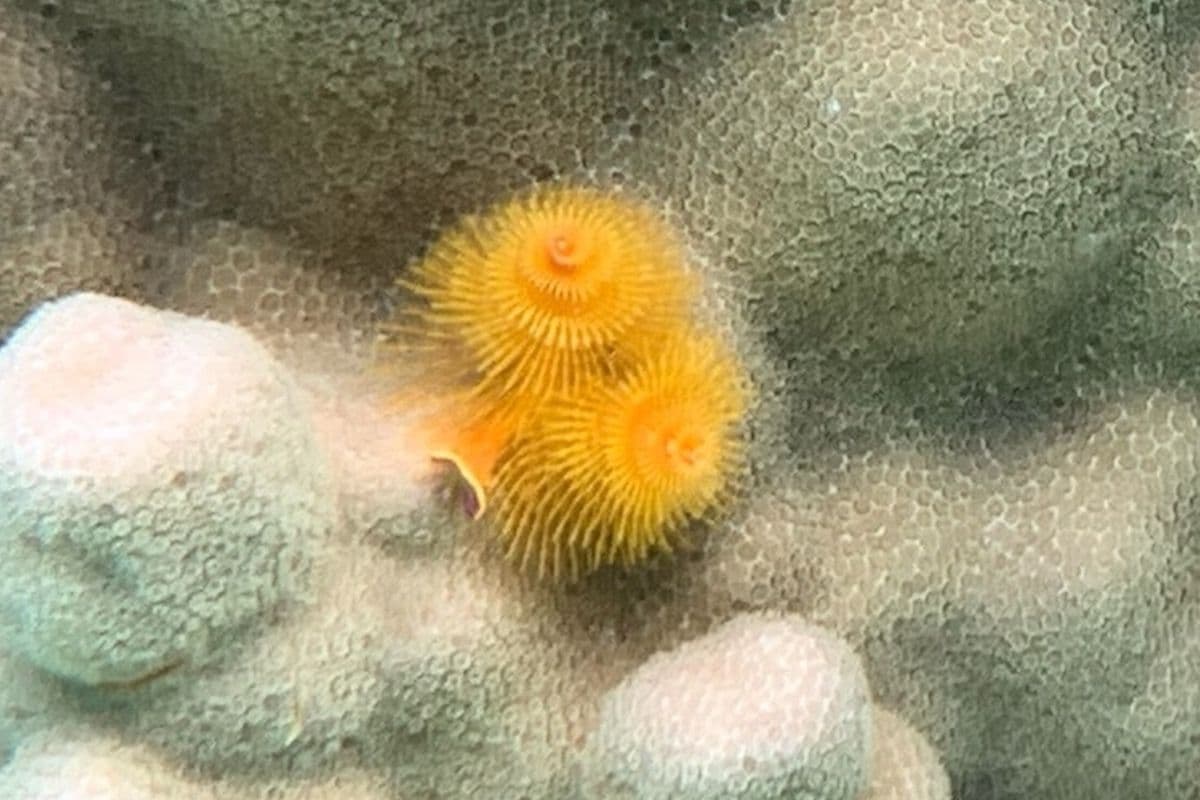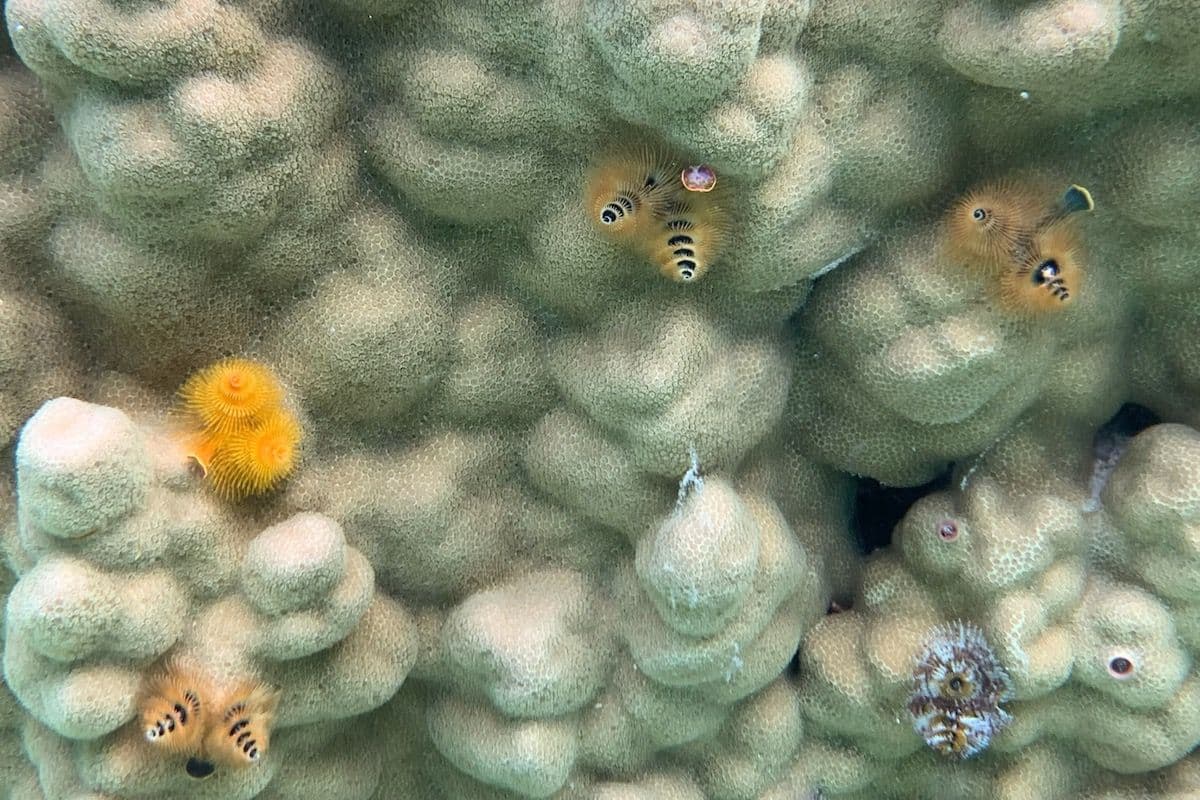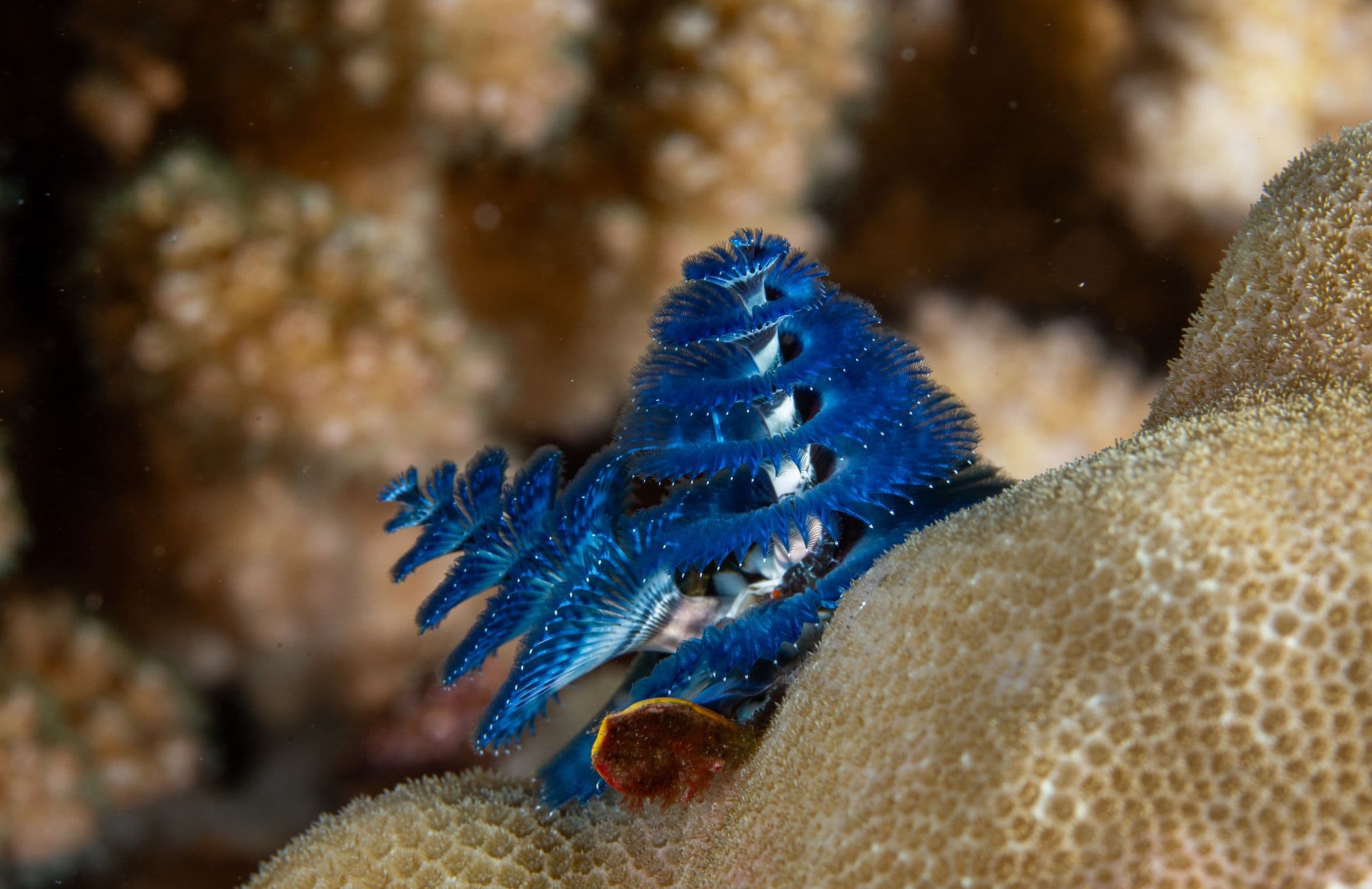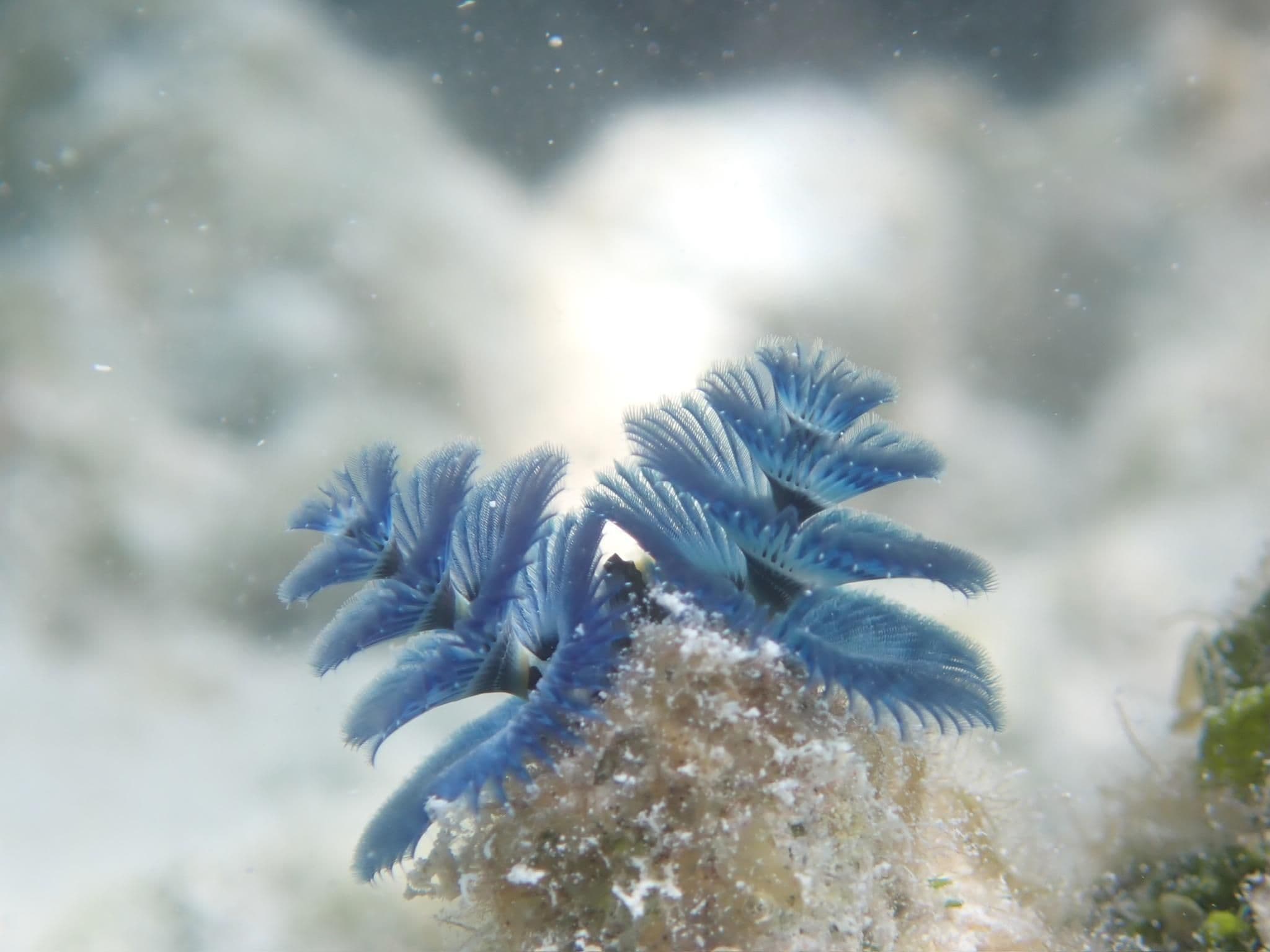
Two tiny spirals of colour rise from a coral colony. Move too close and both disappear at once into a protective tube.
- Local names
- Eu'a au
- Habitat
- Lagoon and reef
- Other names
- Spirobranchus giganteus; Spirobranchus giganteus corniculatus; Legacy source name: Spirobranchus giganteus
About this species
The paired crowns are made of radioles: feathery appendages that exchange gases and catch microscopic food drifting in the water, including phytoplankton. Their striking colours and Christmas-tree shape make these small segmented worms easy to notice. The older guide gives a length of around 4 cm.
Most of the animal remains hidden in a calcareous tube embedded in living coral. Once established, it stays in place. A sudden disturbance sends the crowns back inside, away from a potential predator.
Older accounts group these worms under Spirobranchus giganteus. Indo-Pacific Christmas tree worms formerly called S. giganteus corniculatus are now placed in the Spirobranchus corniculatus complex. That distinction separates them from the western Atlantic S. giganteus group.