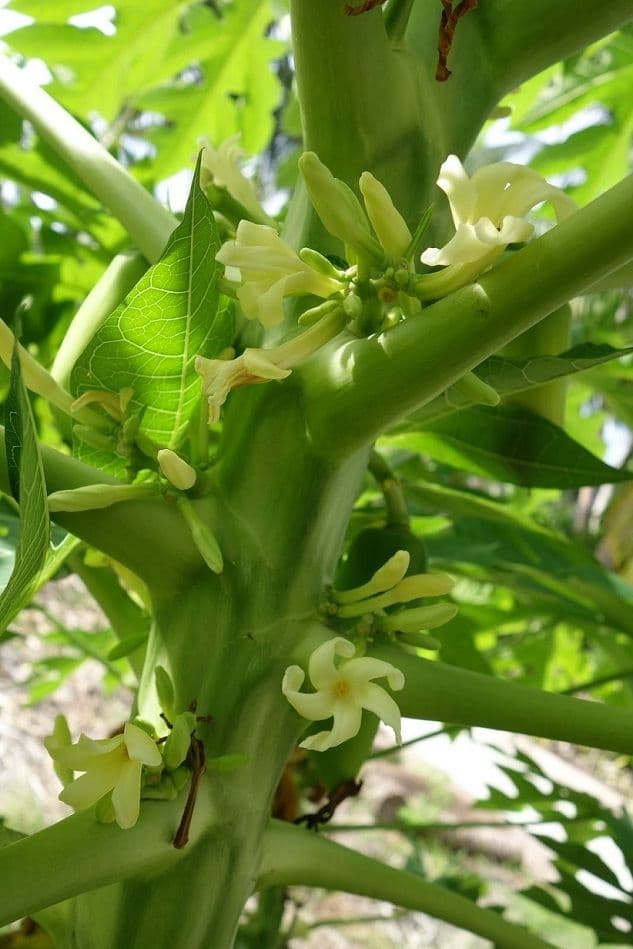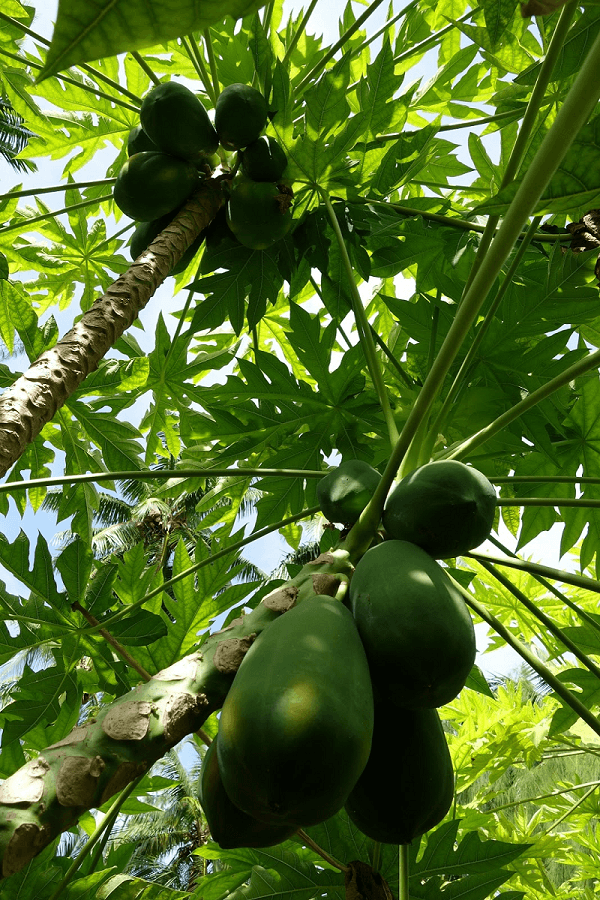
Papaya offers sweet orange flesh and a milky latex containing papain, an enzyme that breaks down proteins.
- Local names
- I'ita (Society Islands), Vi inata (Marquesas Islands)
- Habitat
- Motu and shore
- Family
- Caricaceae
- Biogeographical status
- Polynesian introduction (legacy inventory)
- Life form
- Tree
- Abundance
- Cultivated only on Onetahi
- Ecosystem
- Garden
About this species
This evergreen flowering plant can reach 3–10 metres. Native to the tropical Americas, from southern Mexico towards Venezuela, it produces sweet fruit rich in vitamin C and carotenoids that can provide provitamin A. Its flesh and white latex helped inspire the naming stories retold in the older guide.
Papaya is a widely traded tropical fruit, with Latin America among its producing regions. Papain, present in its latex, breaks down protein and is used for tenderising food. The guide also records roots, flowers, fruits, seeds, and latex in traditional medicinal and antiseptic practices.
Papaya ingredients appear in cosmetic moisturisers, and the leaves have supplied green dye. The source retells the description fruit of the angels, attributed to Columbus, alongside a story comparing the fruit to a breast; these are reported naming traditions rather than a demonstrated word origin.