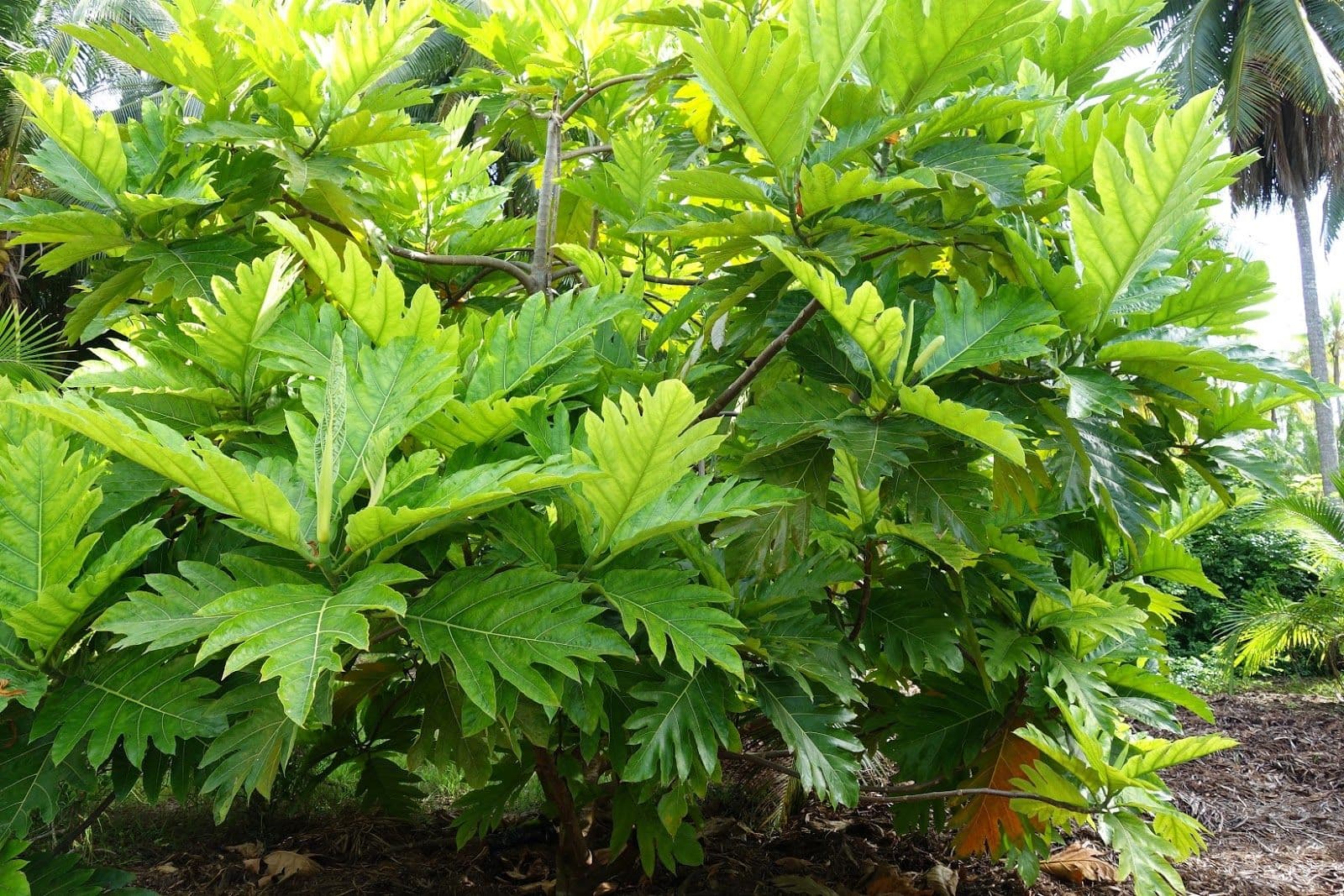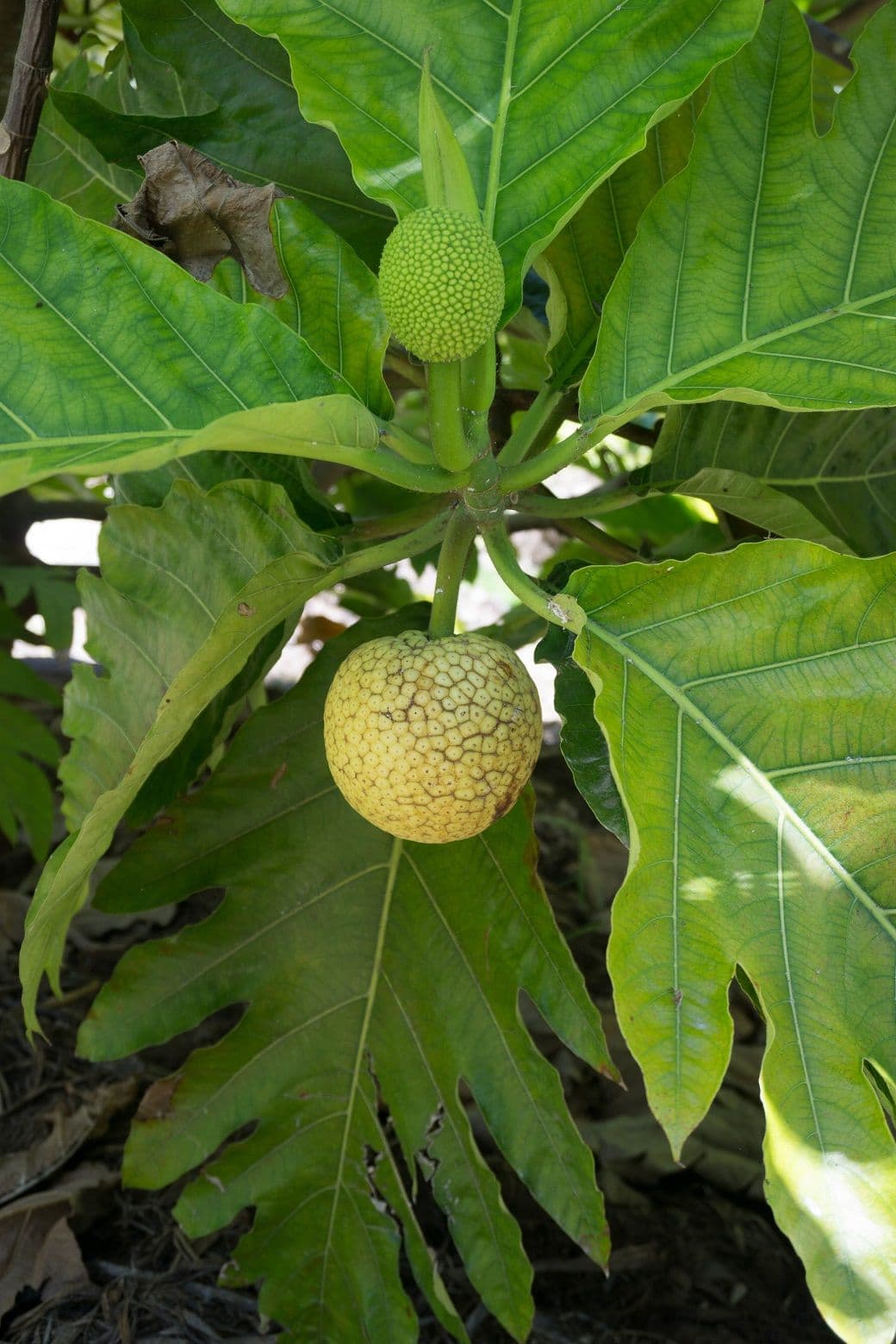
‘Uru has fed generations of island communities. Its many selected forms connect food, boatbuilding, and the history of the Bounty voyages.
- Local names
- 'Uru (Society Islands, Tuamotu Islands, Austral Islands), Mei (Gambier Islands, Marquesas Islands)
- Habitat
- Motu and shore
- Family
- Moraceae
- Biogeographical status
- Polynesian introduction (legacy inventory)
- Life form
- Tree
- Abundance
- Rare
- Ecosystem
- Mixed forest
About this species
Polynesian growers have selected breadfruit varieties for centuries. Fruits at different stages can occur on one tree. Prepared in several ways for people, they have also been fed raw to animals. Male flower spikes, called pop ‘uru in the guide, can be candied. Leaves are used as food wrappers.
The pale-yellow wood is light and soft, useful for carving, canoes, and construction, though vulnerable to moisture, fungi, and insects. The guide records white latex, sap, and other plant parts in traditional pharmacopoeia, and identifies the sap on the fruit surface with the name ‘uru.
In the late eighteenth century, Captain Bligh was commissioned to transport Tahitian breadfruit to the British West Indies. The Bounty mutiny interrupted the first voyage; its retelling became famous through the novel co-written by James Norman Hall.
The guide links a decline in breadfruit production from the 1960s to the growing place of rice and bread in French Polynesian diets. It particularly notes less-favoured varieties that could crop on poorer soils or outside the main season.