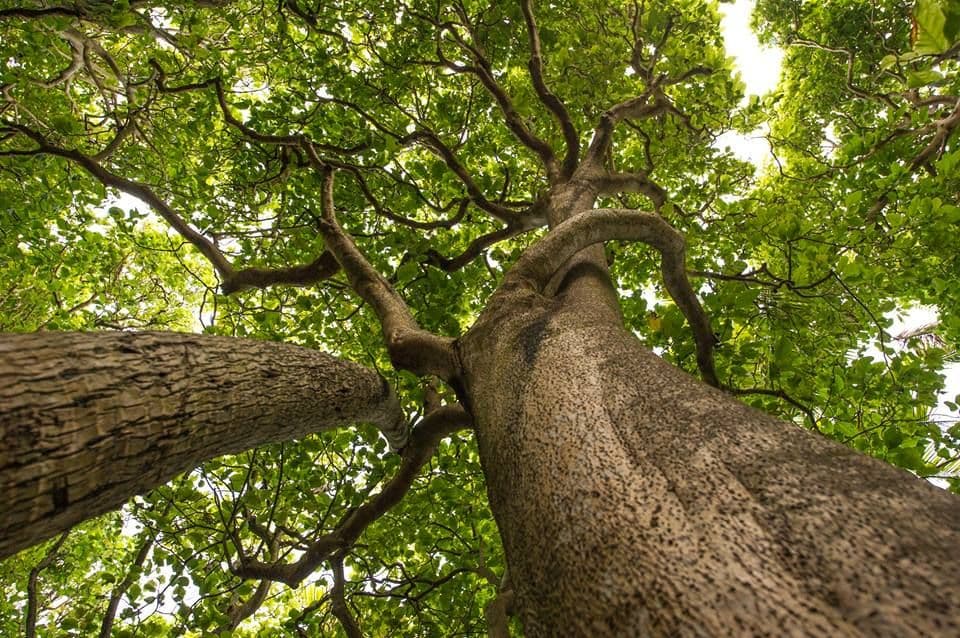
Pisonia gives seabirds a canopy and spreads its seeds on their feathers. Sometimes that sticky partnership becomes a trap.
- Local names
- Pu’atea (French Polynesia), Gatae / Puka (Tuamotu Islands), Pukatea (Marquesas Islands)
- Habitat
- Motu and shore
- Family
- Nyctaginaceae
- Biogeographical status
- Indigenous
- Life form
- Tree
- Abundance
- Common
- Ecosystem
- Primary forest
About this species
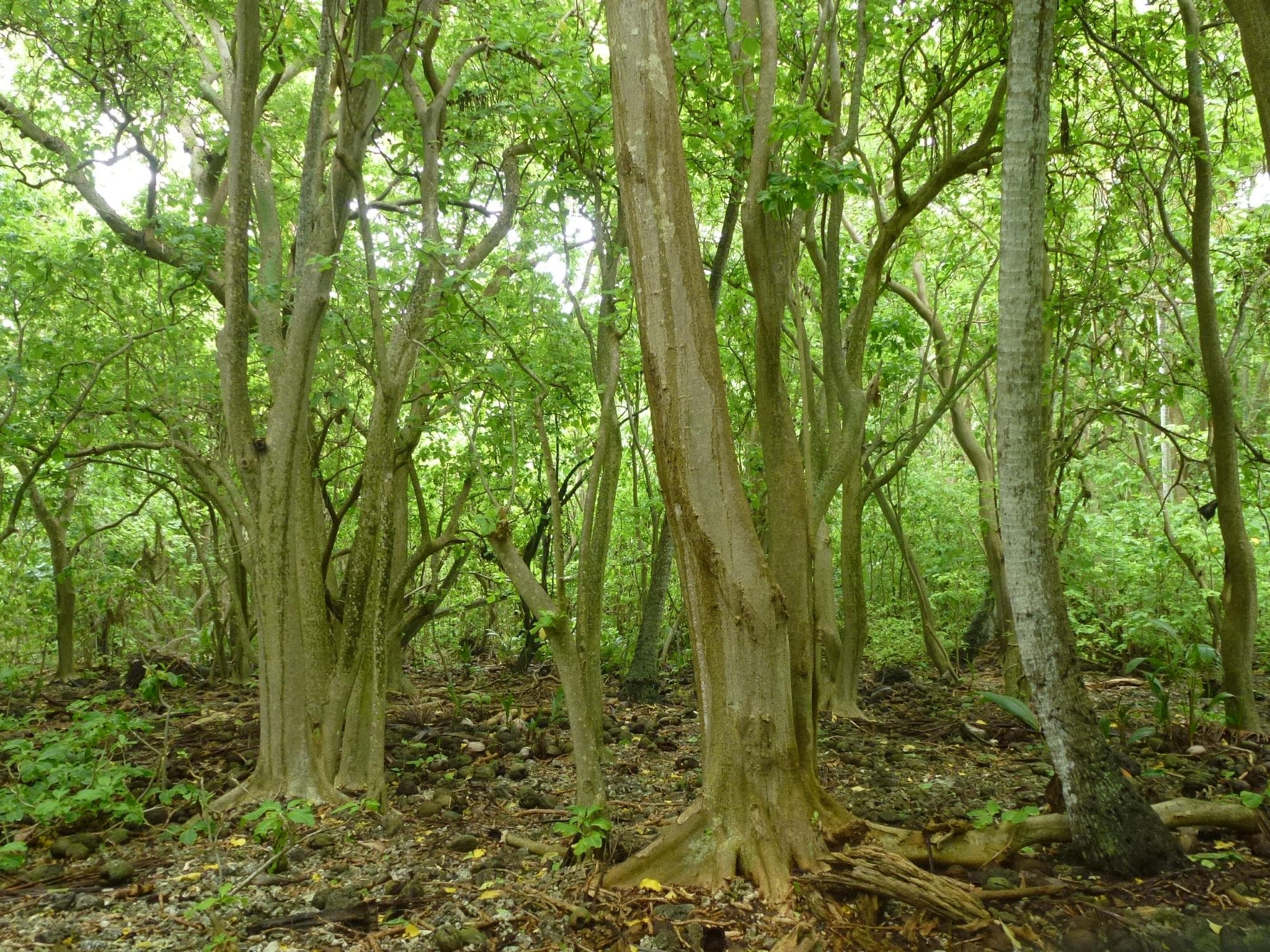
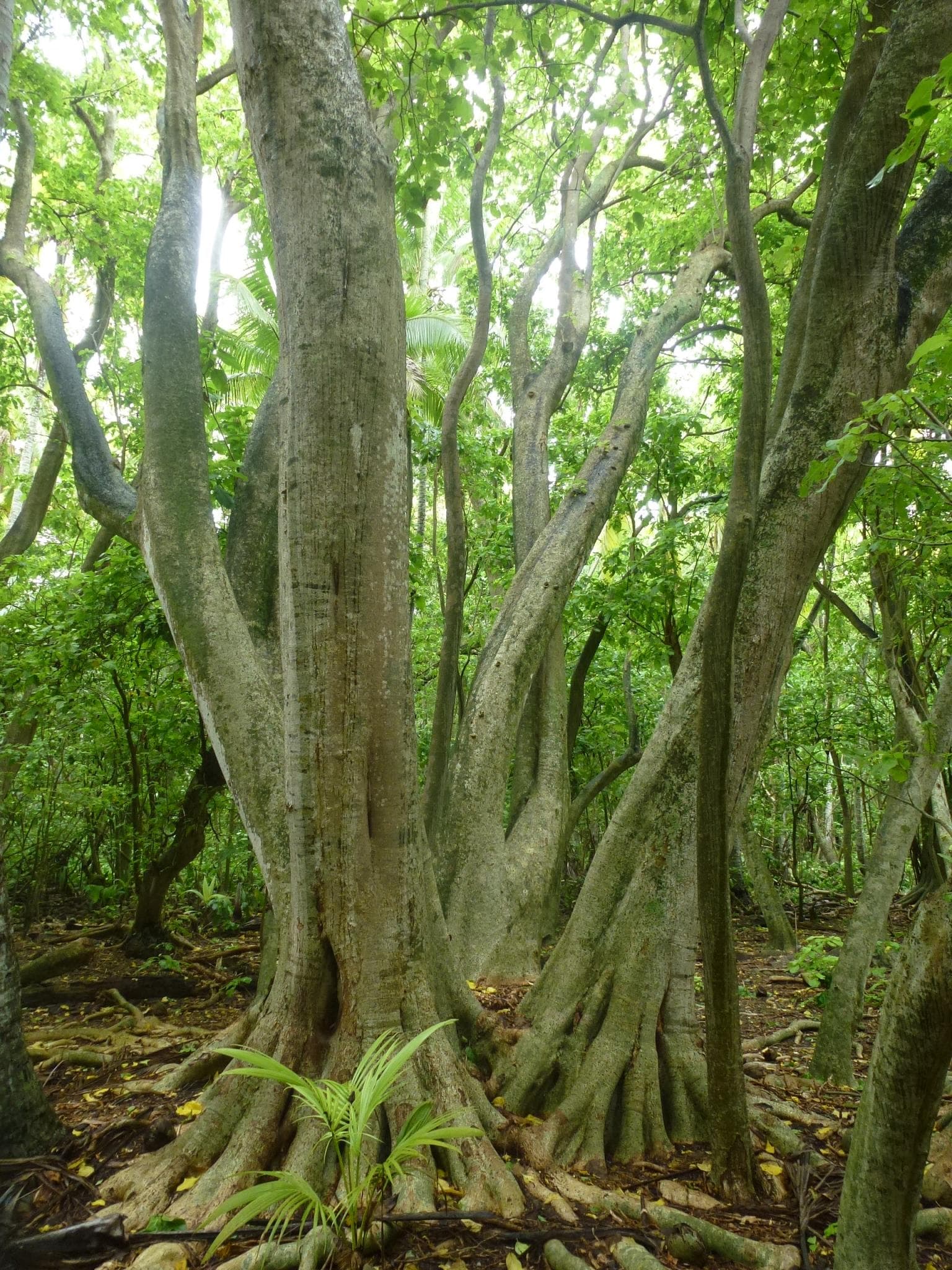
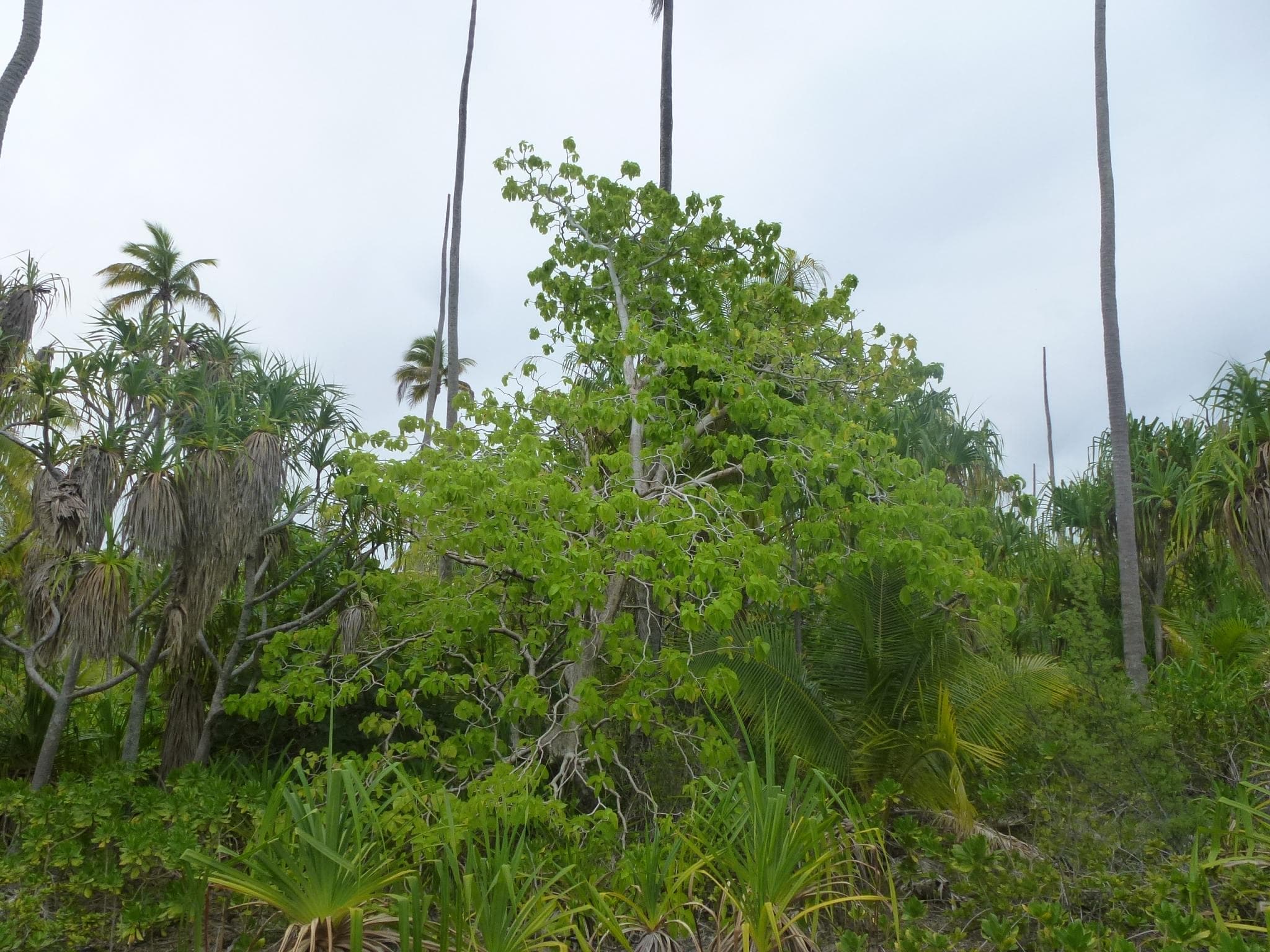
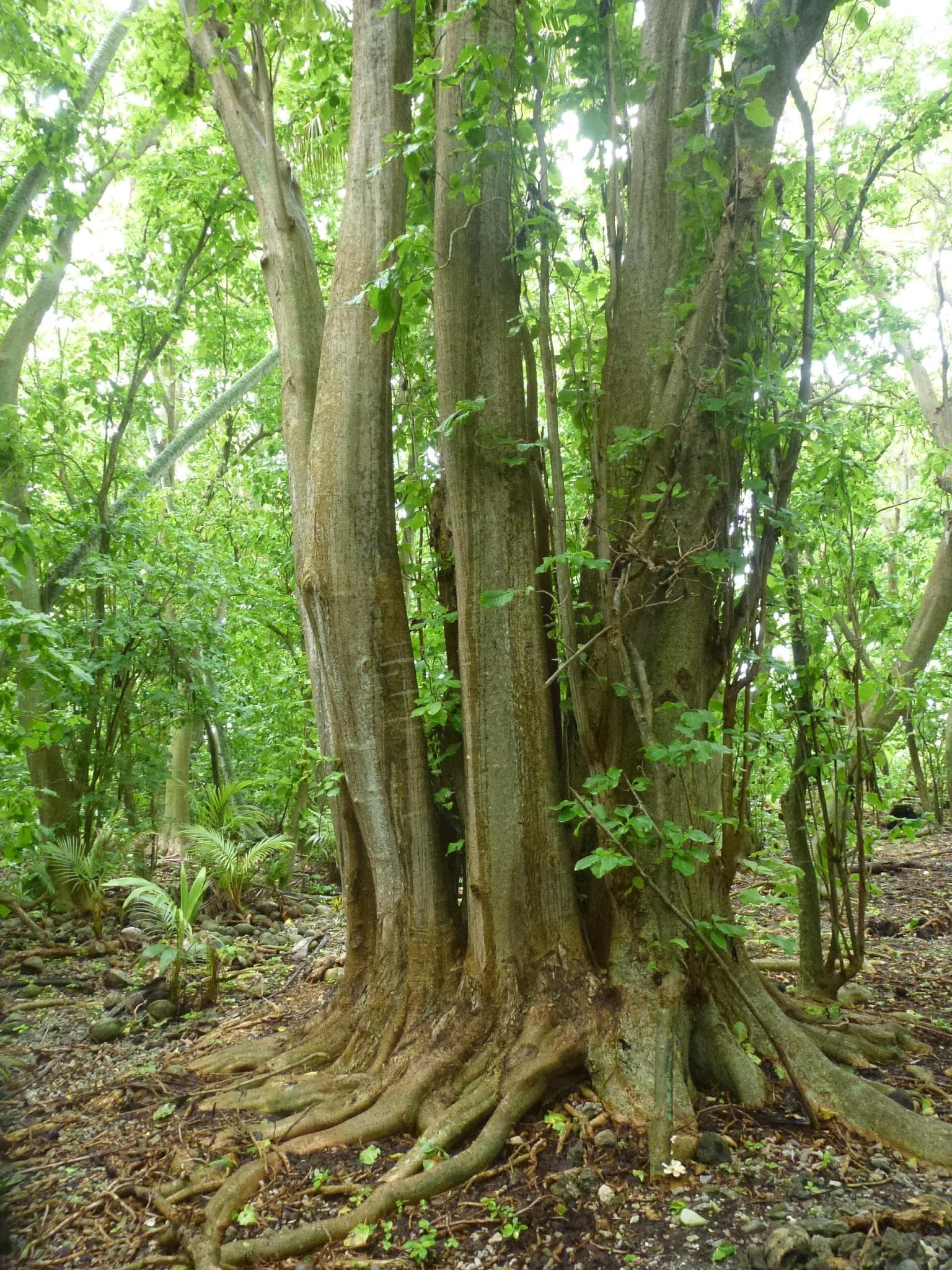
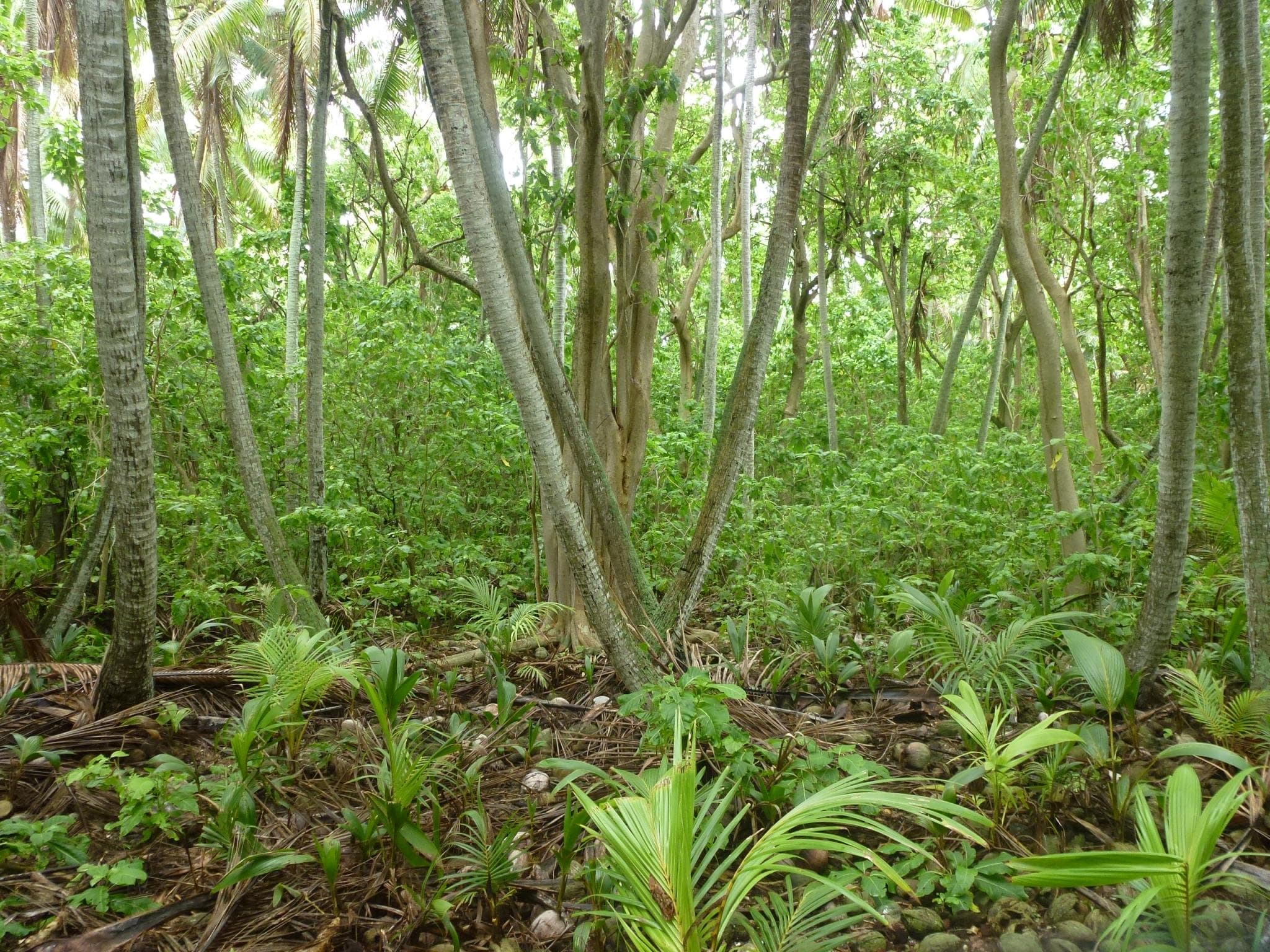
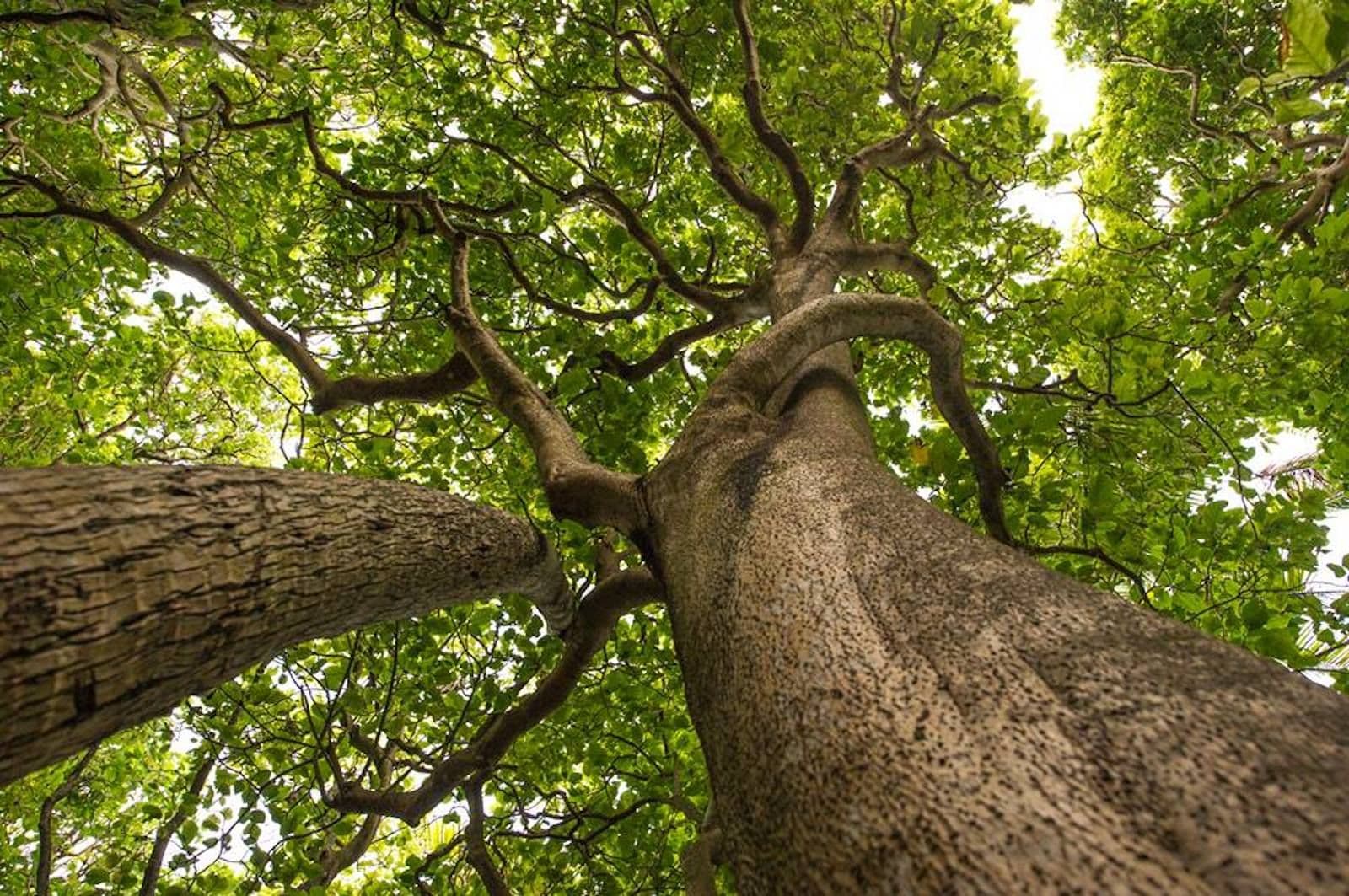
Native across islands of the Pacific and Indian oceans, this coastal tree can reach 25 metres. Its English common name refers to leaves formerly eaten raw or cooked. It can form dense stands on small islands, with branches used by nesting or resting seabirds.
Its brittle wood breaks readily and decays quickly, enriching the soil around the tree. The guide records pisonia on nearly every Tetiaroa motu, with a dense, almost single-species forest on Reiono.
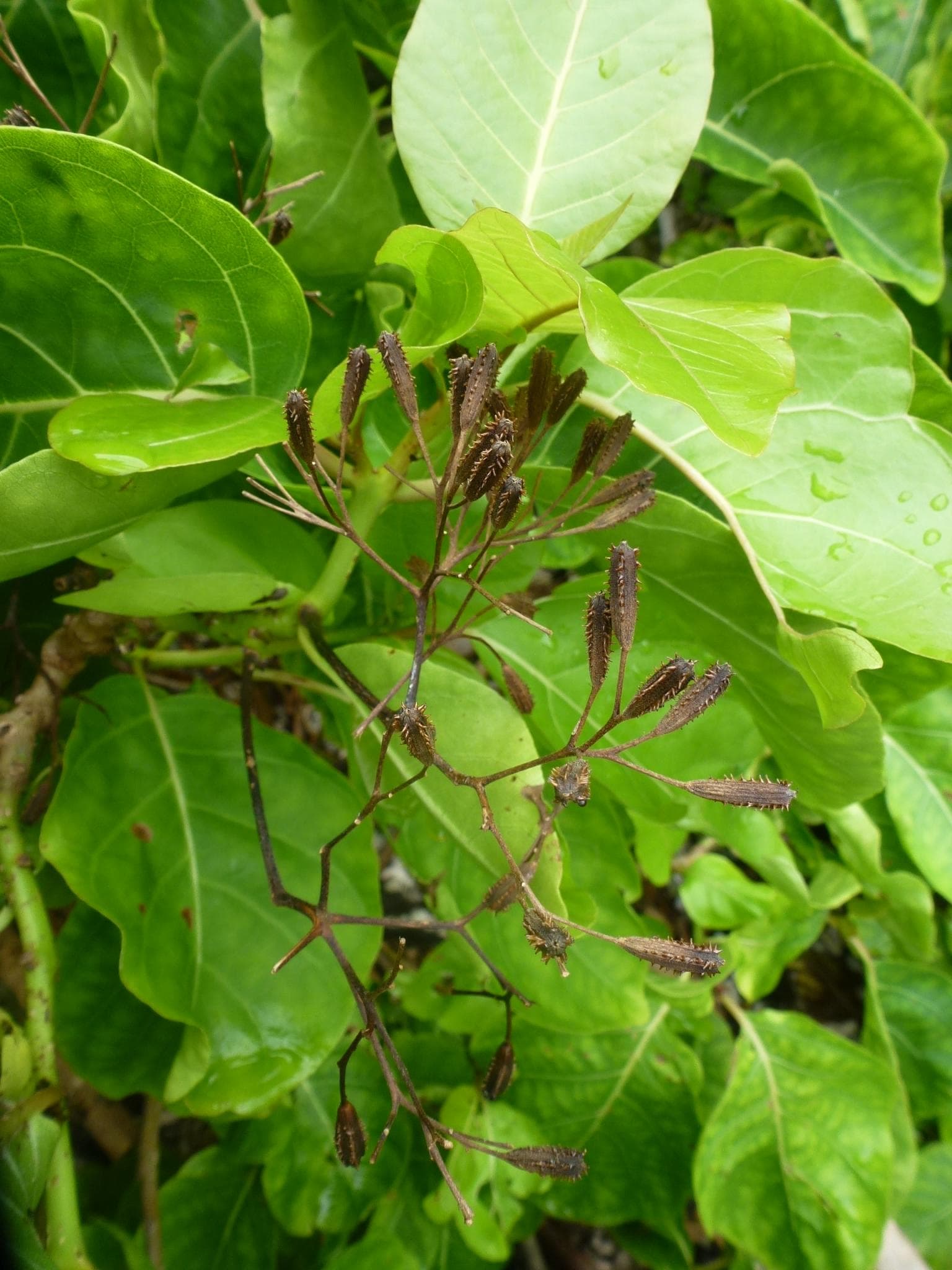
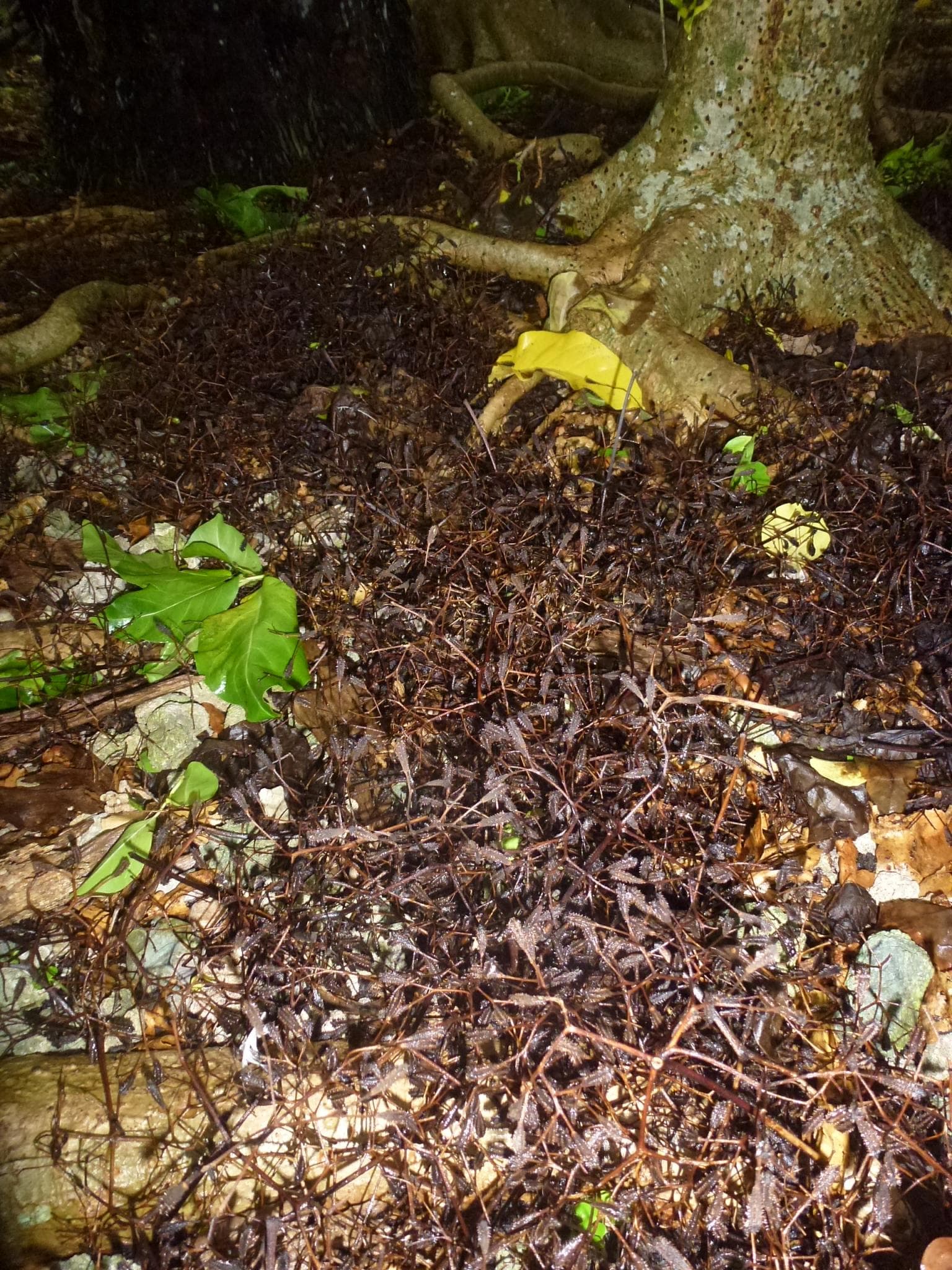
Sticky, barbed seeds attach to feathers and travel with birds. If too many accumulate, however, the feathers become matted and the bird can lose its ability to fly.
Butaud J.F., 2013. Tuamotu du centre, Guide floristique. Direction de l'Environnement.
Butaud J.F., Gérard J., Guibal D., 2011. Guide des arbres de Polynésie française, bois et utilisations. 2e édition, Au vent des îles.