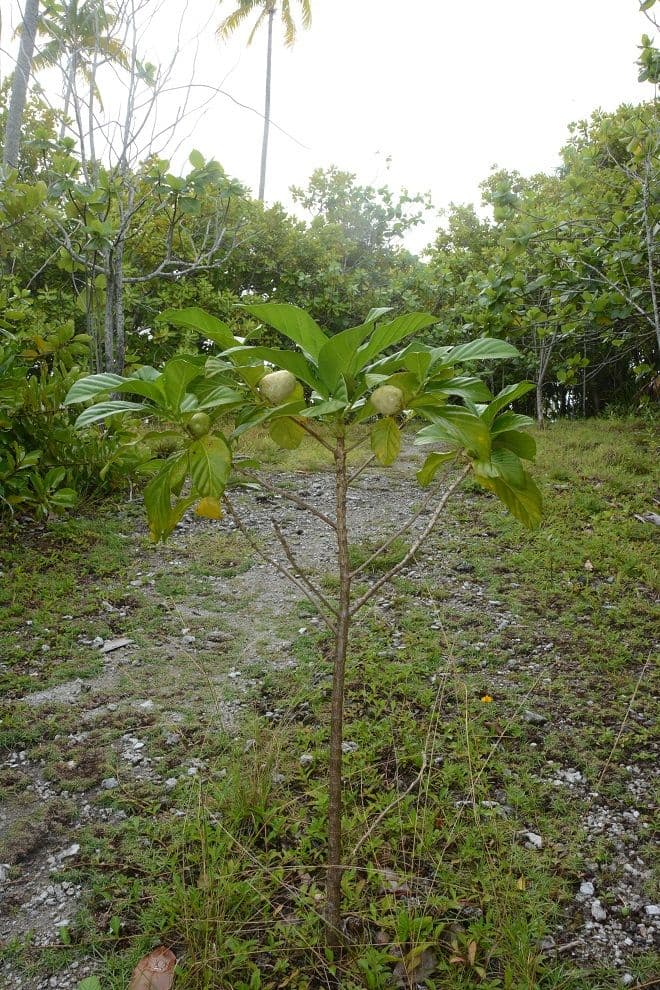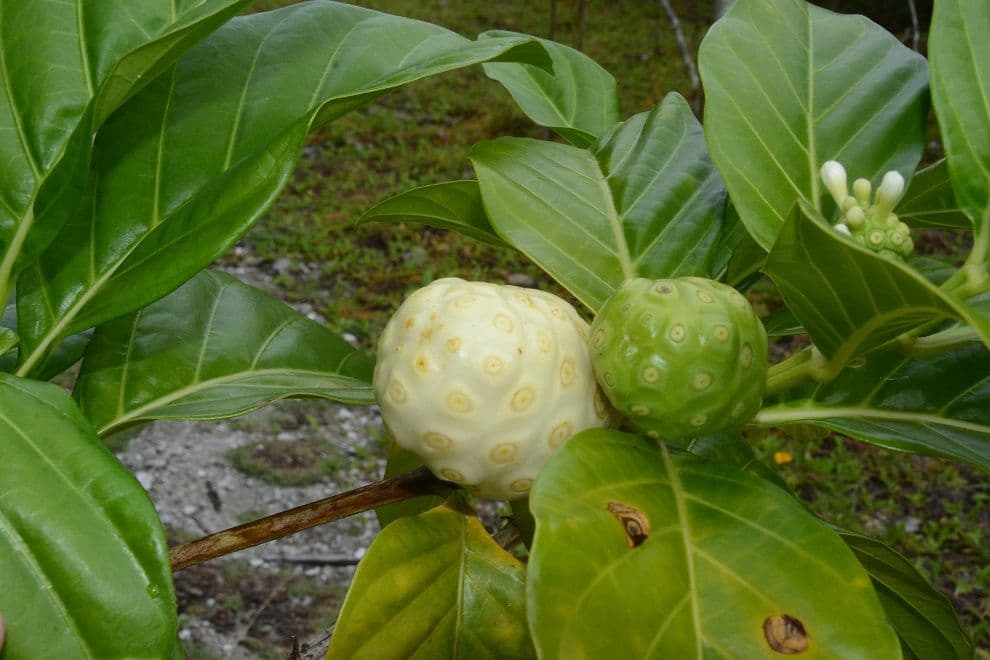
Nono fruits travel with animals and water. This small tree also supplies food, dye, and a record of courtship and traditional plant care.
- Local names
- Nono (Society Islands, Tuamotu Islands, Gambier Islands, Austral Islands), Noni (Marquesas Islands)
- Habitat
- Motu and shore
- Family
- Rubiaceae
- Biogeographical status
- Polynesian introduction (legacy inventory)
- Life form
- Tree
- Abundance
- Common
- Ecosystem
- Mixed forest
About this species
Small flowers develop within the cluster that becomes the lumpy, potato-shaped fruit. Animals and water both disperse the plant, processes called zoochory and hydrochory. The fruits are edible and made into juices or sauces; leaves can wrap food for cooking.
The yellow-to-pink wood has limited use because it is vulnerable to moisture and fungi. The inner parts of the roots provide dye for tapa cloth. The guide records raw or cooked leaves, as well as fruit, in poultices for skin infections, abscesses, boils, and bites, while also noting that prolonged leaf contact can cause blistering. Its claim that fruit preparations strengthen immunity is part of that traditional-use account, not an established health benefit.
The guide preserves a courtship custom called taora nono: young people threw an unripe nono fruit towards a desired partner.