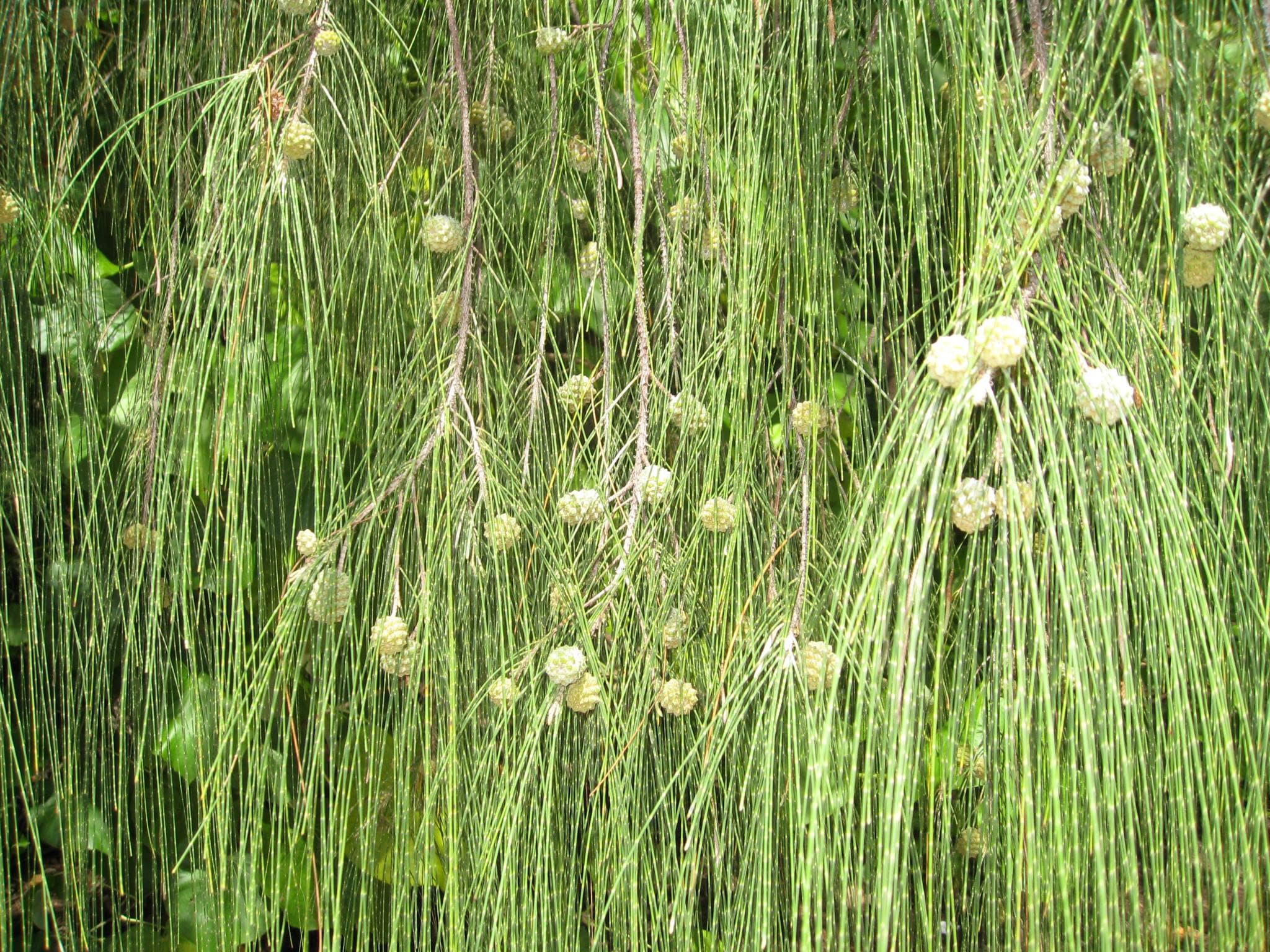
The fine branches suggest a conifer, but ‘aito is a flowering tree. Its exceptionally hard wood also gives it a place in the stories of warriors and sacred sites.
- Local names
- ‘Aito, Toa
- Habitat
- Motu and shore
- Family
- Casuarinaceae
- Biogeographical status
- Polynesian introduction (legacy inventory)
- Life form
- Tree
- Abundance
- Common
- Ecosystem
- Mixed forest, beach and feo (coral rock)
About this species
Pacific ironwood can exceed 30 metres in height. The needle-like parts are slender branchlets; its actual leaves are tiny scales. It produces separate male and female flowers and belongs to the flowering plants, despite its conifer-like appearance.
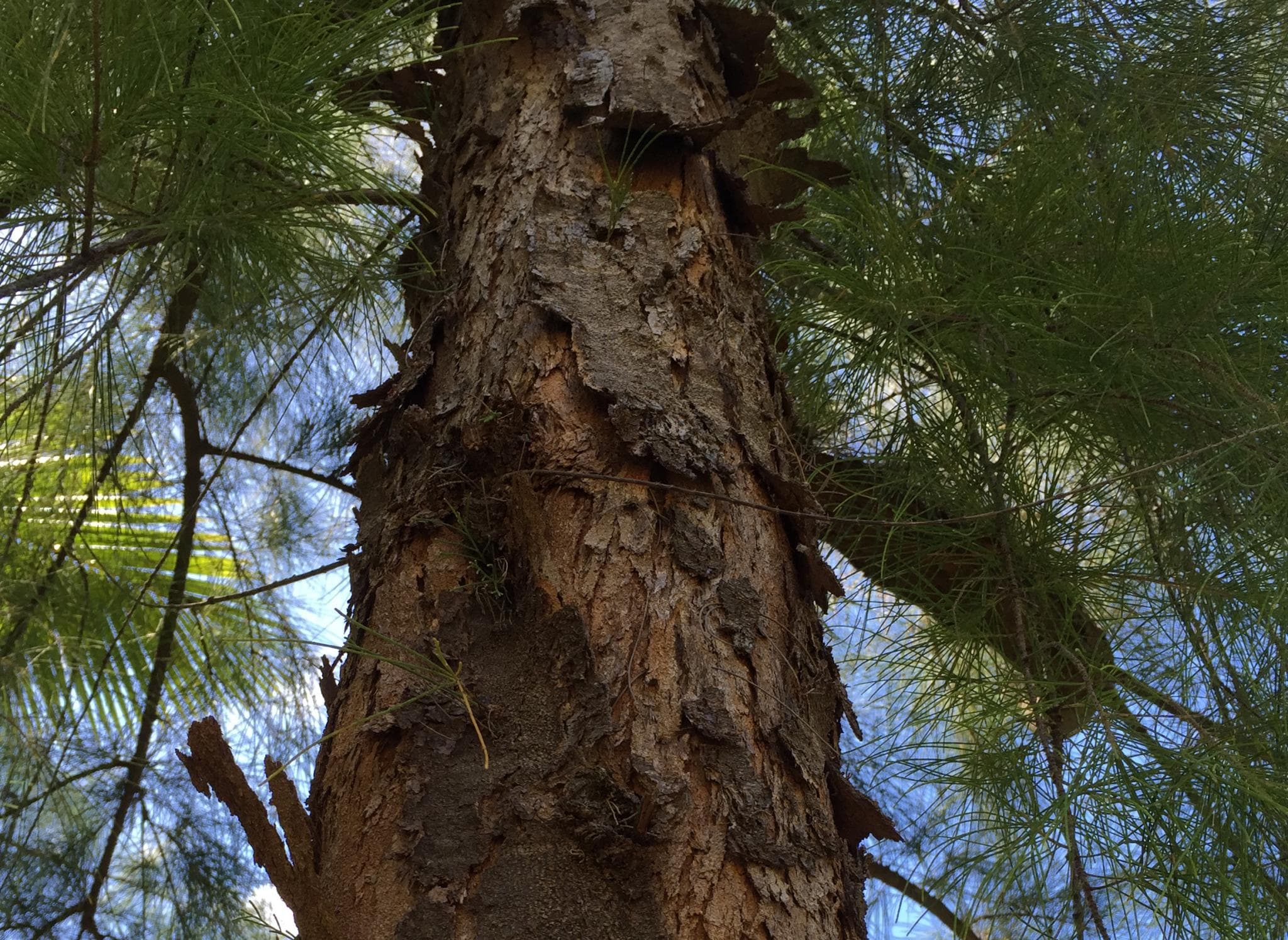
It grows well in warm, dry settings and tolerates poor, salty soils. Rapid growth has made it useful for reforestation and erosion control. Its dense, heavy wood, resistant to rot and salt, is used for buildings, small furniture, boats, and formerly spears and clubs. Bark yields orange-red dye for tapa cloth.
The older name toa also means warrior. The guide relates that the Pōmare dynasty made the word taboo in the nineteenth century, after which ‘aito came into use for both tree and warrior. A tradition associates the tree with the bodies of warriors.
Trees were planted near marae. Birds resting in them could be understood as divine messengers or manifestations. The guide links the reddish sap and orange-toned wood to the blood of ‘Oro, god of war; the wood was carved into tiki and images of the god.