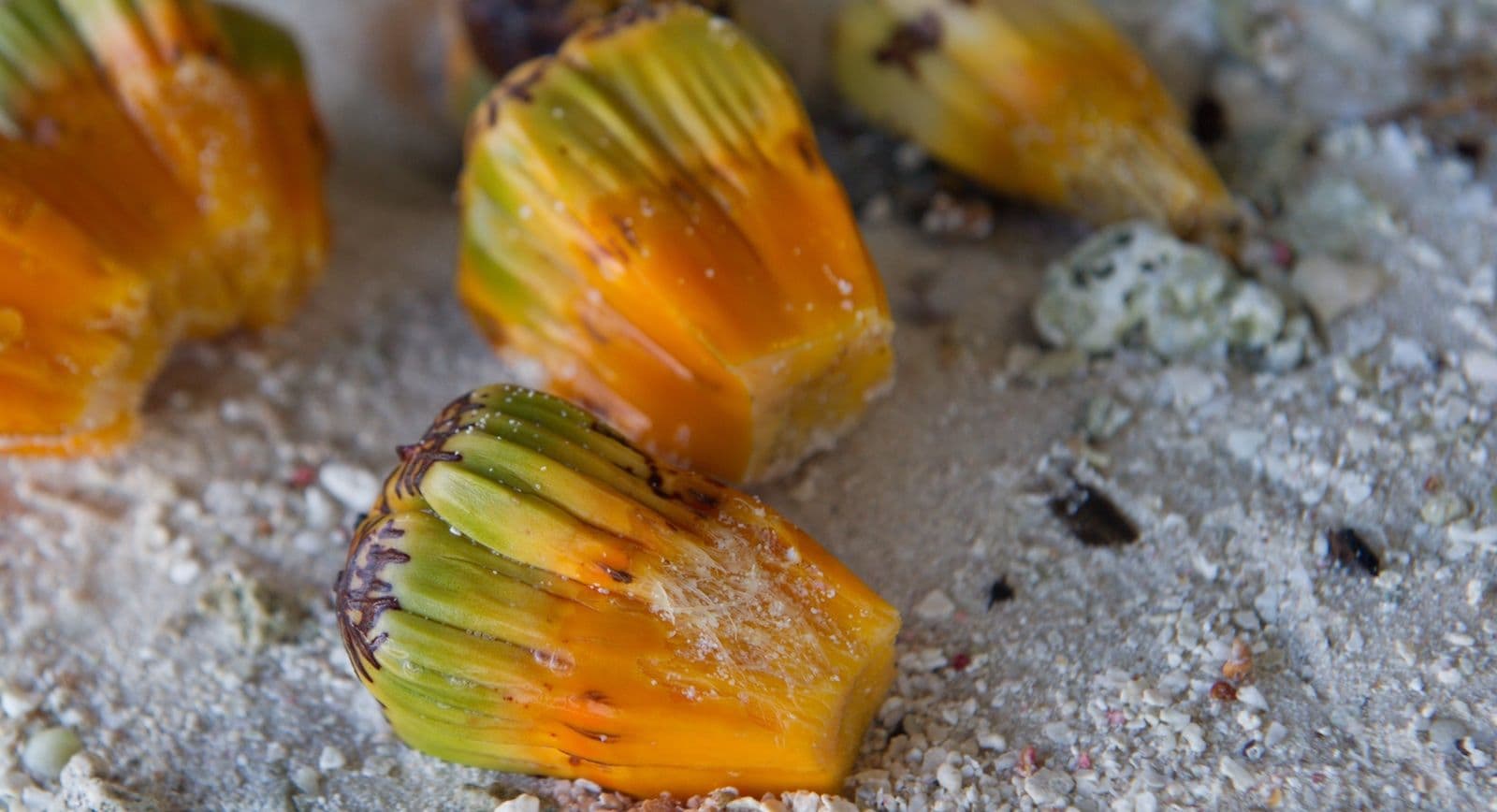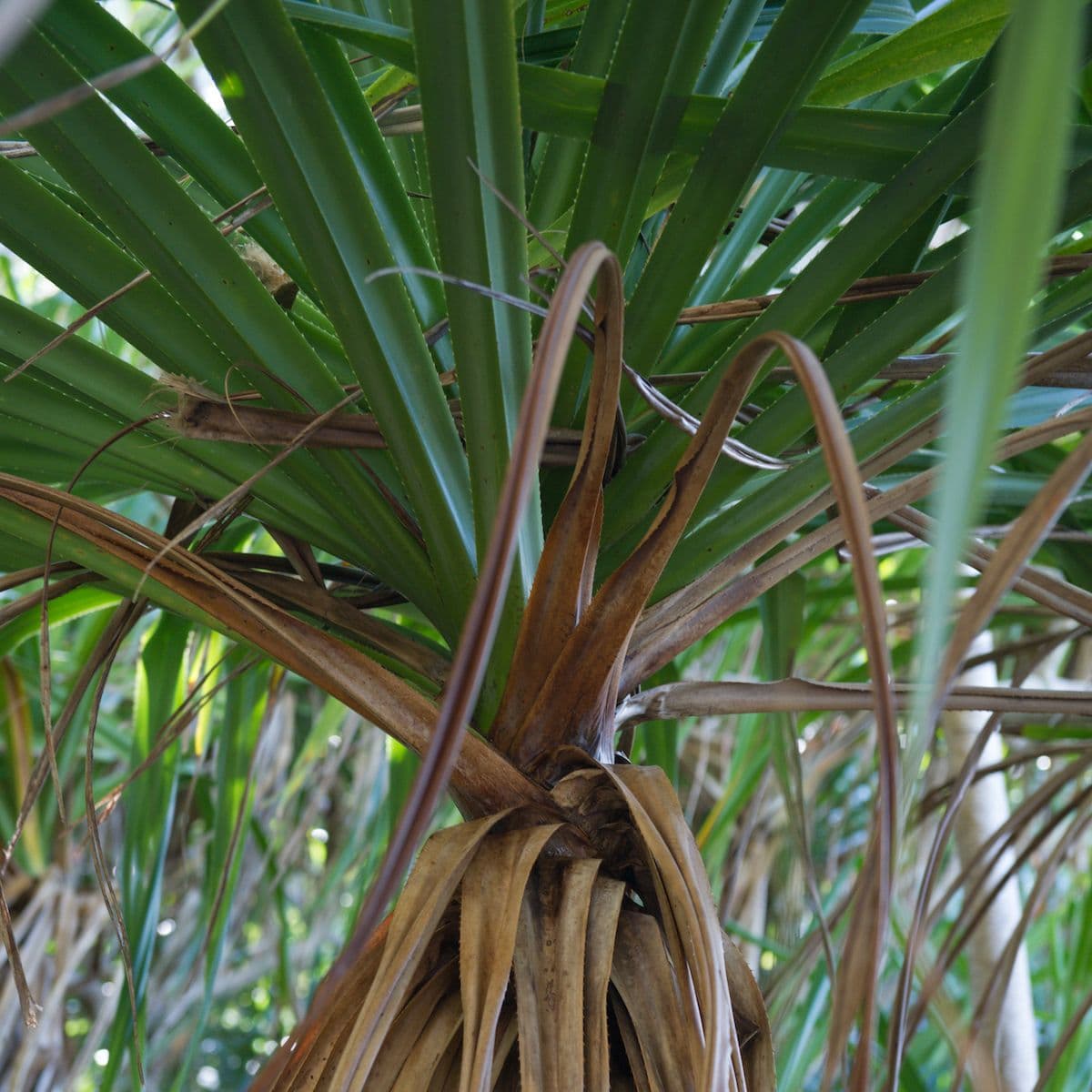
Pandanus leaves become roofs and mats; its scented flowers are known as hinano. Few plants have so many recorded uses across the five Polynesian archipelagos.
- Local names
- Fara (Society Islands, Tuamotu Islands, Austral Islands), Pae'ore (French Polynesia)
- Habitat
- Motu and shore
- Other names
- Screwpine
- Family
- Pandanaceae
- Biogeographical status
- Native
- Life form
- Tree
- Abundance
- Common to abundant across inventory versions
- Ecosystem
- Beach and mixed forest
About this species
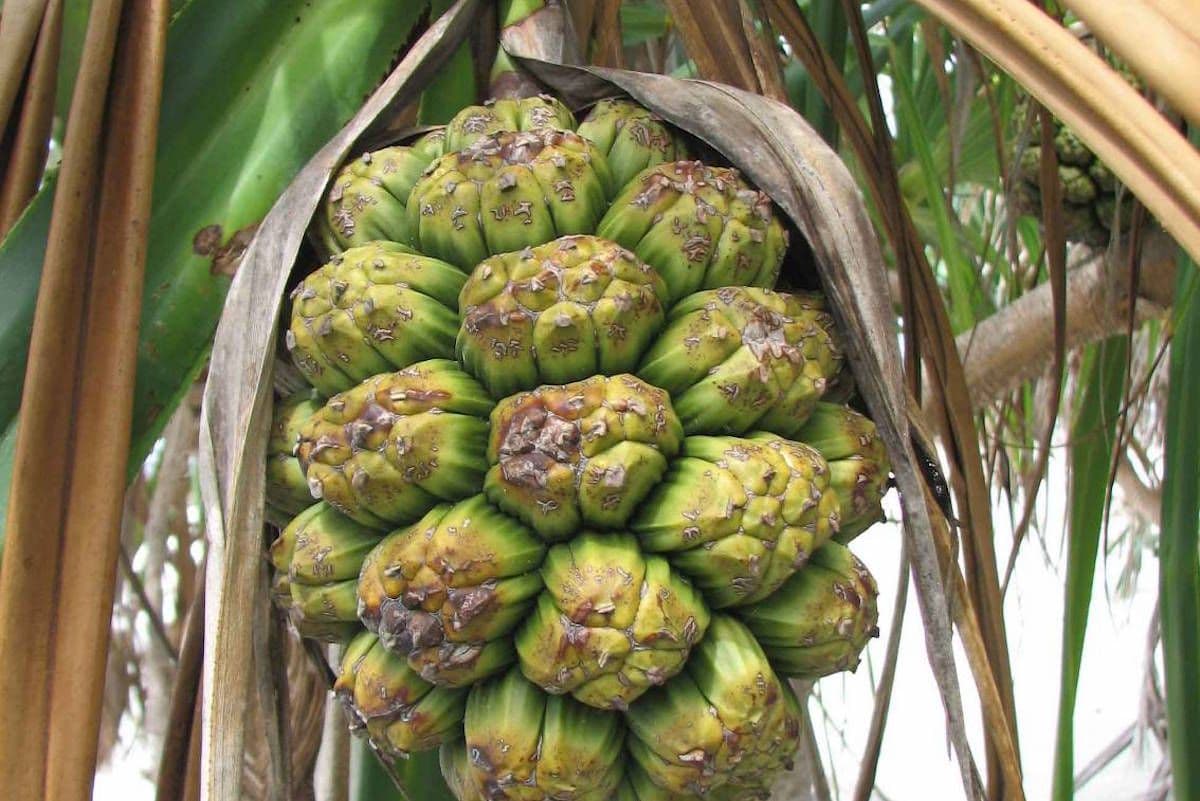
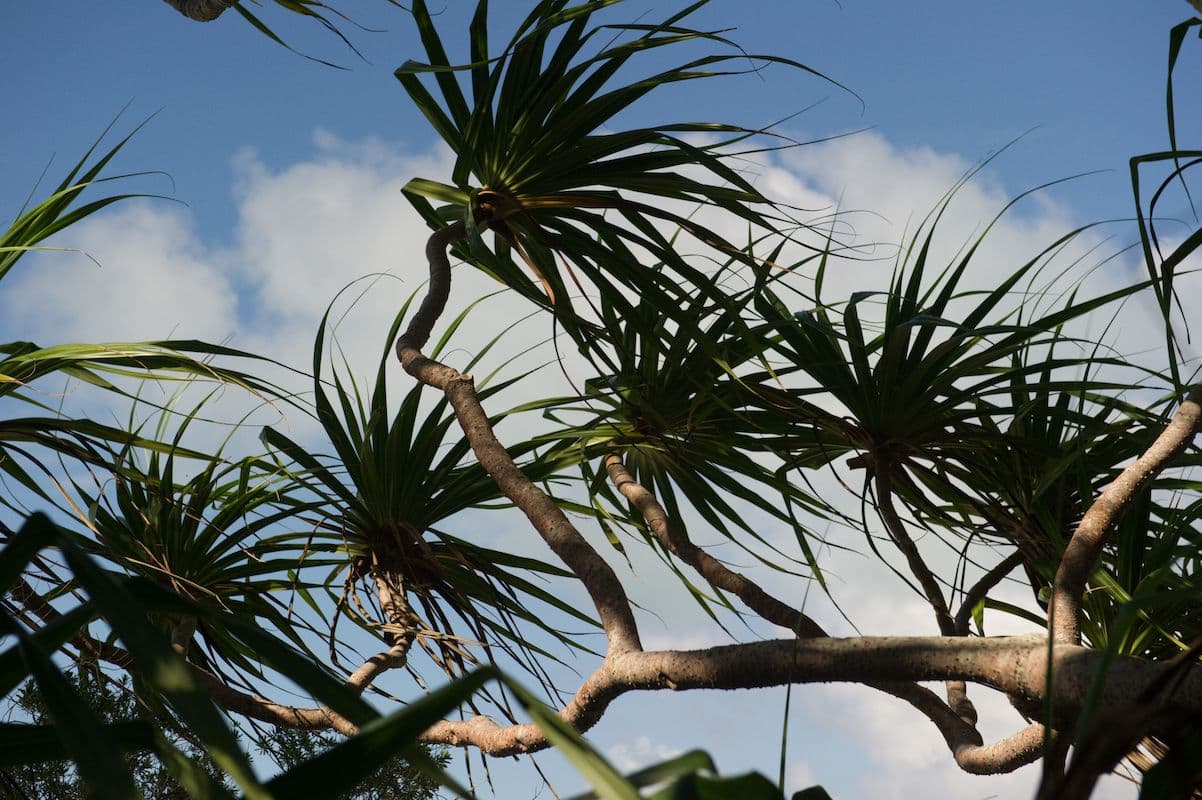
The guide describes pandanus as one of the most common and widely used native plants across French Polynesia, with several dozen cultivated or recognised varieties. It identifies the spiny coastal form, Pandanus tectorius var. tectorius, as the most abundant; this is the form known as fara. The spineless form, called pae‘ore, is identified in the source as laevis.
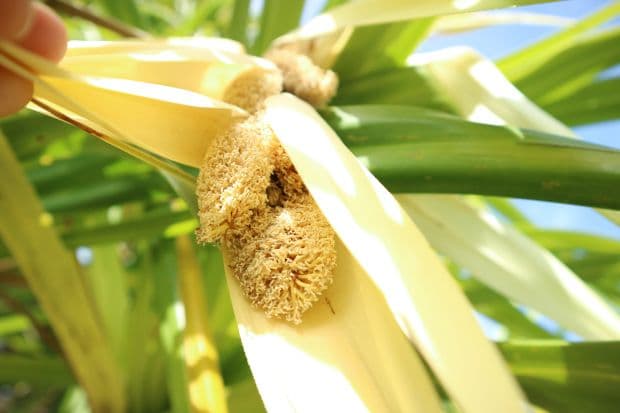
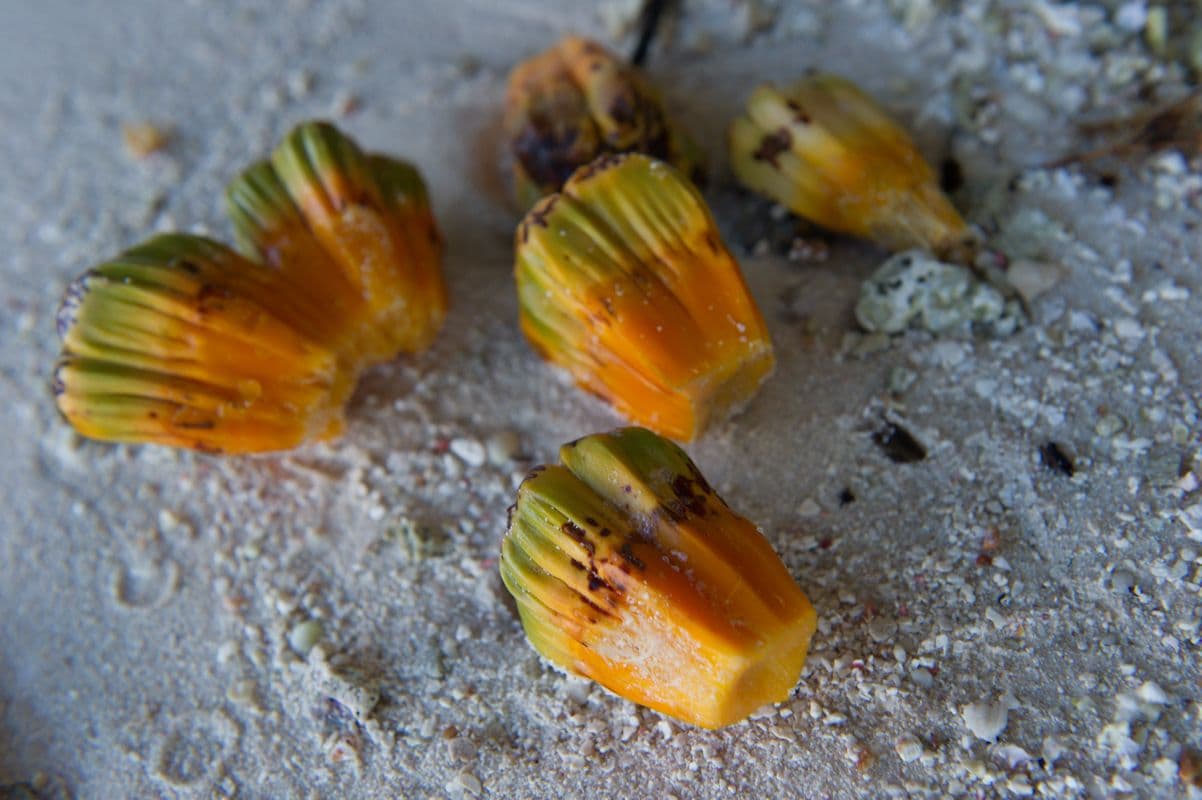
Leaves provide weaving material for roofs, baskets, and mats. The fruit was eaten and could be used as a brush. Fragrant flowers, hinano in Tahitian, perfume monoï and are used in flower necklaces and crowns.
Strong wood supplies canoes, house frames, and formerly weapons. Roots appear in numerous traditional medicinal preparations. These uses extend from the leaves at the crown to the roots below.
Butaud J.F., 2013. Tuamotu du centre, Guide floristique. Direction de l'Environnement
Butaud J.F., Gérard J., Guibal D., 2011. Guide des arbres de Polynésie française, bois et utilisations. Au vent des îles.
Barrau, 1971. Useful plants of Tahiti. Société des Océanistes, Paris, Dossier 8.