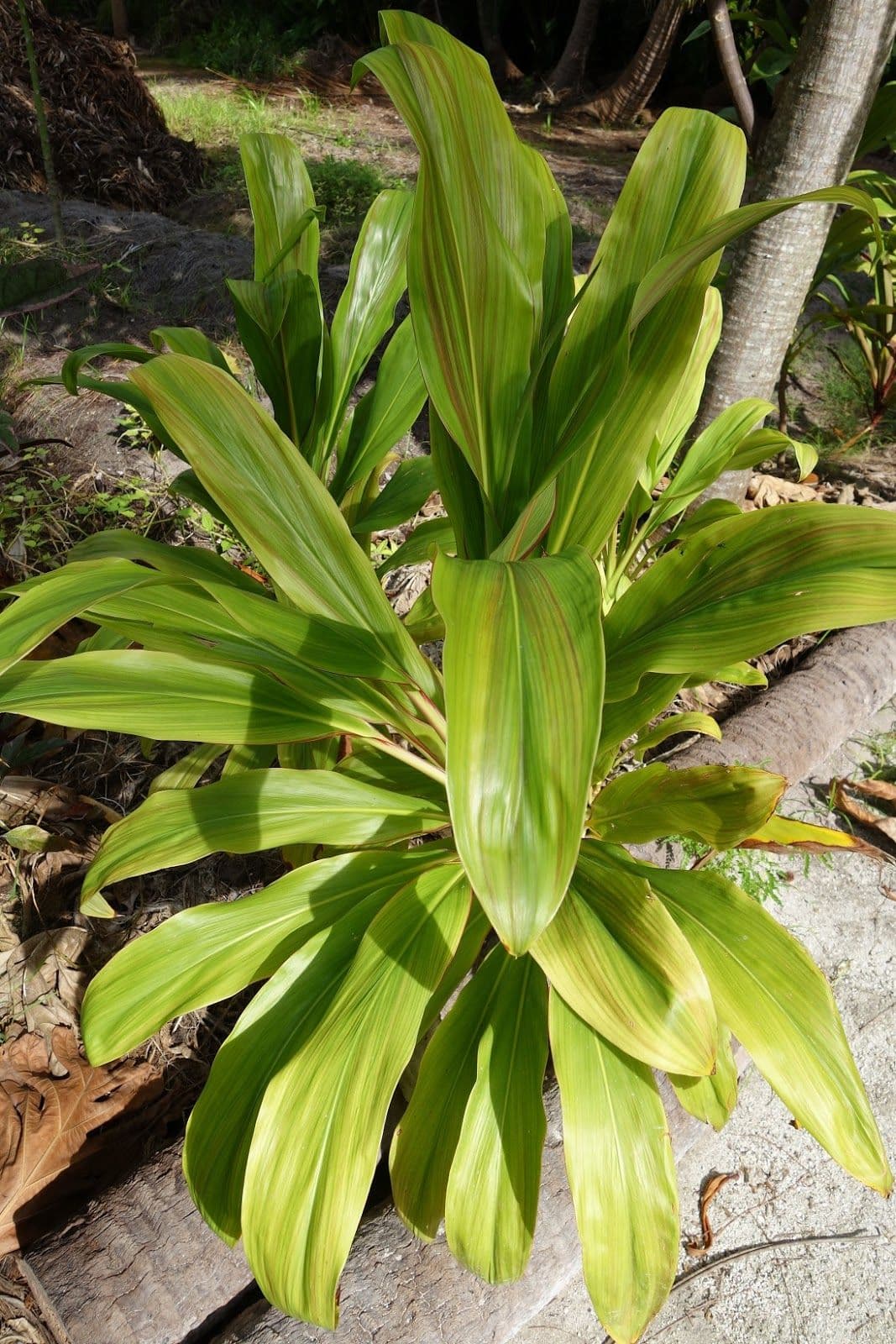
‘Auti leaves appear around houses, around food, and in ceremonial dress. The plant’s practical uses are inseparable from its sacred associations.
- Local names
- ‘Auti (French Polynesia), Ti (French Polynesia)
- Habitat
- Motu and shore
- Other names
- Cordyline
- Family
- Asparagaceae
- Biogeographical status
- Polynesian introduction (legacy inventory)
- Life form
- Shrub
- Abundance
- Cultivated only on Onetahi
- Ecosystem
- Garden
About this species
Often planted in rows beside houses, ‘auti has large, glossy leaves that may be green, red, or yellow, depending on the variety. They are used in traditional plant-fibre costumes and as food wrappers across Oceania.
Teuira Henry described ‘auti as a plant of exceptional importance in Polynesian life. A tradition says Ta‘aroa gave it to people to save them from famine. It is associated with keeping harmful spirits away, and branches and leaves were regarded as essential to the success of marae ceremonies. Warriors, orators, and ritual specialists wore the leaves.
The underground storage parts become sweet and rich in carbohydrates when cooked in an oven, and can yield a sweet juice. The guide records leaf consumption in Hawai‘i and the use of the roots to make the strong drink ‘ōkolehao, a practice it describes as later shared with Tahitians. It also recounts their use by European missionaries in fermented beer.