A flexible, ridged back and an ability to keep warm set the leatherback apart from other sea turtles.
- Local names
- Honu Pa’atore (Society Islands)
- Habitat
- Motu and shoreOpen ocean
About this species
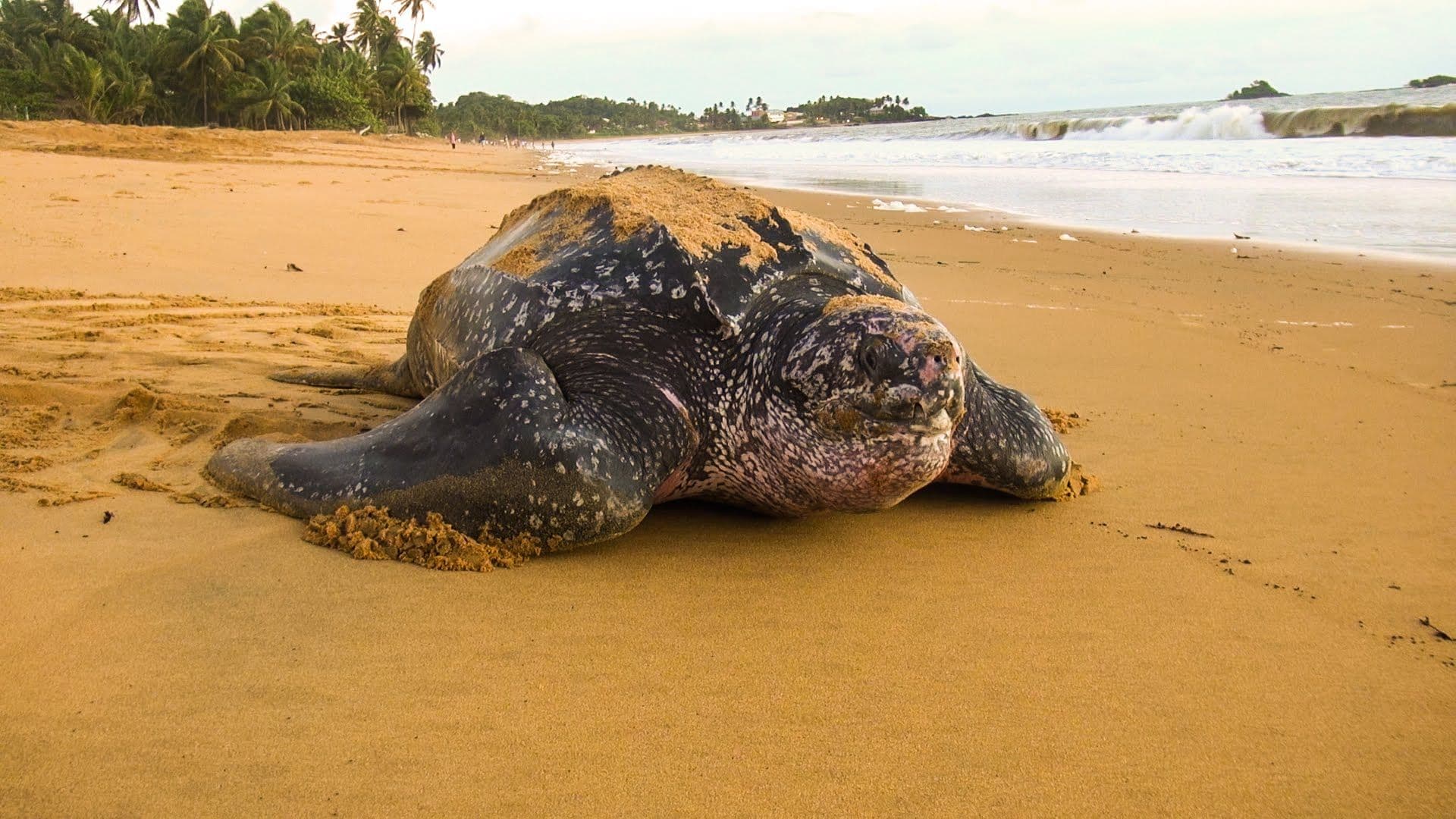
Leatherbacks can exceed two metres in length. The guide describes exceptional individuals around 2.13 m long, with a flipper span of about 2.7 m and a mass approaching 900 kg. These are large-animal measurements, not typical adult sizes.
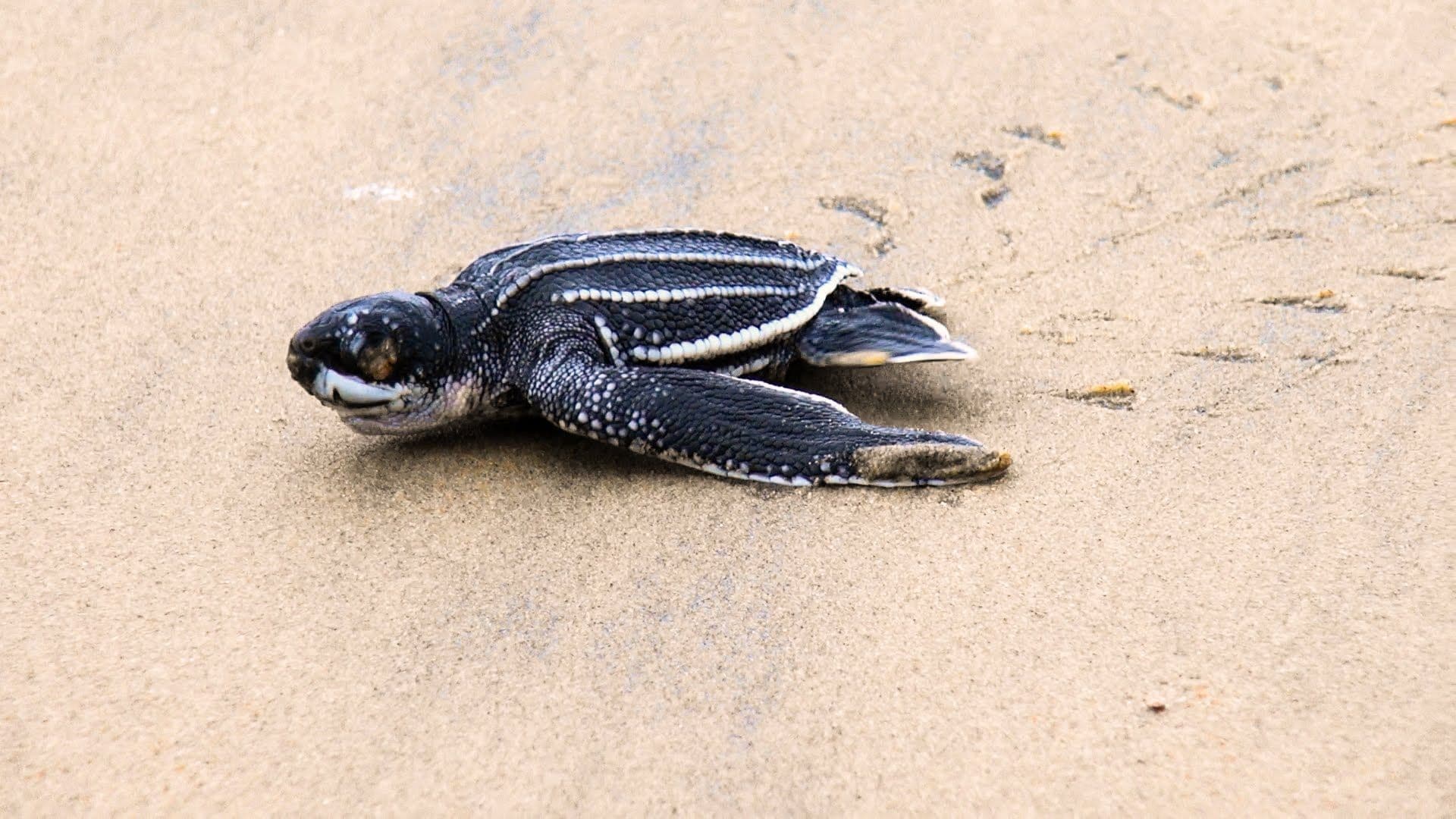
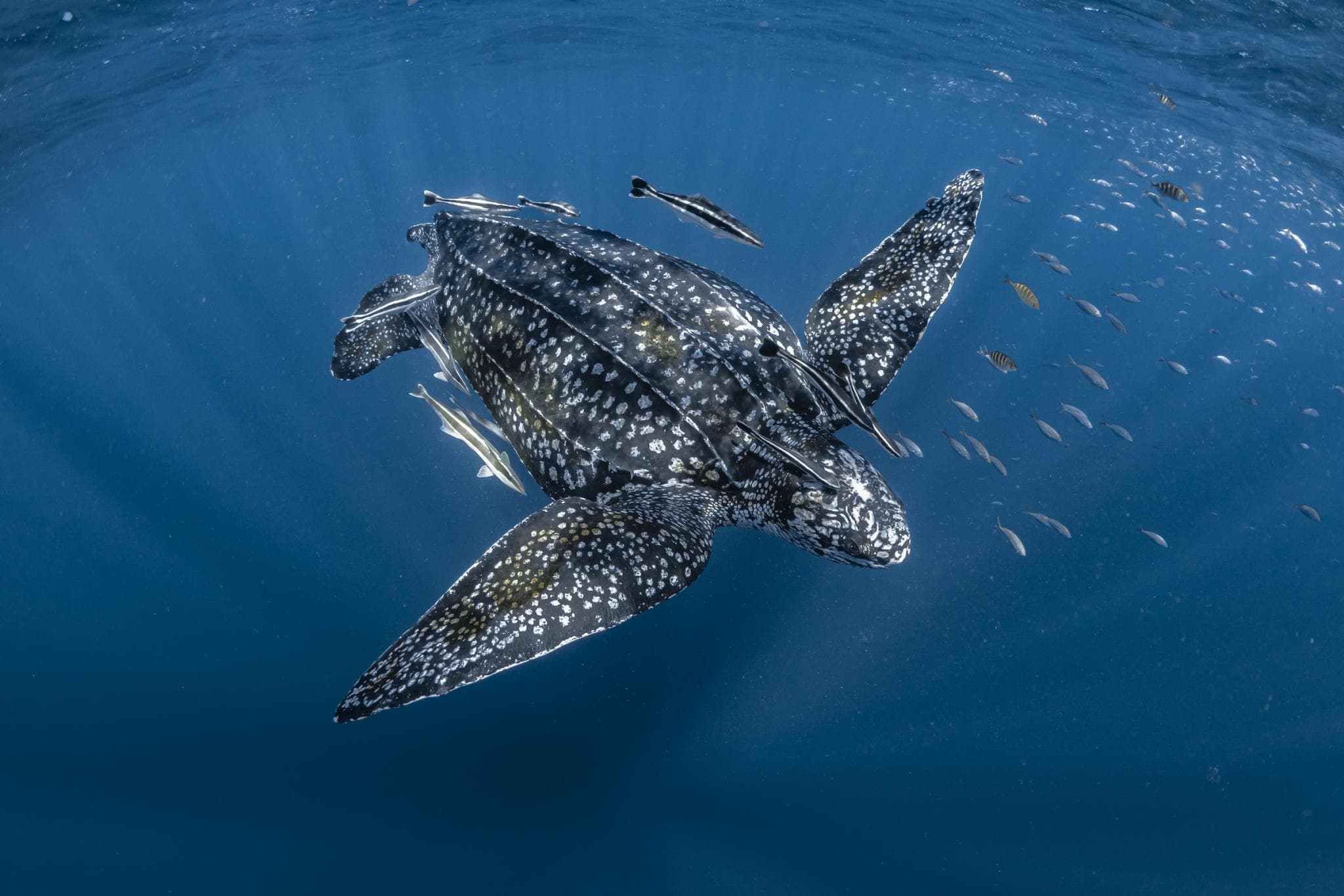
Instead of the hard, scaly shell familiar from other sea turtles, the back is covered by tough, dark bluish skin over a flexible shell. Seven lengthwise ridges run along the back and five along the underside. Hatchlings are mostly black with pale edges to the flippers.
Leatherbacks range through tropical, temperate and some subarctic waters, approaching polar latitudes. They are mainly ocean-going animals but may feed near coasts. Long migrations separate their feeding and nesting areas, and dives can exceed a kilometre in depth; the original account gives a maximum near 1,300 m.
Their circulation helps conserve heat, allowing a body temperature above the surrounding water and feeding in colder seas than most turtles tolerate. Their principal prey are gelatinous invertebrates, especially jellyfish. They are mostly solitary outside breeding encounters.
Nesting beaches include major sites on Atlantic coasts, such as French Guiana in South America and Gabon in Africa. No local nesting record is established by this profile; leatherbacks are uncommon visitors in the broader Polynesian turtle guide.
Leatherbacks grow quickly, but the age at which they mature is uncertain. Older accounts estimated adult size at seven to thirteen years; NOAA gives average estimates of sexual maturity at nine to twenty years. Adult size and reproductive maturity are different measures.
The temperature during incubation influences sex. Cooler nests produce more males and warmer nests more females. The older reference describes a transition around 29°C, including male-producing temperatures at or below about 28.75°C and mixed sexes around 29.5°C; such values should not be treated as a universal threshold for every nest.
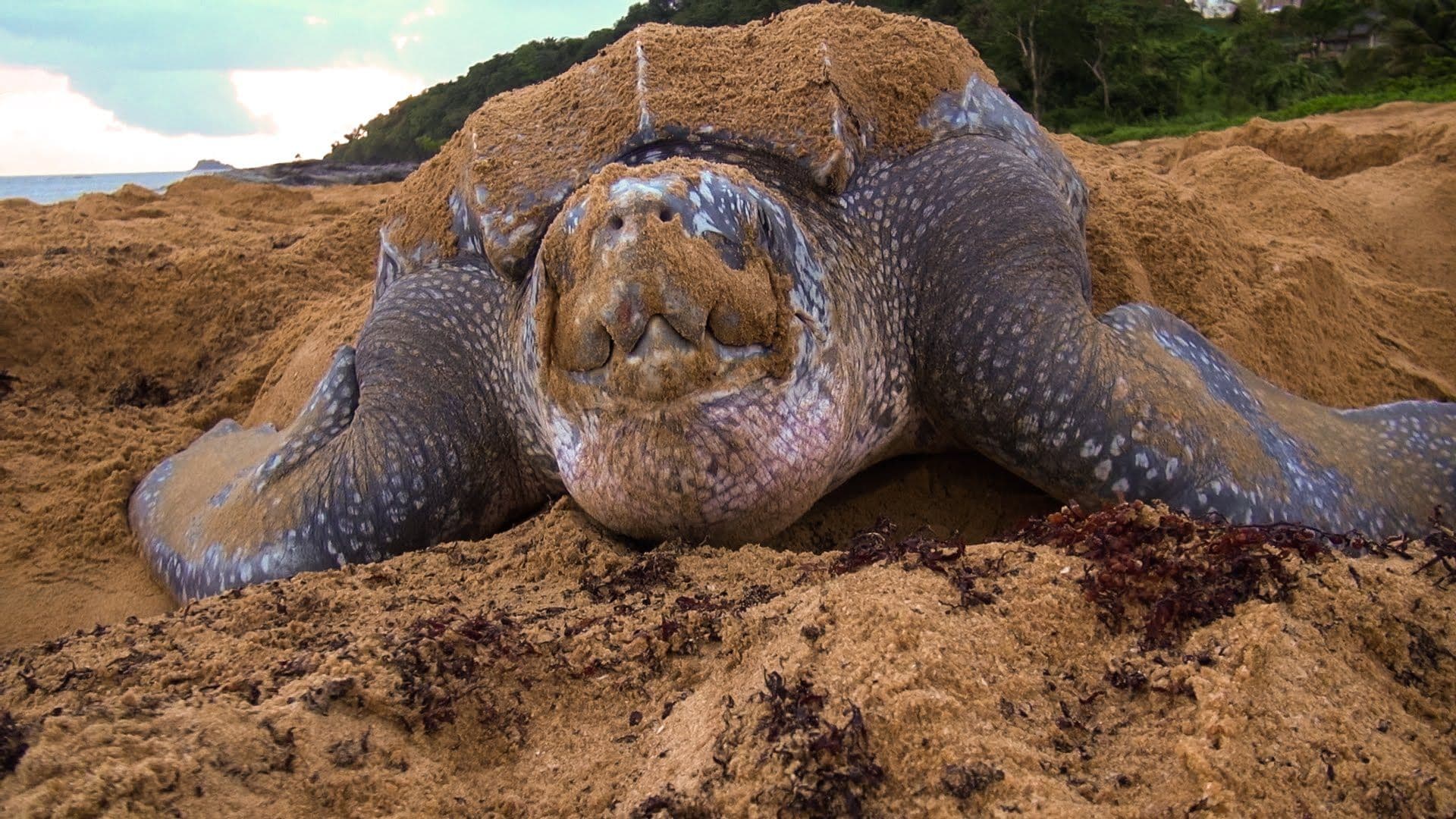
Males and females assemble in breeding waters near nesting beaches; only females come ashore. They usually nest at night, digging in the sand and laying a clutch. The guide gives 50–120 eggs, including eggs that will not develop. Some leatherback eggs lack yolk, which is different from simply being unfertilised.
After laying, the female covers the nest with sand. That cover helps maintain moisture and temperature around the eggs before she returns to the sea.
Fontanes, F.; A. Roszko; S. Flore; K. Hatton; V. Combos and A. Helton 2007. "Dermochelys coriacea"
Animal Diversity Web. Accessed November 10, 2017 at http://animaldiversity.org/accounts/Dermochelys_coriacea/